AI insurance eligibility verification is software that confirms a patient's coverage and benefits before the visit, then writes the result into the practice's system so staff do not have to check each patient by hand. It works two ways in combination: it sends standardized 270 eligibility inquiries and reads the 271 responses through electronic data interchange (EDI), and it logs into payer web portals for the plans and benefit details that EDI does not return. The 2024 CAQH Index reports that most medical eligibility transactions are already electronic, yet a large savings opportunity remains because portal and phone checks are still slow and manual. AI narrows that gap by handling the portal work at scale, flagging prior-authorization requirements, and surfacing patient financial responsibility, with a human reviewing the exceptions rather than each patient by hand.
What is AI eligibility verification?
AI eligibility verification automates the check that confirms whether a patient's insurance is active and what it covers for the scheduled service, before they arrive. Traditional verification has front-desk staff calling payers or logging into portals for each patient, which the CAQH Index measures as a meaningful share of administrative cost. The 2024 CAQH Index report found that most medical eligibility transactions are electronic yet significant spending and manual effort remain, especially where checks route through payer portals. AI verification takes over the repetitive part: it runs the inquiry, parses the response into structured fields (active or inactive, plan, copay, deductible, prior-auth flags), and posts it to the patient record. The goal is a verified, structured benefit picture at scheduling, not a stack of screenshots a biller has to interpret later.
Want this mapped against your own call and claim volume? Book a 30-minute audit
How does it work (270/271 plus portals)?
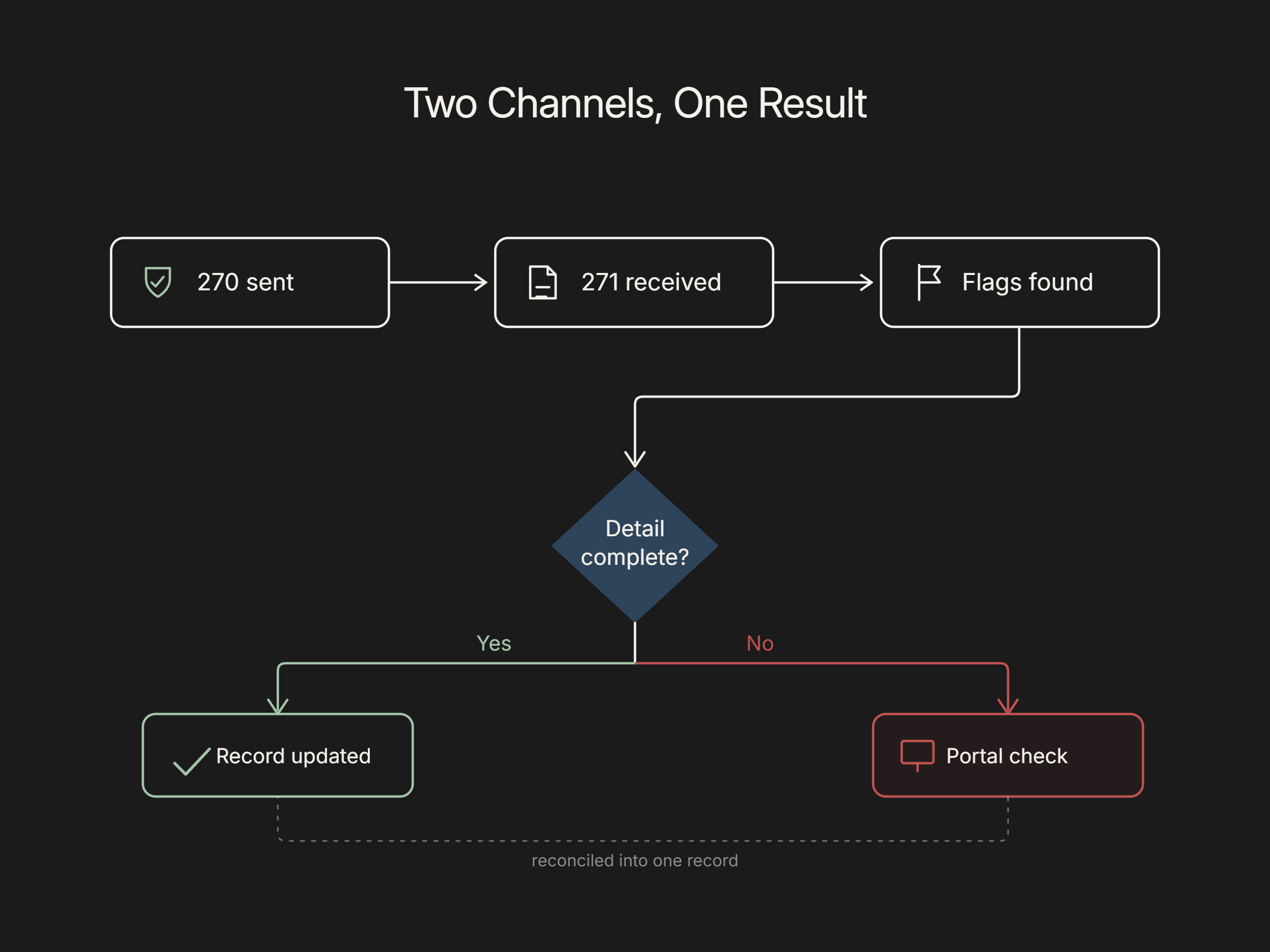
The two paths differ in interface and not in logic. A request goes out, an answer comes back, and something has to reconcile it against what the schedule expects. Flexbone runs the transaction where a payer supports it and drives the portal where one does not, and which payers need which route is established by watching the work rather than from a vendor list.
It works by combining two channels. The first is the X12 270/271 EDI transaction: the practice sends a 270 eligibility inquiry to the payer or clearinghouse, and the payer returns a 271 response with coverage status and benefits. These transactions are governed by the federally adopted CAQH CORE operating rules for eligibility, which require real-time responses, return of patient financial responsibility, and defined error reporting. The catch is that a 271 often lacks the granular benefit detail a practice needs, such as visit limits or service-specific authorization rules. That is where the second channel comes in: the AI logs into payer portals to retrieve what EDI omits. A capable system decides per payer and per benefit which channel to use, then reconciles both into one structured result.
See what AI can run at your facility. In a 30-minute audit we map the calls, eligibility, and follow-ups Flexbone can take off your team first.
Book an auditWhat does it integrate with?
Eligibility AI is only useful if the verified data lands where staff already work, so integration is the deciding factor. It should connect to your practice management system or EHR to read the day's schedule and write results back to the patient record, and to a clearinghouse for the 270/271 traffic across your payer mix. Portal coverage matters because that is where the manual burden concentrates; the American Dental Association reported that benefit-verification spending rose partly from rising portal-check costs, a pattern that holds on the medical side too. When you evaluate a tool, ask which national and regional payers it covers by EDI versus portal, how it handles Medicaid managed-care plans, and whether results post as structured fields your billers can filter, not free text.
How accurate is it and where does a human step in?
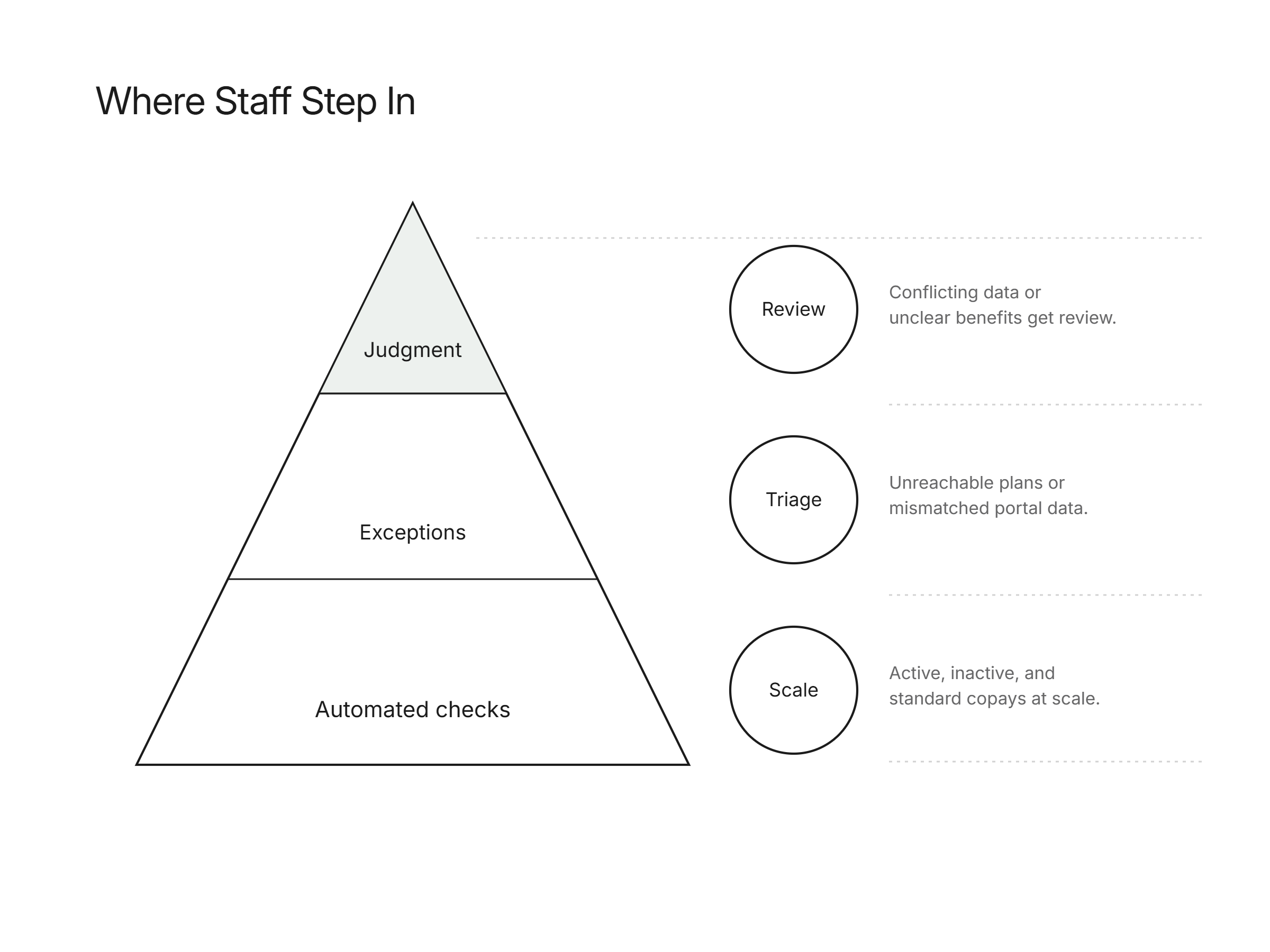
Accuracy depends on the payer and the benefit, so a serious deployment keeps a human in the loop rather than trusting every automated read. AI handles the high-volume, unambiguous checks well, active-versus-inactive coverage and standard copays, and flags the cases it is unsure about: conflicting portal and EDI data, plans it cannot reach, or benefits that need interpretation. Those exceptions route to a staff member. This design matters for more than accuracy. As payers and regulators scrutinize automated decisions in coverage workflows, state and federal rules increasingly require human oversight of AI in prior authorization and claims. The right posture is automation for the routine volume and a human for the judgment calls, with an audit trail behind both.
How Flexbone runs eligibility verification inside your EHR
Most eligibility tools stop at the 270/271 and leave the portal work, the hardest and most manual part, to your staff. Flexbone deploys AI browser and document agents that work inside your EHR to run both channels: EDI inquiries plus payer-portal logins for the details EDI omits, reconciled into structured fields with prior-auth flags and patient responsibility written back to the record. The approach is audit-first, HIPAA compliant, and SOC 2-aligned, with exceptions routed to your team.
See it run against your payer mix: book a demo, or read more on insurance eligibility verification.