
Yes, AI can answer dental patient calls. An AI phone service is a voice agent that picks up inbound calls, understands what the caller wants in natural speech, and either handles the request end to end or routes it to the right person. For a multi-location group it answers every ringing line at once, applies each office's hours and providers, and books directly into the practice management system. This matters because front desks are short-staffed: the American Dental Association's Health Policy Institute reports that staffing shortages remain a top operational strain for dental practices, which is a common reason calls go to voicemail during busy hours. A voice agent absorbs that overflow, covers nights and weekends, and hands complex clinical questions to a human, so patients reach a real answer instead of a full mailbox.
Can AI answer dental patient calls?
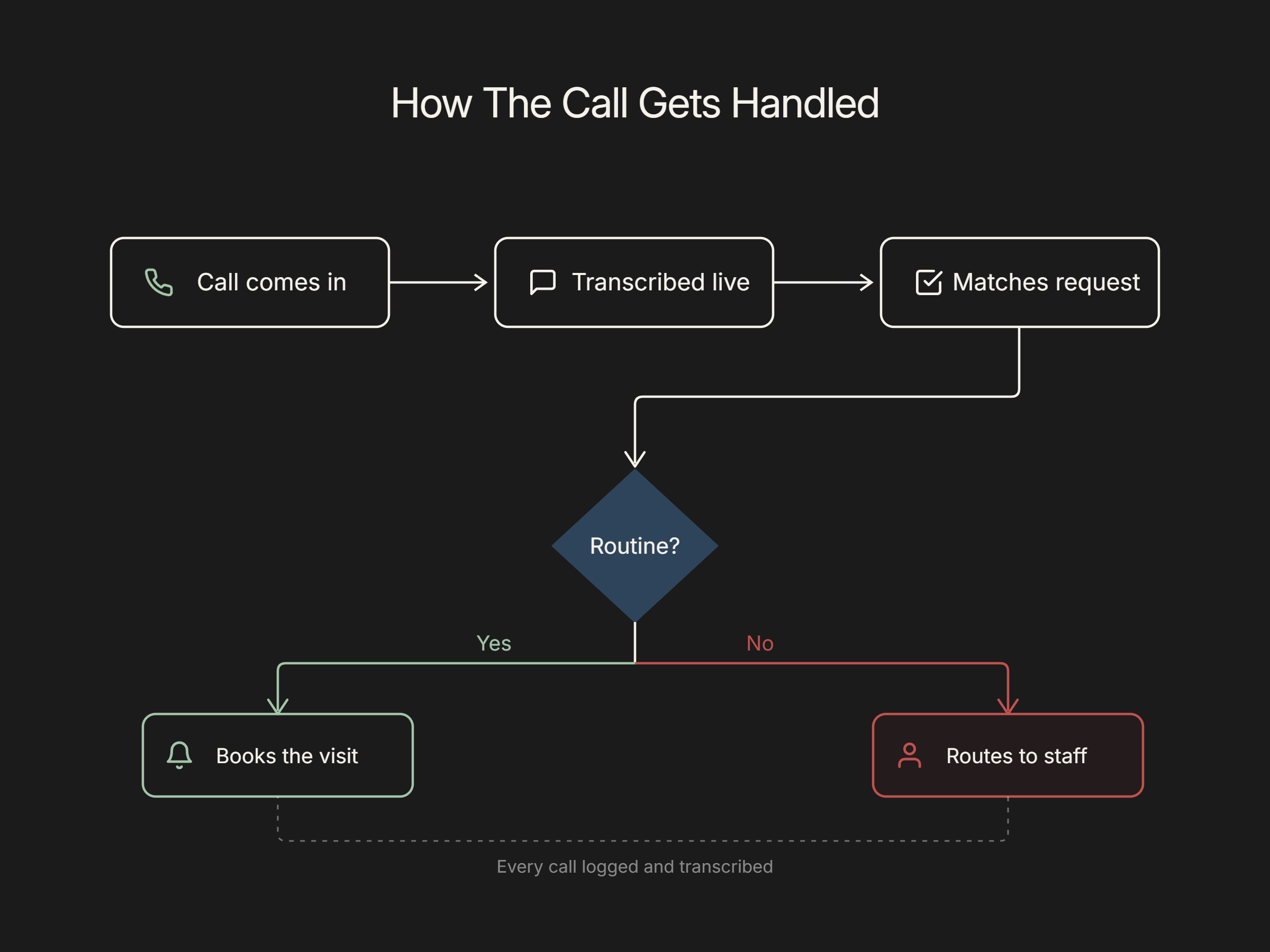
AI can answer routine dental calls: scheduling, rescheduling, insurance and hours questions, directions, and new-patient intake. The agent transcribes speech in real time, matches the request to a workflow, and speaks back a natural response. For an insurance question it can run a real-time eligibility check through the payer's 270/271 transaction and your clearinghouse, including Medicaid plans, and it operates under a HIPAA business associate agreement so patient data stays protected. Phones are still the primary way patients reach a practice, and they are a documented bottleneck. MGMA reports that phone volume continues to cost practices time they cannot easily staff for, which pushes callers to voicemail at peak hours. An AI agent takes the first-line load so staff handle the calls that genuinely need a person. The design that works in the engagements we run keeps a clear escalation path: anything clinical, billing-sensitive, or ambiguous transfers to a team member with the call context attached, rather than the agent guessing.
Want this mapped against your own call and claim volume? Book a 30-minute audit
How does it handle multi-location routing?
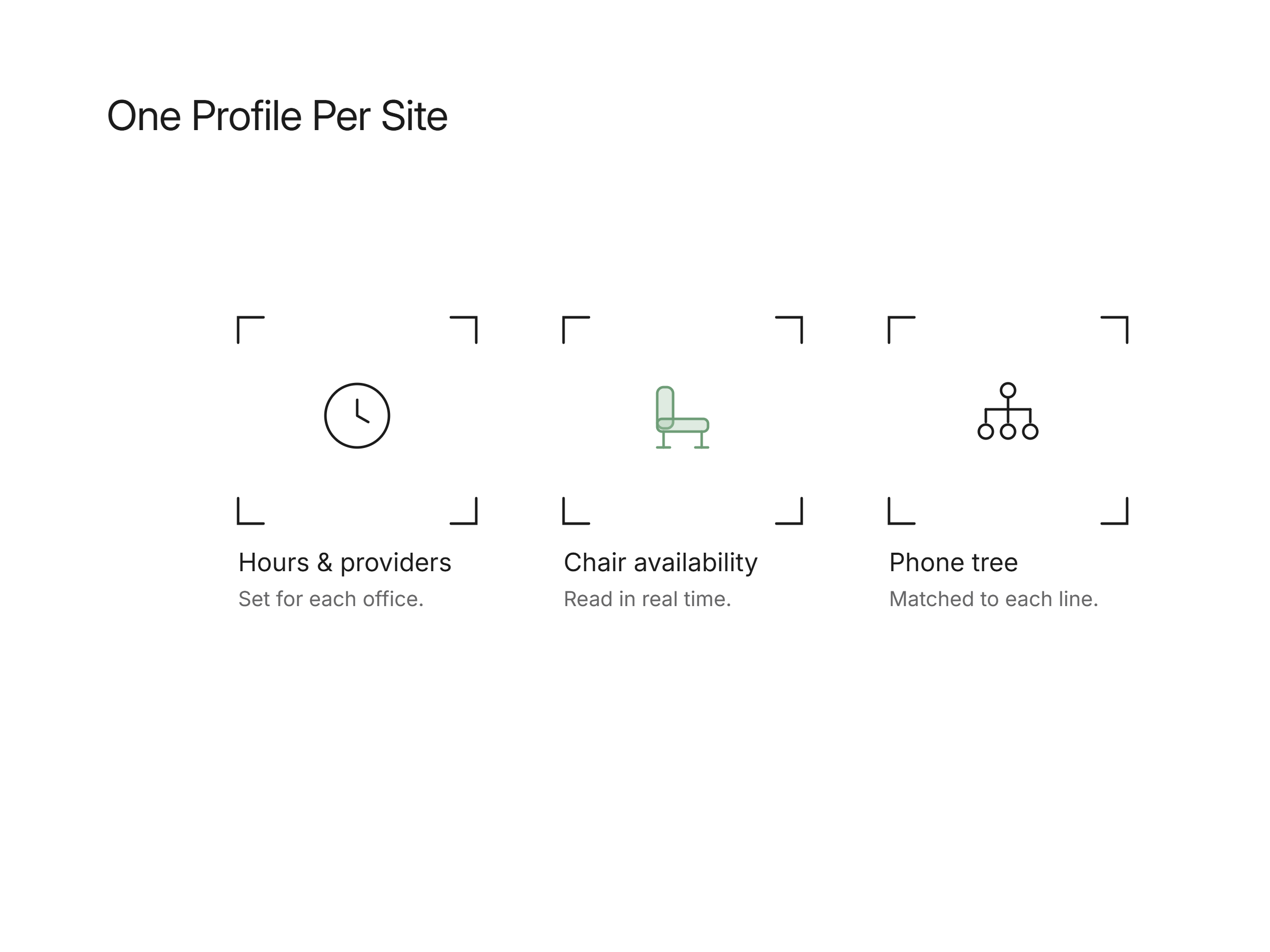
For a group with several offices, the agent holds a separate profile per location: hours, provider roster, address, open chair availability, and the phone tree behind each number. A caller who reaches the main line can be identified by the number they dialed or asked which office they want, then booked against that site's schedule. This is where a single AI layer helps a multi-site group more than adding staff office by office, because recruiting for every front desk is hard. The ADA notes that staffing shortages were the top challenge dentists expected heading into 2025. One voice agent covers all locations with consistent scripting, routes overflow from a swamped office to the queue, and never leaves a second location's line unanswered because the receptionist there stepped away.
Routing across locations is a data problem: which office holds the patient's chart, which provider has the opening, which line the caller actually needs. Flexbone answers it from the practice management system rather than a phone tree, and it learns the practice's real call mix from recordings before deciding what the agent handles. More on dental front desk automation.
See what AI can run at your facility. In a 30-minute audit we map the calls, eligibility, and follow-ups Flexbone can take off your team first.
Book an auditWhat about after-hours and overflow calls?
After-hours coverage is where an AI service earns its place, because patients search and call outside business hours. MGMA reports that patients increasingly expect to book on their own schedule rather than wait for office hours, so a practice that only answers nine to five misses that demand. An AI agent runs 24/7 at the same quality: it books available slots at night and on weekends, captures new-patient details, and flags a true dental emergency for your on-call protocol instead of sending everyone to voicemail. During the day it handles overflow, the calls that arrive while both lines are busy, so the practice stops losing new patients to a competitor who simply picked up the phone. Each call is logged and transcribed for the morning review.
How does it book and confirm appointments?
The agent books by reading live availability from your practice management system, such as Dentrix, and writing the appointment back with the patient, provider, operatory, and reason for visit. It can also run outbound confirmations and reminders, which is the lever that protects revenue, because empty chairs are expensive. A systematic review of outpatient scheduling found that reminder and access improvements reduce no-show rates, and a voice agent applies them consistently across a group without adding front-desk hours. When a patient wants to move a visit, the agent finds the next fit and updates the record. When a slot opens from a cancellation, it can call the waitlist to fill it. Confirmations, reschedules, and recall outreach all post to the same system your staff already work in, so the schedule stays current.
How Flexbone runs a dental voice agent across your locations
Most answering services take a message. Flexbone deploys AI voice agents that resolve the call: they answer each ringing line across your locations, apply each office's hours and providers, book and confirm directly in your practice management system, and escalate clinical or billing-sensitive calls to your team with full context. The approach is audit-first, HIPAA compliant, and SOC 2-aligned, so each call leaves a transcript and an outcome you can review. Coverage runs during business hours for overflow and around the clock for after-hours demand.
Hear it handle your call flow: book a demo, or read more about our healthcare call automation.