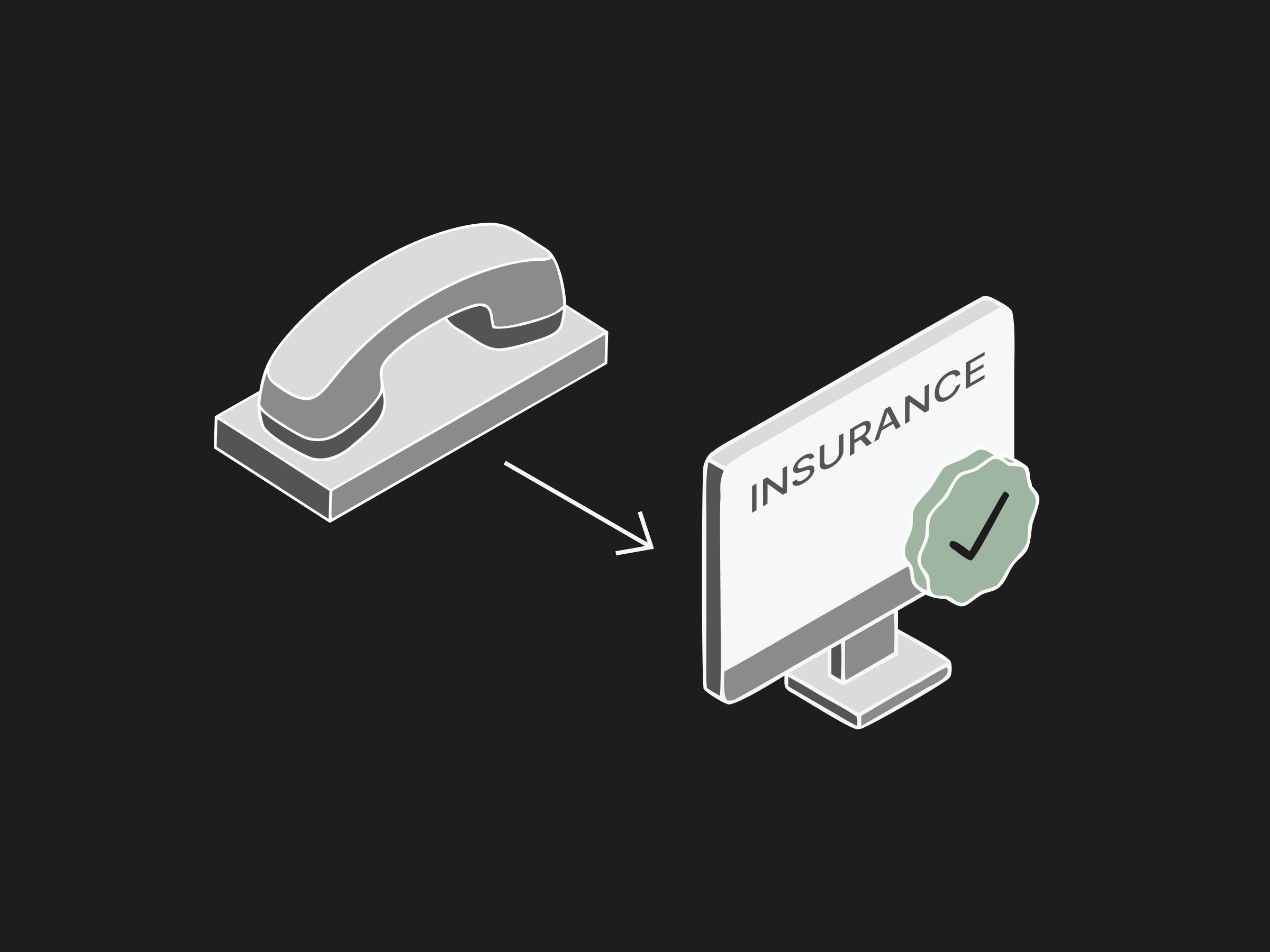
AI voice agents can verify insurance benefits and escalate the exceptions to staff for a multi-site group running Cerner (Oracle Health), Epic, or athenahealth. The pattern is consistent across vendors: the agent runs the eligibility check by EDI or by calling and navigating the payer, parses the result into structured fields, writes it back to the patient account, and routes anything ambiguous to a human. Adoption is no longer early: an HFMA poll found that most healthcare organizations are already using or piloting AI in the revenue cycle. Benefits verification is a common first workflow because it is high volume, rule-bound, and measurable. The rest of this page answers the specific buyer questions about each EHR, how the write-back works, and where these integrations stand in 2026.
Which RCM vendors offer HIPAA-compliant voice bots that verify benefits and escalate exceptions for a multi-site group on Cerner (Oracle Health)?
For a multi-site group on Cerner (Oracle Health), the vendors to shortlist are those that operate under a business associate agreement, verify benefits across your payer mix, and route exceptions to staff rather than guessing. Flexbone is one; the broader category includes RCM automation firms that pair eligibility bots with a human-in-the-loop step. The verification itself follows the national standard: the CAQH CORE operating rules define how 270 eligibility inquiries and 271 responses must return coverage and patient financial responsibility in real time. A capable vendor runs that EDI check, then calls or navigates the payer portal for the benefit detail the 271 omits, reconciles both, and posts a structured result into Oracle Health. Exceptions, meaning conflicting data or unreachable plans, escalate to a staff queue with the call context attached. Confirm the BAA and the exception workflow before you buy.
Want this mapped against your own call and claim volume? Book a 30-minute audit
Can an AI caller integrate with Epic to push benefit verification results into patient accounts?
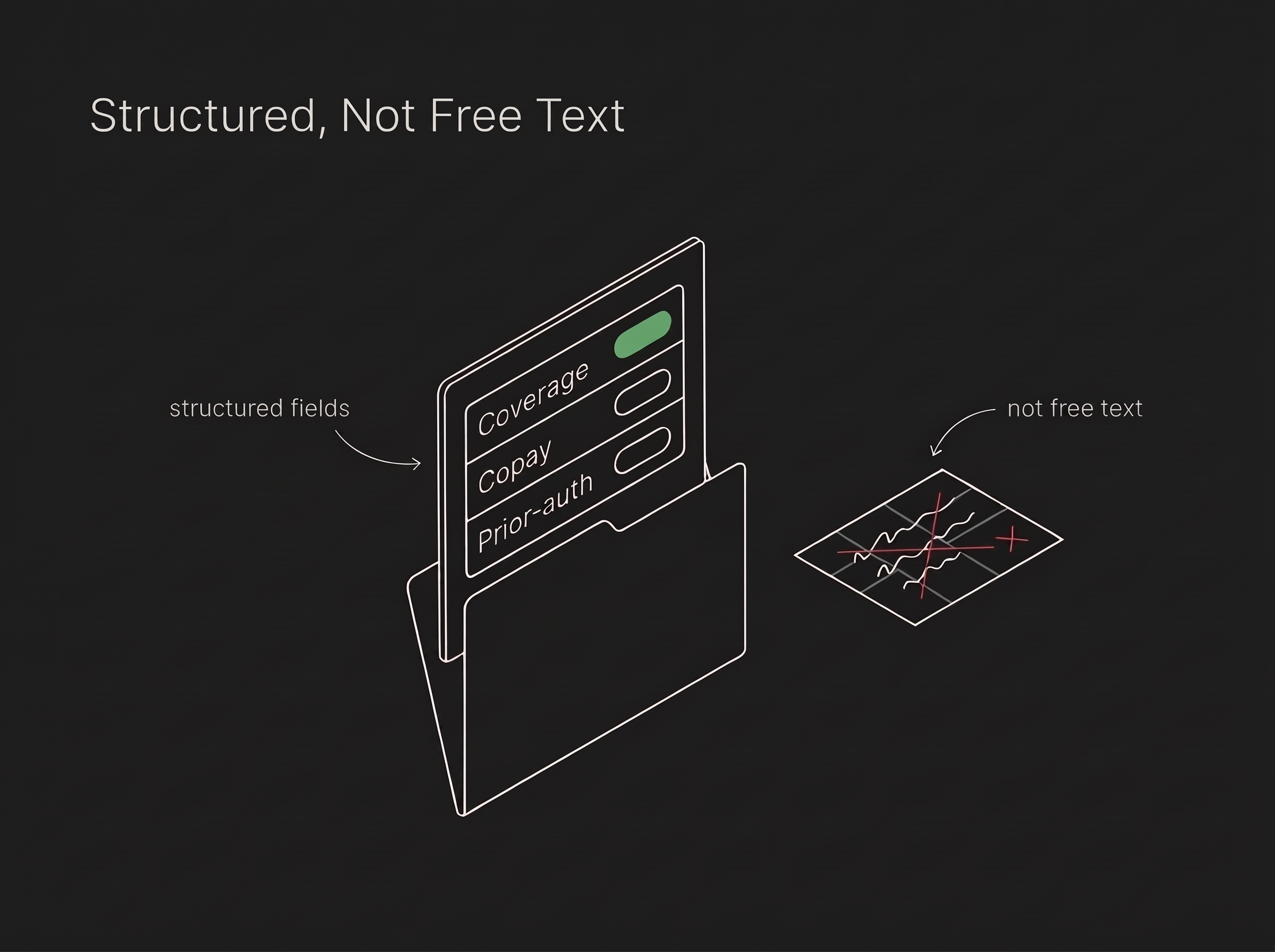
Yes. An AI agent can write verified benefits back into Epic patient accounts, either through Epic's integration surface or by acting inside the application the way a staff member would. Epic exposes documented interfaces for registration, coverage, and eligibility data through its developer program, described on Epic's open developer resources. Through those interfaces, or through a supervised in-application agent, the verification result lands as structured fields: active or inactive coverage, plan, copay, deductible, and prior-authorization flags, attached to the correct guarantor and coverage record. For a large Epic site, the value is that the benefit picture is present at scheduling and registration rather than reconstructed later by a biller. Ask any vendor how it authenticates into Epic, whether results post as structured coverage fields or free text, and how it handles Epic's certification requirements for the connection.
See what AI can run at your facility. In a 30-minute audit we map the calls, eligibility, and follow-ups Flexbone can take off your team first.
Book an auditWhich conversational AI companies handle benefits verification and update athenahealth billing systems?
Because athenahealth is a combined EHR and revenue-cycle platform, a voice or browser agent can verify benefits and update the billing side through one interface. athenahealth's developer program documents a patient insurance eligibility API alongside its claims and billing endpoints, so a verified result can post as structured eligibility data that flows into claim creation. Vendors that handle this include RCM-focused automation companies and, for the calling and portal work, voice-agent providers such as Flexbone. The practical test is the same across them: does the tool read the day's athenahealth schedule, run the check by EDI and by portal or phone where EDI falls short, and write the result back as structured eligibility rather than a note a biller has to retype? On athenahealth the integration path is typically faster than a hospital EHR, but the exception-routing design still decides whether the automation is trustworthy.
How mature are these healthcare voice integrations in 2026?
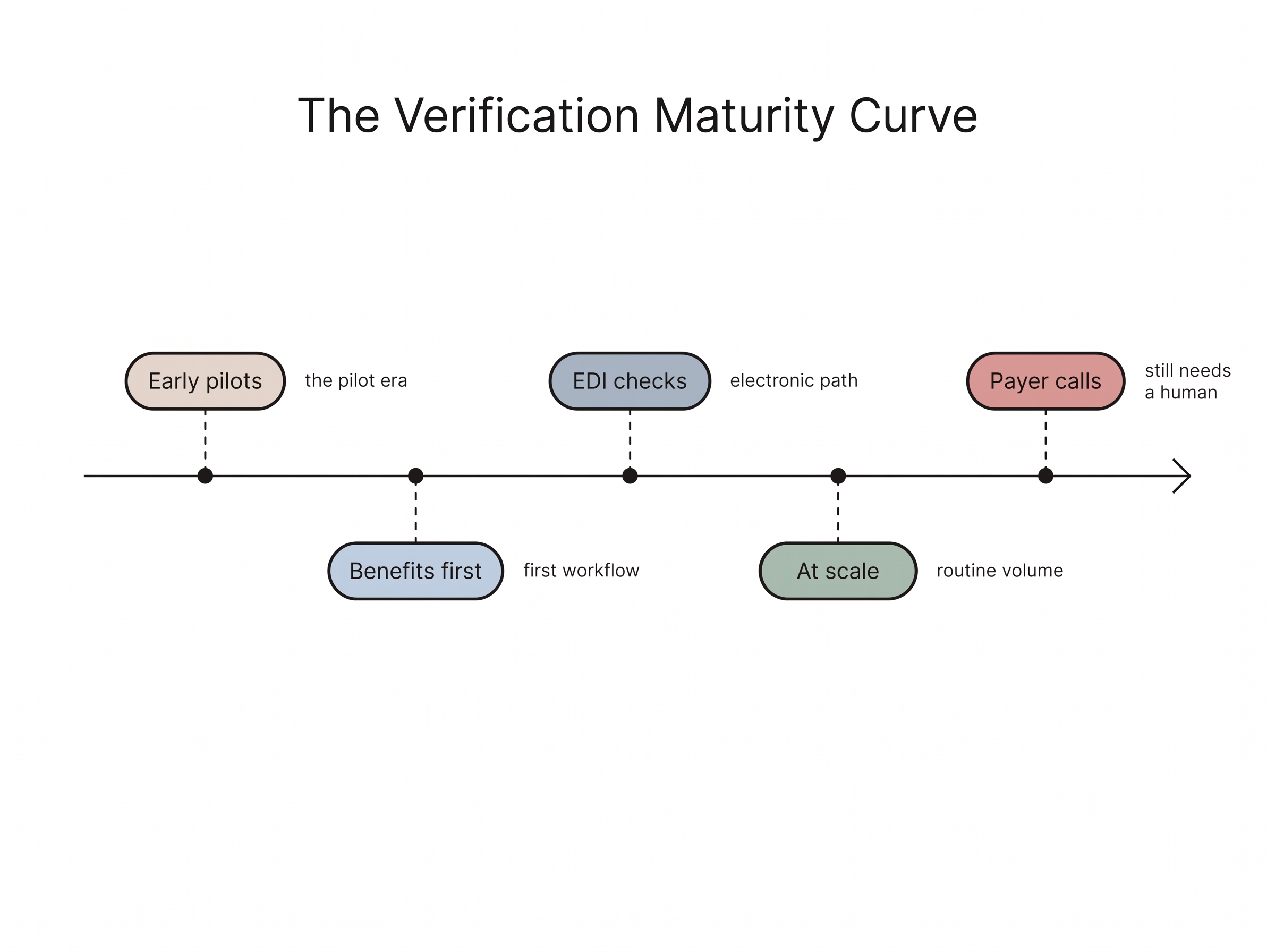
They are past the pilot stage for eligibility and benefits, and still maturing for the harder calling workflows. A 2025 HFMA and AKASA survey found that about 80 percent of health systems are exploring, piloting, or implementing generative AI in the revenue cycle, with benefits verification and denials among the leading use cases. In the engagements we run, the EDI and portal verification paths are reliable enough to handle the high-volume, unambiguous checks at scale, while payer phone calls with long holds and inconsistent scripts remain the part that most needs a human backstop. The mature posture in 2026 is automation for the routine volume across Oracle Health, Epic, and athenahealth, a human for the judgment calls, and an audit trail behind both. Vendors that claim full autonomy without an exception queue are ahead of what the workflow supports.
How Flexbone verifies benefits inside your EHR
Flexbone deploys AI voice, browser, and document agents that verify benefits inside Cerner (Oracle Health), Epic, and athenahealth. The agents run the EDI check, call or navigate the payer for what EDI omits, reconcile both into structured coverage fields with prior-auth flags and patient responsibility, and write the result back to the patient account. Exceptions route to your team with full context. The program is audit-first, HIPAA compliant, and SOC 2-aligned.
See it run against your payer mix and EHR: book a demo, or read more about insurance eligibility verification.