AI voice agents handle the phone-heavy work of a property and casualty insurance operation: first notice of loss (FNOL) intake, claim status calls, policy and coverage questions, renewal and payment reminders, and verification calls. They answer or place the call, hold a natural spoken conversation, and act on what they hear, recording answers into the systems the team already uses. Routine calls get resolved end to end. Anything that needs judgment, a coverage interpretation, or a licensed decision is escalated to an adjuster or agent with the details already captured. This is general property and casualty work across auto and home lines, which is distinct from healthcare payer and claims work, and the value comes from taking predictable, high-volume calls off a team's plate so people focus on the calls that need them.
What insurance calls can AI voice agents handle?
Most of the phone volume in an auto or home insurance operation is repetitive and rules-based, which is exactly what a voice agent handles well. The common categories are first notice of loss intake when a policyholder reports an accident or property damage, claim status calls where someone wants an update on an open claim, policy and coverage questions about what a policy includes and what a deductible is, renewal and payment reminders, and verification calls to confirm details before a policy or claim moves forward. In each case the agent runs the same loop: it listens to what the caller is asking, decides what the request is and whether it can complete it, and acts by reading back information or recording what the caller provides. When a call falls outside its defined scope, it escalates instead of guessing.
Want this mapped against your own call and claim volume? Book a 30-minute audit
How do AI voice agents take FNOL intake?
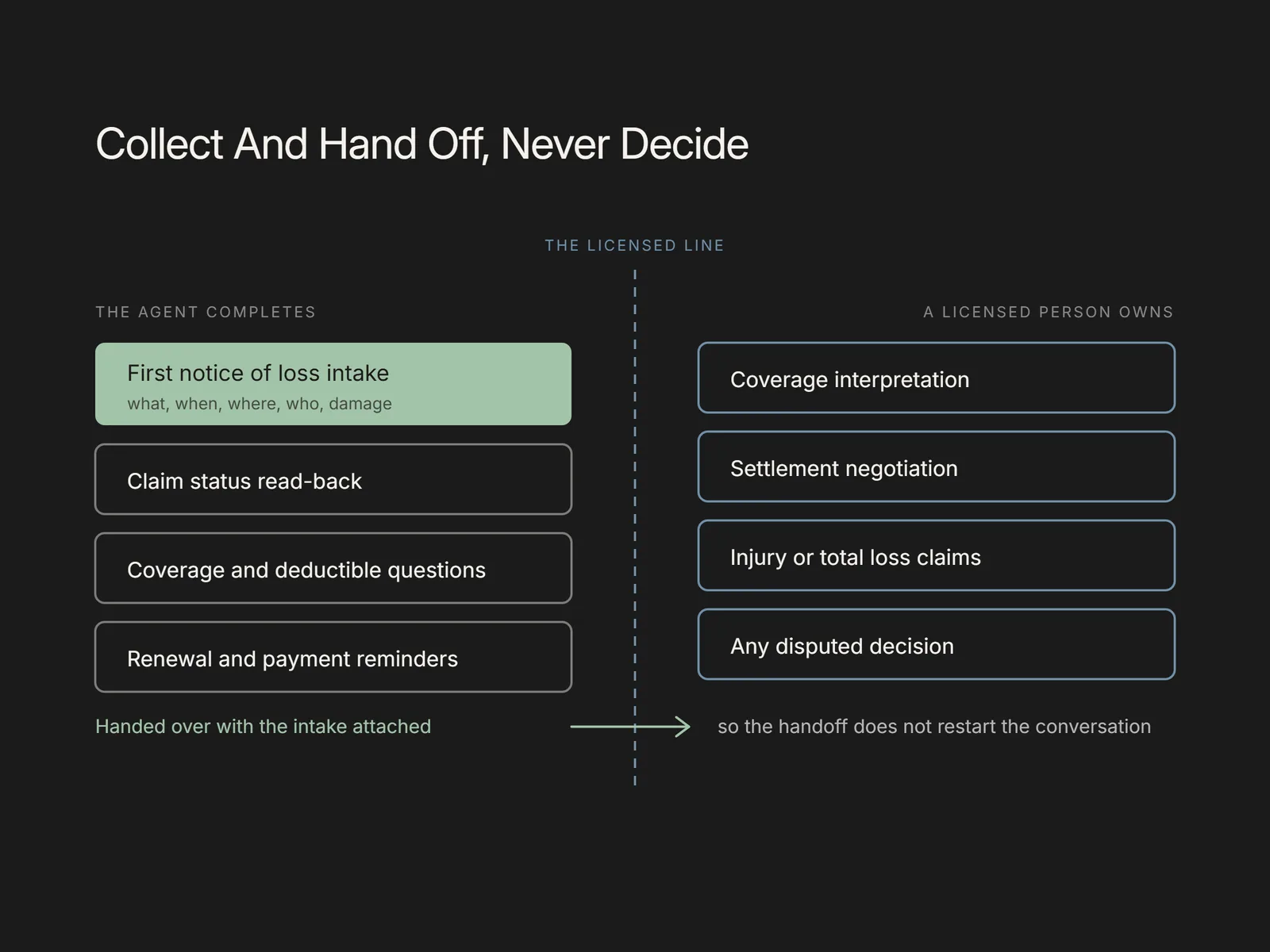
First notice of loss is the point where a claim begins, and it is well suited to a voice agent because the information needed is consistent from call to call. The agent answers, confirms the caller is the policyholder or an authorized party, and walks through the loss in order: what happened, when and where it happened, who was involved, and the extent of the damage or any injuries. It records each answer in a structured format rather than a free-text note, then creates or updates the claim in the system the team already uses. Capturing clean, complete intake at this stage matters, because a missing detail here becomes a follow-up call and a delay later. When the loss involves an injury, a likely total loss, or anything that needs a licensed adjuster, the agent routes the call to the right person with the intake already attached, so the handoff does not restart the conversation.
See what AI can run at your facility. In a 30-minute audit we map the calls, eligibility, and follow-ups Flexbone can take off your team first.
Book an auditHow do they handle claim status calls?
Claim status calls are high in volume and low in complexity, which makes them a good fit for automation. A policyholder wants to know where their open claim stands, and the answer usually lives in the claims system already. The agent verifies the caller's identity, looks up the claim, and reads back the current status in plain language: what stage it is in, what has been received, and what the next step is. If the caller asks something the record cannot answer, such as a negotiation over a settlement figure or a dispute about a coverage decision, the agent recognizes that the request is outside its scope and transfers to an adjuster rather than improvising. Because it can take these calls at any hour, status questions get answered without a policyholder waiting for business hours or sitting in a queue.
How do AI voice agents handle renewals and payments?
Renewals and payments are largely reminder and confirmation work, so a voice agent can place these calls as well as answer them. The agent can call a policyholder ahead of a renewal date to confirm the policy is continuing, flag a change in coverage, or remind them of an upcoming premium payment. It can answer inbound questions about when a payment is due, what a premium covers, and how to make a payment, reading the details from the policy record. For anything that touches sensitive payment handling, the agent follows the same discipline as the rest of the operation: it verifies identity first and stays inside a defined scope, and it hands off to a person or a secure process when a call requires it. The result is fewer missed renewals and fewer lapses caused by a reminder that never reached the policyholder.
Do AI voice agents replace insurance agents?
No. The point of a voice agent is to take the repetitive intake and status work off a team so licensed agents and adjusters spend their time where judgment is required: interpreting coverage, working complex claims, negotiating settlements, and handling difficult conversations. The agent gathers information, records it, and reads back what it has, then escalates anything that needs a person. It is built to collect and hand off, not to make coverage or payment decisions on its own, and a responsible deployment keeps a person in the loop for every decision that carries a licensed obligation. Compliance and verification are part of that design: the agent confirms who it is speaking with before sharing policy details and logs each call so a compliance team can review what was said and done. You can see the underlying capabilities on Flexbone features and read about how Flexbone runs voice agents end to end.
AI voice agents can take first notice of loss, answer claim status and coverage questions, run renewal and payment reminders, and handle verification calls for a property and casualty operation, resolving the routine ones and escalating the rest to your licensed staff. If you want to see what that could do for your team's call volume, book a call with Flexbone.