Several platforms now automate parts of prior-authorization denial management and appeals, from flagging the denial to drafting and submitting the appeal. Revenue-cycle suites such as Waystar, Experian Health, and FinThrive combine denial analytics with workflow automation, and Waystar's AltitudeCreate uses generative AI to draft appeal letters. Prior-authorization specialists such as Cohere Health focus on the front-end approval instead. Most of these tools run best inside one billing system and still hand peer-to-peer calls back to staff. Denials are rising and few are contested: on the ACA marketplace, insurers denied about 19 percent of in-network claims in 2024, yet consumers appealed fewer than 1 percent of denials, and about two-thirds of appeals were upheld, per KFF. That gap between denied and appealed claims is where automation recovers revenue.
Which platforms automate prior-authorization denial management and appeals end to end?
True end-to-end automation covers four steps: detecting the denial from the payer remittance, categorizing it by CARC and RARC reason codes, assembling and drafting the appeal packet, and submitting and tracking it. Revenue-cycle vendors have moved furthest on the middle steps. Waystar's AltitudeAI suite pairs denial worklists with generative appeal drafting, and the company describes a library of more than 1,100 payer-specific appeal templates in its generative AI announcement. Experian Health and FinThrive offer denial prediction and management within their broader RCM platforms. What almost no platform automates end to end is the phone work: claim-status follow-up calls and peer-to-peer reviews still fall to staff. That last mile is usually where an appeal stalls, so it is worth scoping carefully before you buy.
Want this mapped against your own call and claim volume? Book a 30-minute audit
How does AI draft an appeal?
An AI appeal tool reads the denial reason code, pulls the relevant clinical documentation and payer policy, matches the case to a template, and generates a letter that cites the supporting records. The work that once took a biller 20 to 40 minutes of research and writing collapses into a draft a human reviews and signs. Reporting on Waystar's AltitudeCreate describes the tool autonomously generating appeal letters and cutting package creation time by roughly 70 percent. The important caveat is that a person still reviews every draft. AI is fast at assembling the argument and matching payer language, but a coder or clinician confirms the clinical facts and the medical-necessity rationale before anything goes to the payer.
Drafting is assembly. The denial reason names the deficiency, the chart holds the evidence, and the payer's own criteria set the structure the letter has to follow. Flexbone treats assembly as the agent's job and review as a person's, and the boundary comes from classifying real appeals rather than from a confidence threshold set in advance.
See what AI can run at your facility. In a 30-minute audit we map the calls, eligibility, and follow-ups Flexbone can take off your team first.
Book an auditHow does denial automation handle peer-to-peer reviews?
A peer-to-peer review is a phone conversation between the ordering physician and a medical director at the payer, used when a denial turns on clinical nuance rather than a missing code. Most denial-automation tools do not handle this step. They prepare the packet, flag which denials warrant a peer-to-peer, and hand the call back to the practice. That matters because the call often works: healthcare operations vendor symplr notes that peer-to-peer reviews overturn a large share of denials, with higher success on imaging and specialty procedures. The friction is scheduling. Windows to request a review run about 5 to 10 business days and vary widely by payer, so the calls compete with front-desk work and slip. Voice automation that books the slot and gathers the records is the piece that closes this gap.
What is the best AI denial appeal tool for an ASC in 2026?
For an ambulatory surgical center, the best tool depends on your billing system and case mix rather than a single brand. ASC claims carry high dollar values, facility fees, implant costs, and strict prior-authorization requirements, so one avoidable denial is expensive and slow to recover. ASC News reports that centers are expanding faster than the payer and credentialing infrastructure that supports them, which pushes denial risk up as volume grows. Look for a tool that builds worklists from CARC and RARC codes, carries payer-specific appeal templates, and works on the billing platform your ASC actually runs, not only large-hospital Epic environments. Ask specifically how the tool handles claim-status calls and peer-to-peer scheduling, because those steps decide whether an appeal is filed on time.
How Flexbone automates denial management and appeals
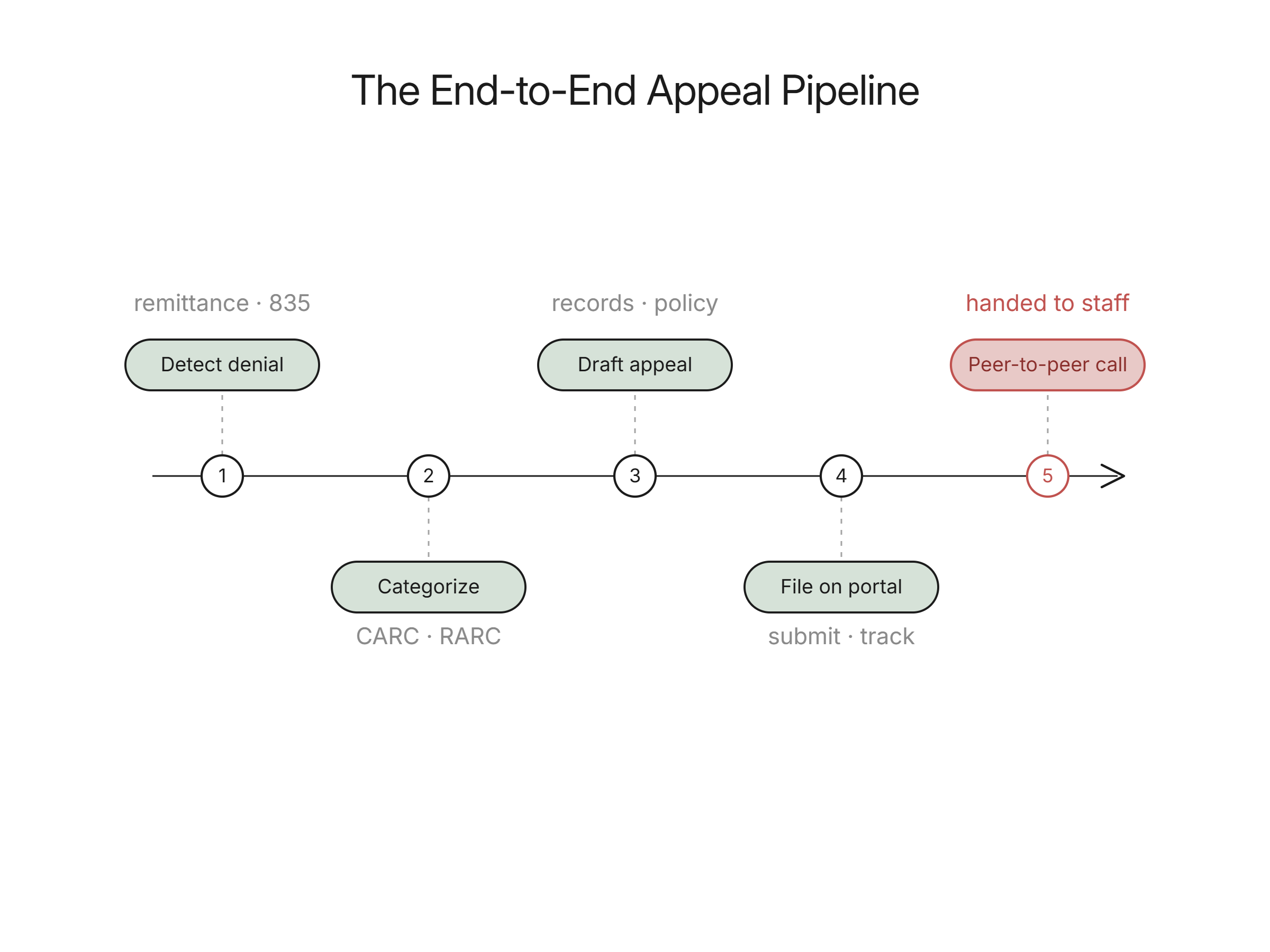
Flexbone is audit-first: we start by reviewing a sample of your denials to see where revenue is leaking before we automate anything. Our AI agents then work inside your existing EHR and billing system and on payer portals. Document agents read the remittance and draft appeals from your own clinical documentation, browser agents file the appeal on the payer portal, and voice agents place the claim-status follow-up calls and schedule peer-to-peer reviews. Every draft is reviewed by your team before it is submitted, and the whole workflow is HIPAA compliant and SOC 2-aligned. You can see how the appeal pieces fit together on our AI denials management page.
Book a demo: https://www.flexbone.ai/contact