An automated healthcare receptionist is an AI system that handles the routine front-desk work a practice would otherwise assign to a person: answering inbound calls, scheduling and rescheduling appointments, verifying insurance, capturing new-patient information, and answering common questions about hours, location, and forms. It works through voice on the phone and often through text and web chat, understanding natural language and acting inside the practice management system or EHR. The point is to keep the phones answered when staff are busy, because they frequently are. MGMA reports that phones remain a persistent bottleneck that costs practices time. An AI front desk absorbs that first-line volume and routes anything clinical or sensitive to a human, so patients get a fast answer and staff focus on the calls that need judgment.
What is an automated healthcare receptionist?
It is software that performs front-desk tasks conversationally, rather than a menu tree or a static chatbot. A caller speaks normally, the system understands intent, and it completes the task or transfers the call. The value is availability and consistency: patients increasingly expect to reach a practice on their own schedule, not only during office hours. MGMA reports that patients increasingly expect to book on their own schedule, not only by phone during office hours, and a receptionist who only works business hours cannot meet that. An AI front desk answers calls in parallel, applies the same scripting each time, and does not put a caller on indefinite hold. It complements staff rather than replacing the human judgment a front desk still needs for clinical triage and difficult conversations.
Want this mapped against your own call and claim volume? Book a 30-minute audit
What tasks can it handle?
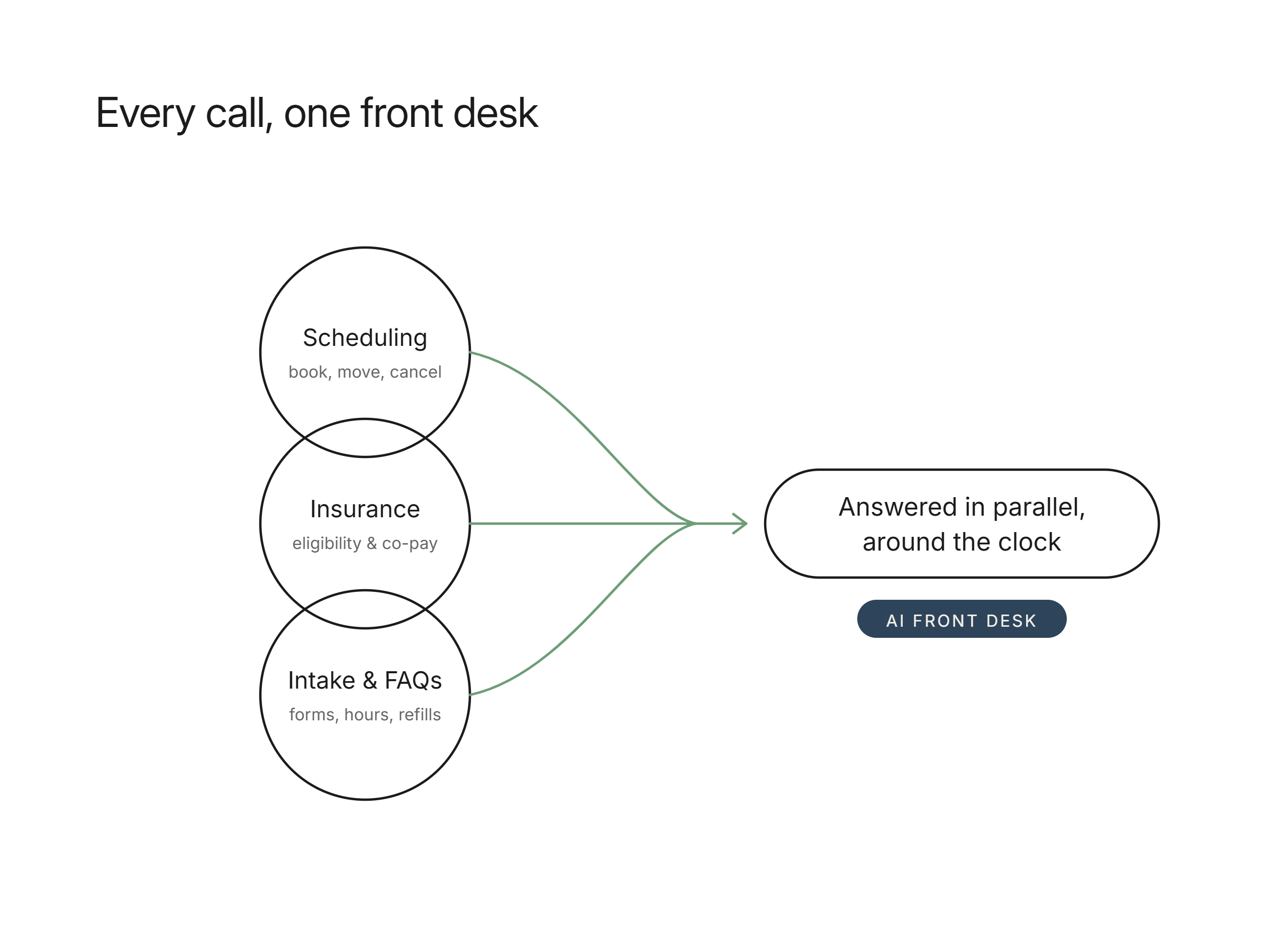
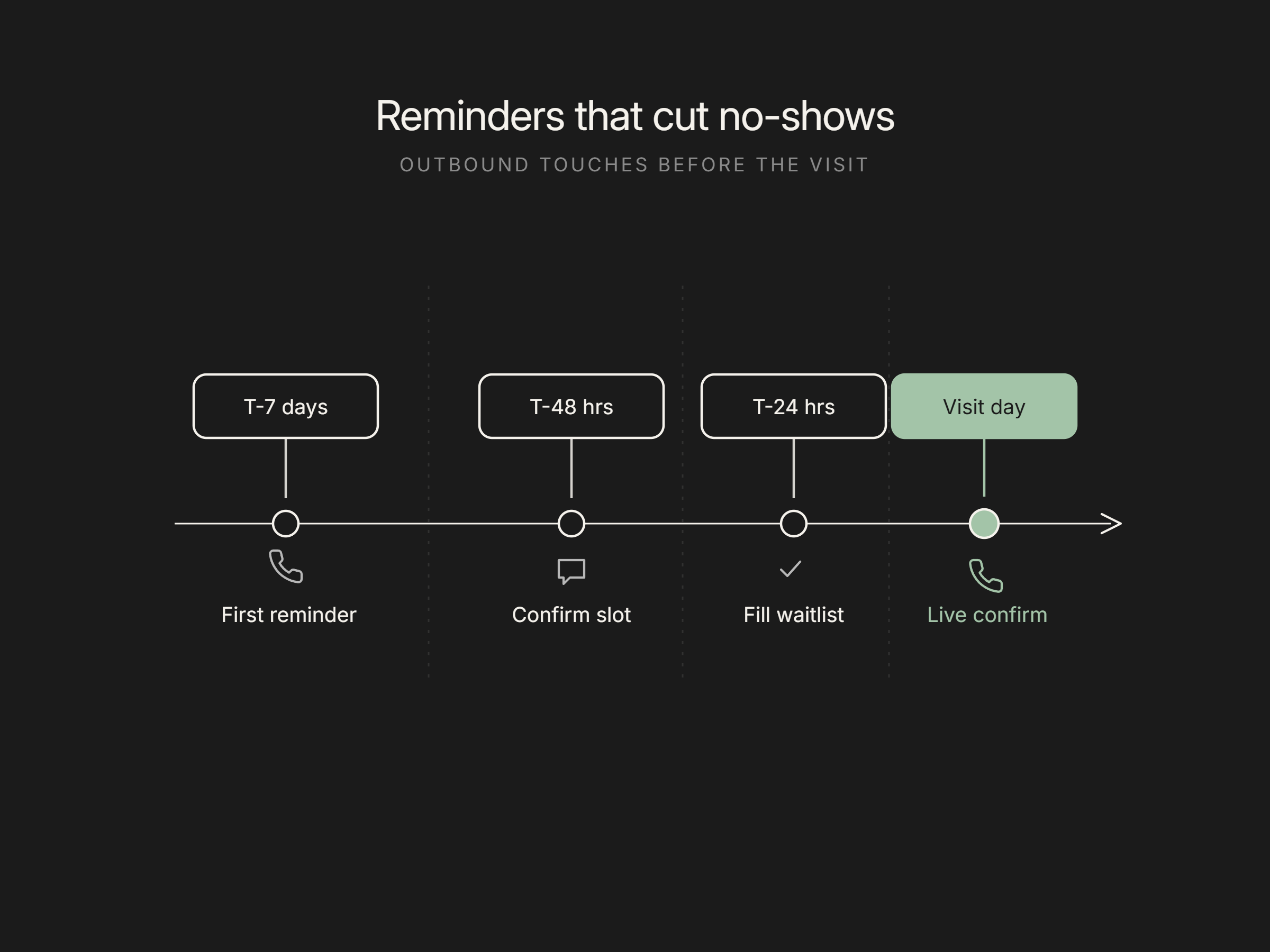
The core tasks are scheduling, rescheduling, and cancellations; appointment reminders and confirmations; insurance and eligibility questions; new-patient intake; prescription-refill and referral routing; and general FAQs. Scheduling is the highest-value one because it also protects revenue by keeping the calendar full. A systematic review of outpatient scheduling found that reminder and access improvements reduce no-show rates. An AI receptionist reads live availability, books into the correct provider and visit type, and writes the appointment back to the system of record, whether that is athenahealth, eClinicalWorks, NextGen, or Epic. For a coverage question it can run an eligibility check through the payer's 270/271 transaction rather than guessing. It can also run outbound work: confirming tomorrow's schedule, calling a waitlist when a slot opens, and following up on missed appointments. Anything outside its defined scope, a clinical question or a billing dispute, is handed to a person rather than answered by the machine.
The list is long because most front-desk calls are variations on a few transactions: book, move, cancel, confirm, and answer a policy question. Flexbone builds the agent around the transactions that appear most in the practice's own recordings and routes anything outside them to staff. See healthcare call automation.
See what AI can run at your facility. In a 30-minute audit we map the calls, eligibility, and follow-ups Flexbone can take off your team first.
Book an auditHow does it hand off to human staff?
A well-built AI front desk is designed around escalation, not around answering everything itself. It handles the routine volume and transfers the rest to a staff member with the call context attached: who the patient is, what they asked, and what the agent already did. That boundary is deliberate and increasingly expected by regulators. KFF's review of AI in coverage and care workflows notes that federal and state rules are moving toward required human oversight of automated decisions. In practice, the agent escalates on three triggers: a clinical or urgent question, low confidence in what the caller wants, or an explicit request for a person. The handoff is warm, meaning the human receives the transcript so the patient does not repeat themselves. Every interaction is logged for the team's morning review.
Is it HIPAA compliant?
An AI receptionist can be HIPAA compliant, but compliance is a property of the deployment, not a label the software wears by default. Because the system creates, receives, and stores protected health information on the practice's behalf, the vendor is a business associate and must sign a business associate agreement. HHS is explicit that a covered entity must have a contract binding the business associate to safeguard PHI. Beyond the paperwork, look for encryption in transit and at rest, access controls and audit logging, workforce training, and a breach-notification process. Ask where call recordings and transcripts are stored, who can access them, and how long they are retained. A vendor that treats HIPAA as a signed BAA plus documented technical safeguards, rather than a marketing claim, is the one to trust with patient calls.
How Flexbone runs an AI front desk inside your EHR
A generic answering service takes a message and stops. Flexbone deploys AI voice, browser, and document agents that resolve front-desk work inside your EHR: answering calls, scheduling and confirming, verifying coverage on payer portals, and escalating clinical or sensitive calls to your team with full context. The approach is audit-first, HIPAA compliant, and SOC 2-aligned, so every interaction leaves a transcript and an outcome you can review.
See it run against your workflows: book a demo, or read more about our AI patient coordinator.