Automating eligibility means confirming a patient's coverage and benefits before the visit without staff checking each patient by hand, and it runs on two channels. The first is the 270/271 EDI transaction: the practice sends a standardized eligibility inquiry (the 270) through a clearinghouse and reads back a coverage response (the 271) in real time, which works for most national payers. The second is the payer web portal, used for the plans that do not return a usable 271, where someone has to log in to read benefits, visit limits, and authorization rules. The 2024 CAQH Index estimates an $18.4 billion medical savings opportunity that remains because portal and phone checks are still manual. Automation handles both channels, writes structured results into the practice system, and routes exceptions to staff.
What is a 270/271 eligibility transaction?
The 270/271 is the standardized electronic pair that carries an eligibility question and its answer between a provider and a payer. The provider sends a 270 (Health Care Eligibility Benefit Inquiry) with the patient, plan, and service in question, and the payer returns a 271 with coverage status and benefit details. These are X12 EDI transactions, usually routed through a clearinghouse, and CMS publishes companion guides that define the exact fields for its own eligibility service in the HETS 270/271 companion guide. Because the format is standardized, a system can send thousands of 270s against tomorrow's schedule and parse every 271 into structured fields: active or inactive, plan, copay, deductible, and any prior-authorization flags. That structured output is what makes eligibility automatable in the first place.
Want this mapped against your own call and claim volume? Book a 30-minute audit
Why do some payers force portal-only checks?
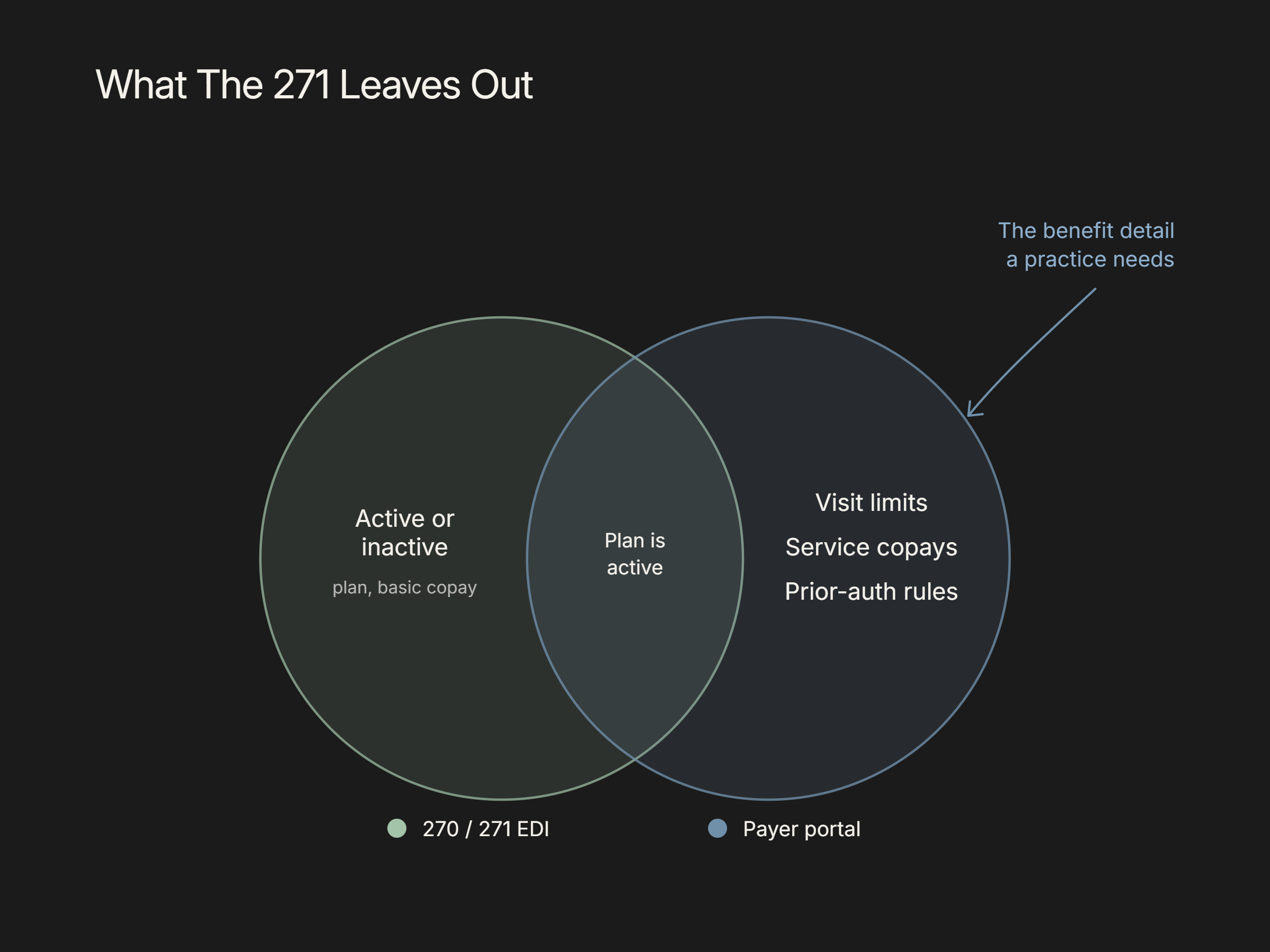
Some payers return a 271 that is technically valid but thin, missing the benefit detail a practice actually needs, so the only way to get that detail is the payer's web portal. The 271 might confirm the plan is active yet omit visit limits, service-specific copays, or whether the scheduled procedure needs authorization. Portals fill that gap, but each one has its own login, layout, and rules, which is part of why administrative spending kept rising even as electronic adoption grew, a pattern documented in the 2024 CAQH Index report. For a biller, this means a portal-only payer turns a two-second EDI check into a multi-minute manual task, repeated for each patient on that plan. Regional Medicaid managed-care plans and some commercial plans are common examples in the practices we work with.
A portal-only payer is not a harder problem, only a different interface: the same question, answered through a browser instead of a transaction. Flexbone runs browser agents for exactly this case, on the same portals staff already use, and it audits which payers fall into it before building anything.
See what AI can run at your facility. In a 30-minute audit we map the calls, eligibility, and follow-ups Flexbone can take off your team first.
Book an auditHow do you automate portal-only payers?
You automate portal-only payers with a browser agent that logs into each payer site, runs the same search a biller would, and reads the benefit page into structured fields. The agent navigates the portal, enters the member ID and service, captures coverage, cost share, and authorization requirements, then reconciles that against any partial 271 so the record has one clean answer. The reliability of this depends on consistent inputs, which is why the federally adopted CAQH CORE operating rules for eligibility matter for the EDI side and set the baseline the portal work has to match. A capable setup decides per payer and per benefit which channel to use, so EDI carries the volume and the portal agent handles only what EDI cannot return.
How does eligibility connect to the claim?
Eligibility connects to the claim as its first line of defense: a coverage detail missed before the visit becomes a denial after it. When a plan is inactive, the service is not covered, or an authorization requirement goes unnoticed, the claim gets rejected and the practice reworks it or writes it off. Registration and eligibility errors are consistently the leading source of denials, a pattern reporting has tracked for years and summarized in coverage of patient-access and registration denial data. Automating eligibility across both EDI and portals moves that check upstream, where a flagged authorization requirement or a dead plan can be resolved before the patient arrives. The structured result also feeds the claim itself, so the plan, copay, and authorization number are already on the record when billing goes to submit.
How Flexbone automates eligibility end to end
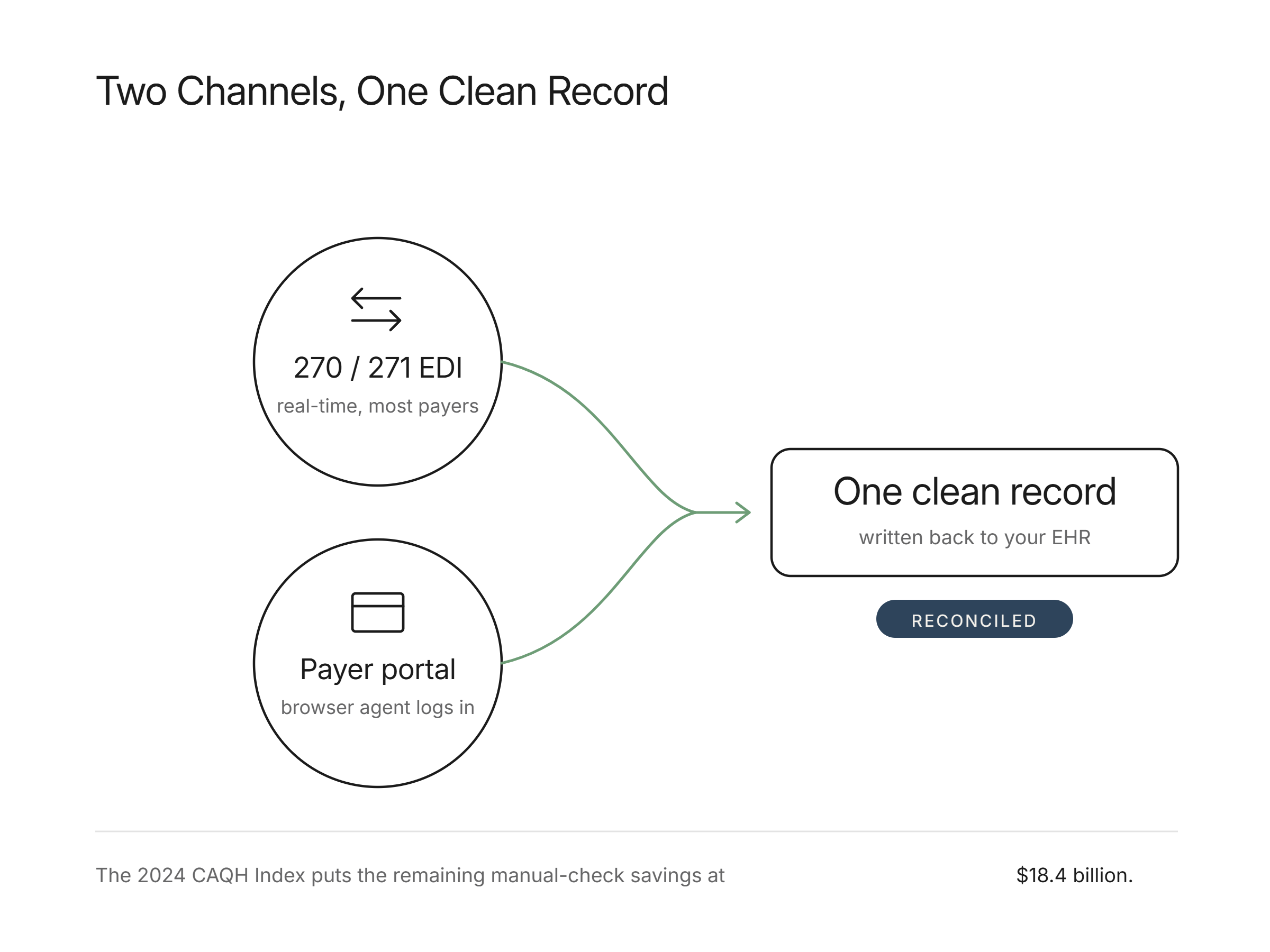
Most eligibility tools stop at the 270/271 and leave the portal-only payers, the hardest and most manual part, to your staff. Flexbone deploys AI browser and document agents that run both channels inside your EHR: EDI inquiries plus payer-portal logins for the plans that do not return usable benefits, reconciled into structured fields with prior-authorization flags and patient responsibility written back to the record. The approach is audit-first, HIPAA compliant, and SOC 2-aligned, with exceptions routed to your team rather than trusted blindly.
See it run against your payer mix: book a demo, or read more on insurance eligibility verification.