
Coordination of benefits determines which plan pays first when a patient has more than one. A coordination of benefits denial happens when the payer believes another plan is primary, or when the patient's coordination of benefits information is missing or outdated on file. In both cases the payer will not process the claim until the order of liability is clear. Resolving it means confirming which plan is primary, getting the coordination of benefits record updated with the patient or the payer, and rebilling the correct plan in the right order. Preventing it means capturing every plan a patient carries at registration and verifying coverage before the claim goes out.
What is coordination of benefits?
Coordination of benefits, often shortened to COB, is the set of rules that decides the order in which two or more health plans pay for a patient's care. When someone is covered by more than one plan, one plan is designated primary and pays first, and the other is secondary and may pay part of what the primary did not, without the plans paying more than the total allowed amount between them. A patient can hold multiple plans for ordinary reasons: coverage through two employed spouses, a child on both parents' plans, active employment alongside Medicare, or an accident that brings in auto or workers' compensation coverage. Coordination of benefits sorts out who pays first so a claim can be adjudicated cleanly, which ties directly to coordination of benefits work during registration and eligibility.
Want this mapped against your own call and claim volume? Book a 30-minute audit
Why do coordination of benefits denials happen?
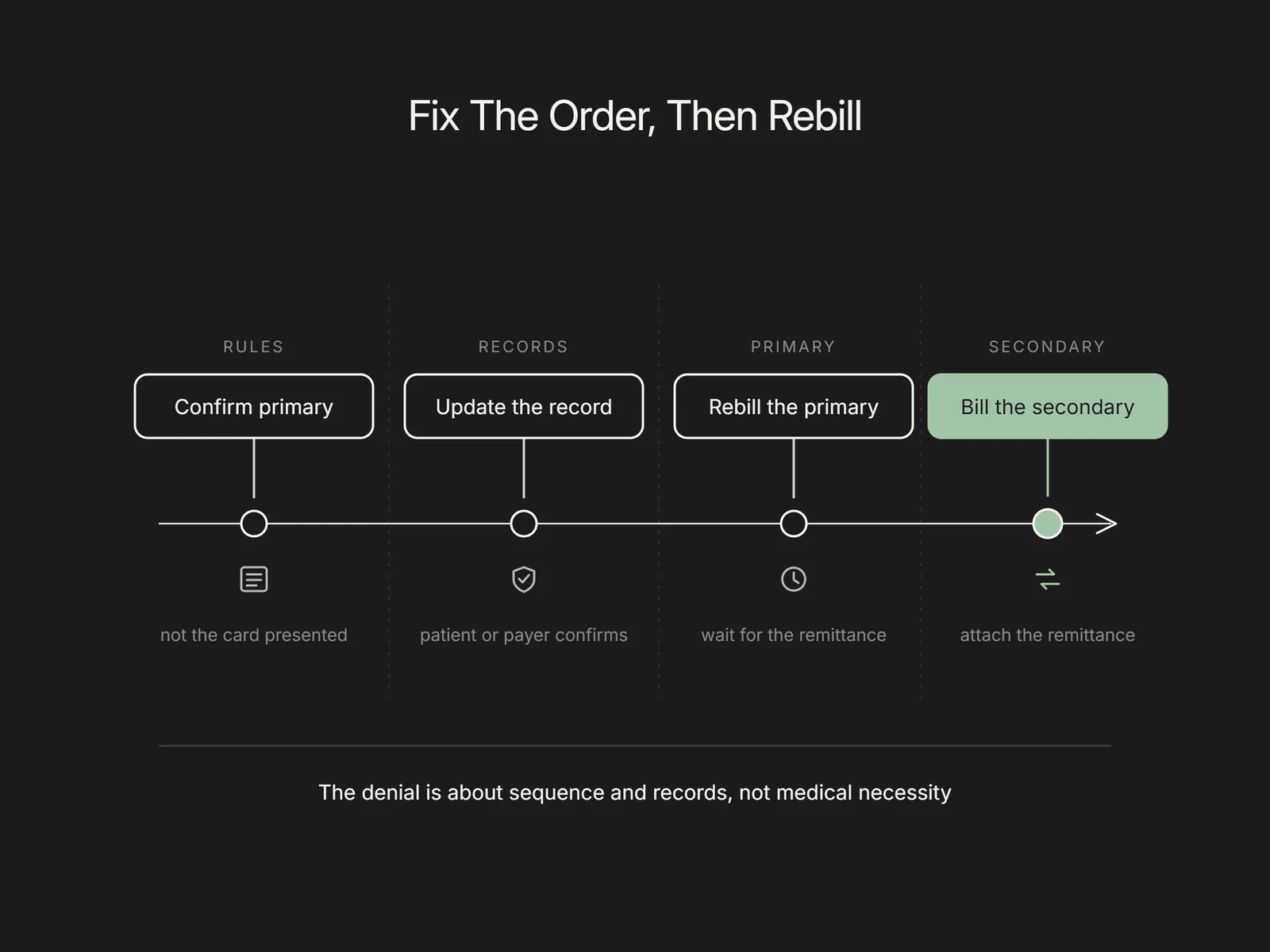
A coordination of benefits denial usually comes down to a mismatch between what the payer expects and what it has on file. One common cause is that the claim was sent to the wrong plan first, so the payer that received it believes another plan is primary and will not process it until the primary pays. Another is a missing or outdated coordination of benefits record: the payer suspects the patient has other coverage but has not received confirmation of the order of liability, so it holds the claim rather than paying it. Payers often ask the patient to confirm or update their coordination of benefits information directly, and until the patient does, claims keep bouncing. Other triggers include a plan change the provider did not know about, a newborn added to a second plan, or a Medicare Secondary Payer situation the billing system did not flag. In each case the underlying service may be fully covered: the denial is about sequence and records, not medical necessity.
How do you determine which insurance is primary?
Order of liability follows coordination rules, not the patient's preference or which card they handed over. A few general principles cover most situations. When a person is the subscriber on one plan and a dependent on another, the plan where they are the subscriber typically pays first. For a child covered by two parents, the birthday rule applies: the parent whose birthday falls earlier in the calendar year, judged by month and day rather than year of birth, holds the primary plan, and the other parent's plan is secondary. Custody orders or a divorce decree can override the birthday rule, so those cases are checked on their own. Active employer coverage generally pays before retiree, COBRA, or continuation coverage. Medicare has its own framework under the Medicare Secondary Payer rules, which set out when Medicare pays first and when it pays second, for example when a patient is still working and covered by an employer group health plan, or when workers' compensation or a liability insurer is responsible for the care. The reliable move is to confirm each plan's role against these rules before billing.
See what AI can run at your facility. In a 30-minute audit we map the calls, eligibility, and follow-ups Flexbone can take off your team first.
Book an auditHow do you resolve a coordination of benefits denial?
Work a coordination of benefits denial in a set order. First, confirm which plan is genuinely primary using the coordination rules above, so you are correcting toward the right answer rather than guessing. Second, compare that against what the patient's file and each payer have on record. If the claim went to the wrong plan, rebill the correct primary payer. If the coordination of benefits record is missing or stale, it has to be updated before claims will move, and that often means the patient calling the plan to confirm they have no other coverage, or to state which plan is primary. Once the record matches reality, resubmit to the primary plan, wait for the primary remittance, then bill the secondary plan with that remittance attached so it can coordinate its share. Watch the timely-filing clock throughout, because a claim that ping-pongs between two plans can quietly age past a filing deadline, and appealing later is easier when the corrected records and the reason for the delay are documented. Where the denial is one of many, feeding it into a structured AI denials management process keeps the corrected records, resubmission, and secondary billing from falling through the cracks.
How do you prevent coordination of benefits denials?
Most coordination of benefits denials are preventable at the front of the visit. Prevention starts at registration by asking each patient whether they carry more than one plan, and capturing subscriber, member ID, group, and relationship details for each plan rather than only the card presented first. Eligibility verification does the confirming work: an electronic eligibility inquiry through the 270/271 transaction, the standardized health plan eligibility benefit inquiry and response used across the industry, confirms that coverage is active for the date of service and can surface a second plan or a Medicare Secondary Payer flag before a claim ever goes out, as described in the CMS eligibility transaction standard. Keeping the coordination of benefits record current matters just as much as capturing it once, since coverage changes when a patient switches jobs, ages onto Medicare, or adds a dependent, and a record that was correct last year can trigger a denial this year. Front-end insurance eligibility verification is where this happens in practice. The payoff is meaningful, because denials in general are common: an analysis of HealthCare.gov plans found that insurers denied 20% of in-network claims in 2023, yet patients appealed fewer than 1% of those denials, per KFF's review of ACA marketplace denials. Catching coordination of benefits issues before the claim goes out keeps them out of that denied pool in the first place.
If you want to map exactly what AI can take off your coordination of benefits and denials work, book a call with Flexbone and we will start by reviewing a sample of your current denials to see where the order of liability is breaking down.