Cost per contact is your total contact-center operating cost for a period divided by the number of contacts handled in that same period. If a team spends $180,000 in a month and handles 30,000 calls, the cost per contact is $6.00. Reported benchmarks vary widely by channel and complexity; one industry reference puts the average cost per contact near $7.16 Klipfolio. Phone contacts usually cost more than chat or email because they take an agent's full attention. To lower the number, you either reduce the cost side (labor, overhead, handle time) or move a share of simple contacts to automation, which pulls down the blended average. This page gives the formula, a worked example, realistic benchmarks, and the automation-share math behind that blended figure.
How do you calculate cost per contact?
Use one formula: cost per contact = total operating costs / total number of contacts, measured over the same period. Total operating costs include agent wages and benefits, supervisor and QA time, telephony and software, facilities, and a share of overhead. Contacts are the interactions handled across the channels you are measuring. For a worked example, a center spending $250,000 a month that handles 50,000 contacts runs at $5.00 per contact, inside the $2.70 to $5.60 range one analysis reports for higher-volume operations MaestroQA. Decide once whether you count only resolved contacts or every attempt, and whether you blend channels or measure each separately, then hold that definition steady so month-over-month comparisons mean something.
Want this mapped against your own call and claim volume? Book a 30-minute audit
What is a good cost-per-contact benchmark?
There is no single right number, because cost per contact tracks channel mix, product complexity, and the local labor market. As a rough guide, phone support commonly lands in the mid single digits to low double digits per call, while self-service sits far lower. Nextiva's 2026 cost analysis puts general call handling around $6 per call, with small and midsize operations near $3 to $5 and complex, high-touch support reaching $10 or more Nextiva. Compare your number against your own channel and vertical rather than a global average. A BPO handling simple order status can and should run cheaper per contact than an insurance team handling claims disputes or a healthcare team handling benefits questions.
For comparison, Flexbone's automated calls are priced per completed call, $2 to $6 depending on volume, plus a platform fee. The ranges are on pricing.
See what AI can run at your facility. In a 30-minute audit we map the calls, eligibility, and follow-ups Flexbone can take off your team first.
Book an auditWhat goes into the true cost of a call?
The sticker cost of an agent's time is only part of it. Agent pay is the largest single line item: the U.S. Bureau of Labor Statistics reports a median wage for customer service representatives of $20.59 an hour, about $42,800 a year, as of May 2024 U.S. Bureau of Labor Statistics. The true cost of a call includes those wages and benefits, but also the supervisory, quality, training, and workforce-management layers that keep the floor running, plus telephony, software licenses, facilities, and idle or occupancy losses. Handle time is the multiplier: every extra 30 seconds of average handle time raises cost per contact across the whole queue. Repeat contacts hide more cost, because a problem that takes two or three calls to resolve multiplies the per-issue price. As one breakdown notes, teams that judge cost per call on wages alone routinely understate the real figure Loris. Measuring resolution, not just call count, is what surfaces the hidden spend.
How much can automation cut cost per contact?
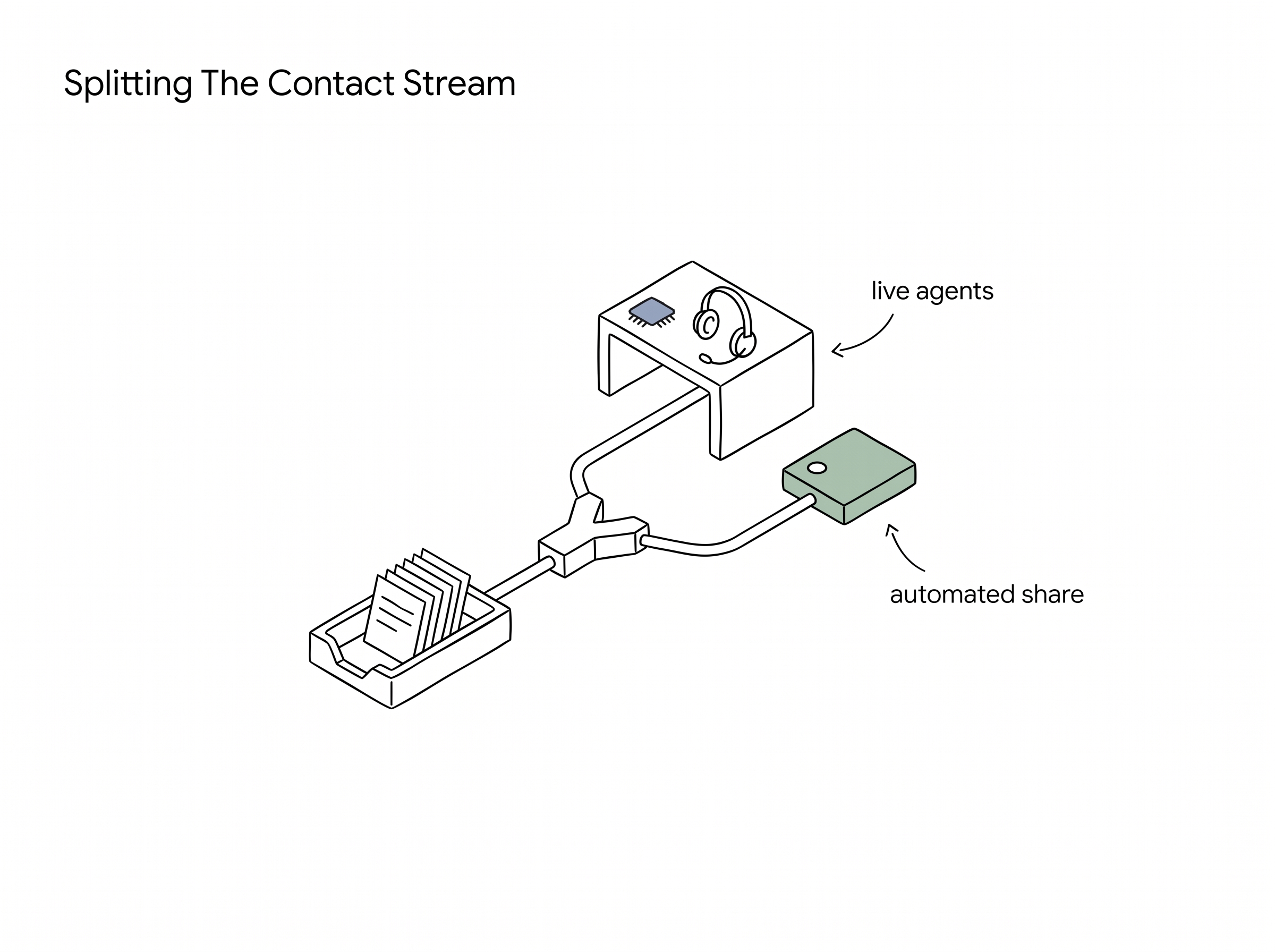
Automation lowers the blended cost per contact by moving a share of simple, repeatable contacts off live agents. The mechanism is arithmetic. Suppose live handling costs $6 per contact and an automated self-service session costs a fraction of that; industry figures put an IVR self-service session at roughly six times cheaper than a call reaching an agent Contact Centres. If automation resolves 30 percent of 100,000 monthly contacts, 70,000 stay at $6 (that is $420,000) and 30,000 shift to about $1 (that is $30,000), so the blended cost per contact falls from $6.00 to roughly $4.50. The size of the drop depends on two things: the share you can safely contain, and the true resolved cost of each automated contact. Resolution matters here too, because a contained contact that bounces back to an agent costs you both.
How Flexbone lowers your cost per contact
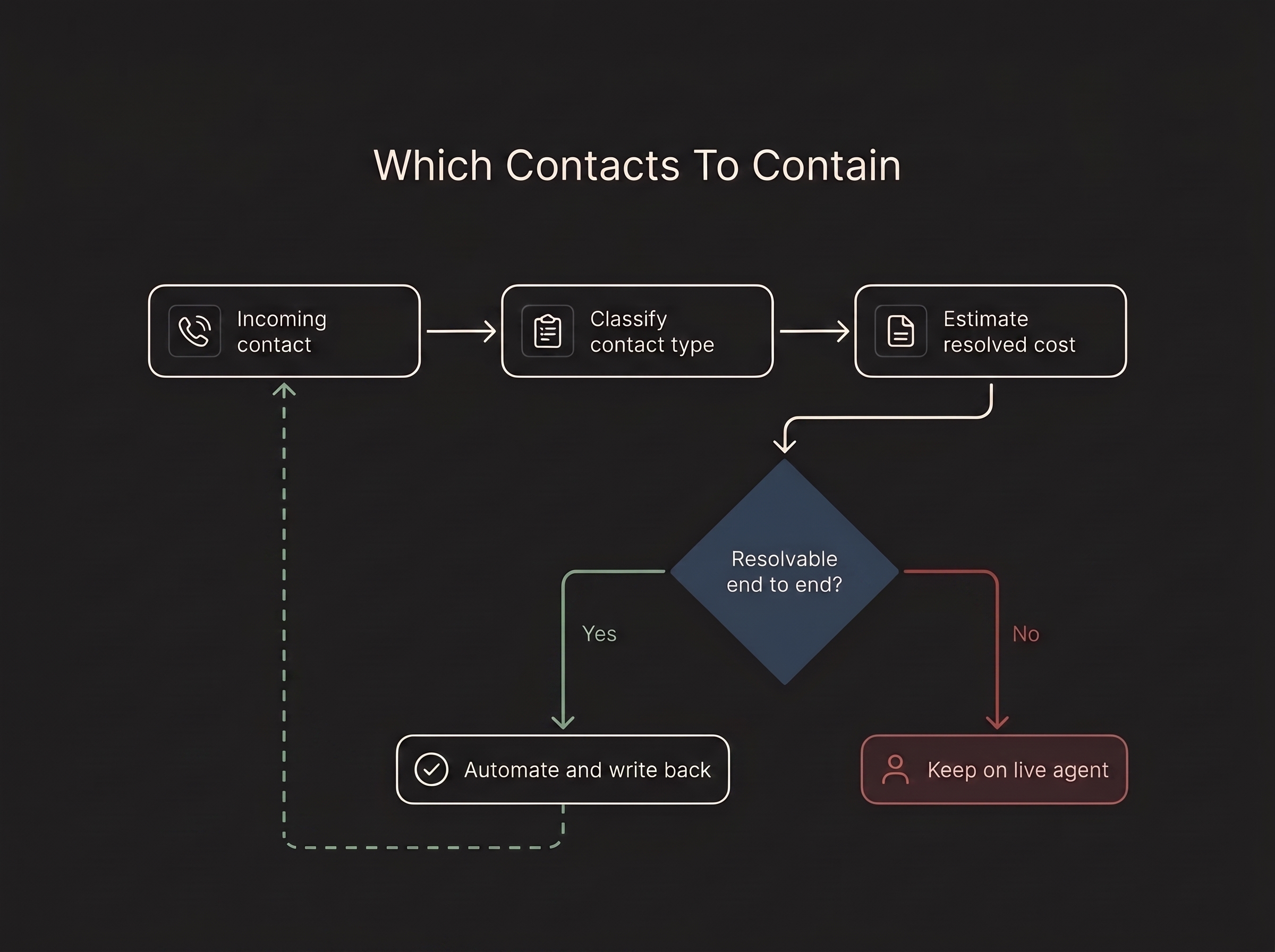
Most cost-per-contact advice stops at "reduce handle time" or "add self-service." The harder part is containing the right contacts without pushing frustrated callers into repeat calls that erase the savings. Flexbone runs an audit first: we measure your current cost per contact by channel and contact type, then identify which tier-1 volume (order status, eligibility checks, balance and status questions, routine scheduling) can be resolved end to end by an AI voice, chat, or document agent rather than merely routed. We build agents that resolve those contacts and write the outcome back to your systems, so a contained contact stays contained. The goal is a lower blended cost per contact with resolution holding steady, across BPO, insurance, healthcare, and public-sector queues.
See what your blended cost per contact could be: book a demo, or read more about our AI patient coordinator.