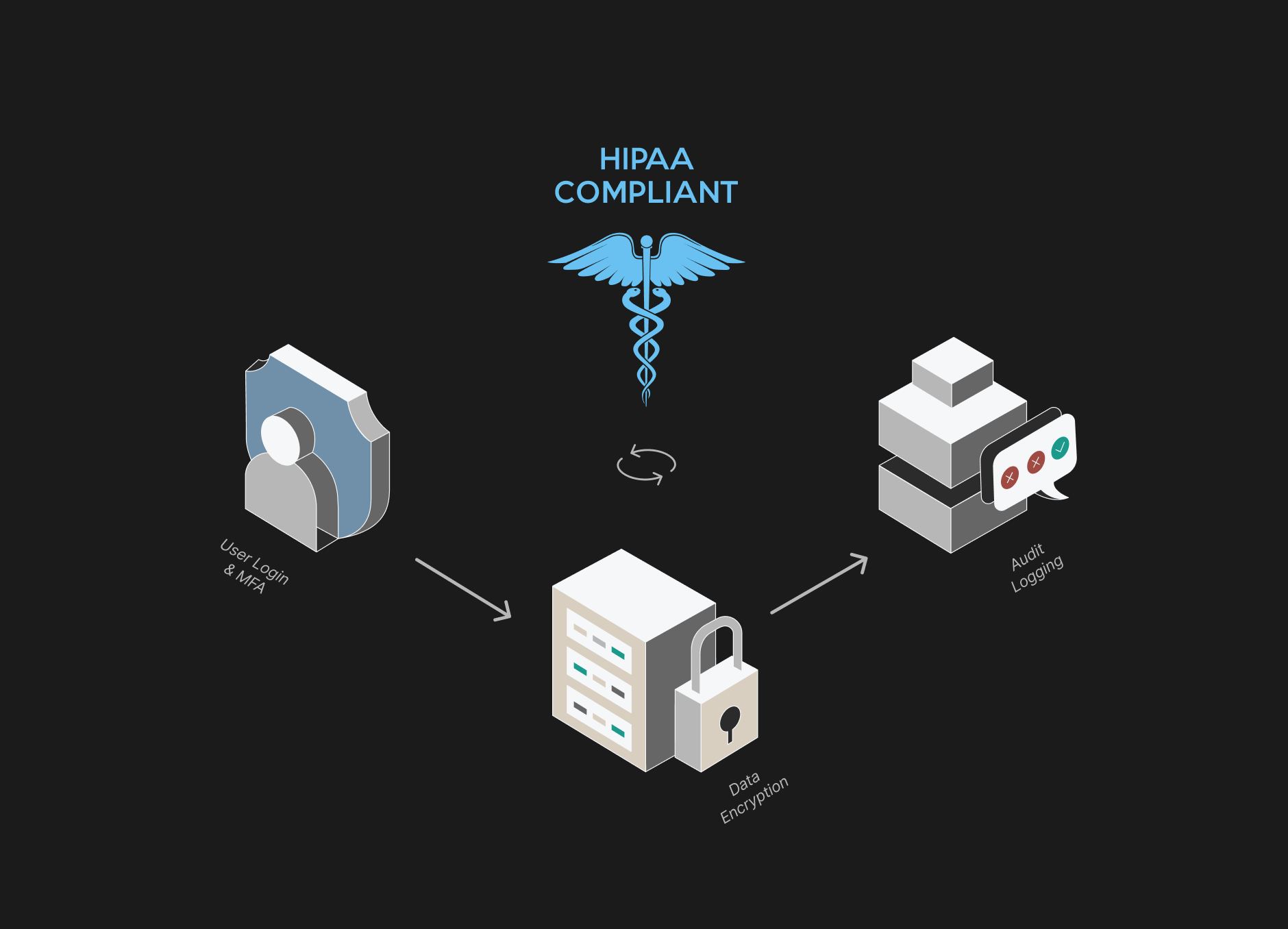
Flexbone has achieved HIPAA compliance. Because our AI agents handle eligibility, prior authorization, and billing, they process electronic protected health information every day, so we built the platform to safeguard that data at every layer. This post explains what HIPAA requires and how our systems meet it.
The Health Insurance Portability and Accountability Act (HIPAA), enacted in 1996, laid the foundation for securing patient health information and simplifying healthcare administration. With the introduction of the HIPAA Privacy Rule (2003) and Security Rule (2005), the stakes were raised for anyone handling electronic protected health information (ePHI), especially as digital systems and AI tools have become deeply embedded in healthcare workflows.
Today, HIPAA-compliant AI software must not only safeguard sensitive patient data but also do so at the scale and speed modern healthcare demands. Flexbone’s AI agents, which handle tasks such as eligibility verification, prior authorization, and billing, routinely process large volumes of sensitive information across payors, providers, and clearinghouses. This level of access makes rigorous compliance non-negotiable.
Flexbone’s systems are built from the ground up with HIPAA compliance in mind. We enforce strict access controls, encryption standards, and secure data storage policies. Our platform limits access to the minimum necessary data required for each task and conducts regular internal audits, compliance reviews, and penetration tests to maintain integrity and trust.
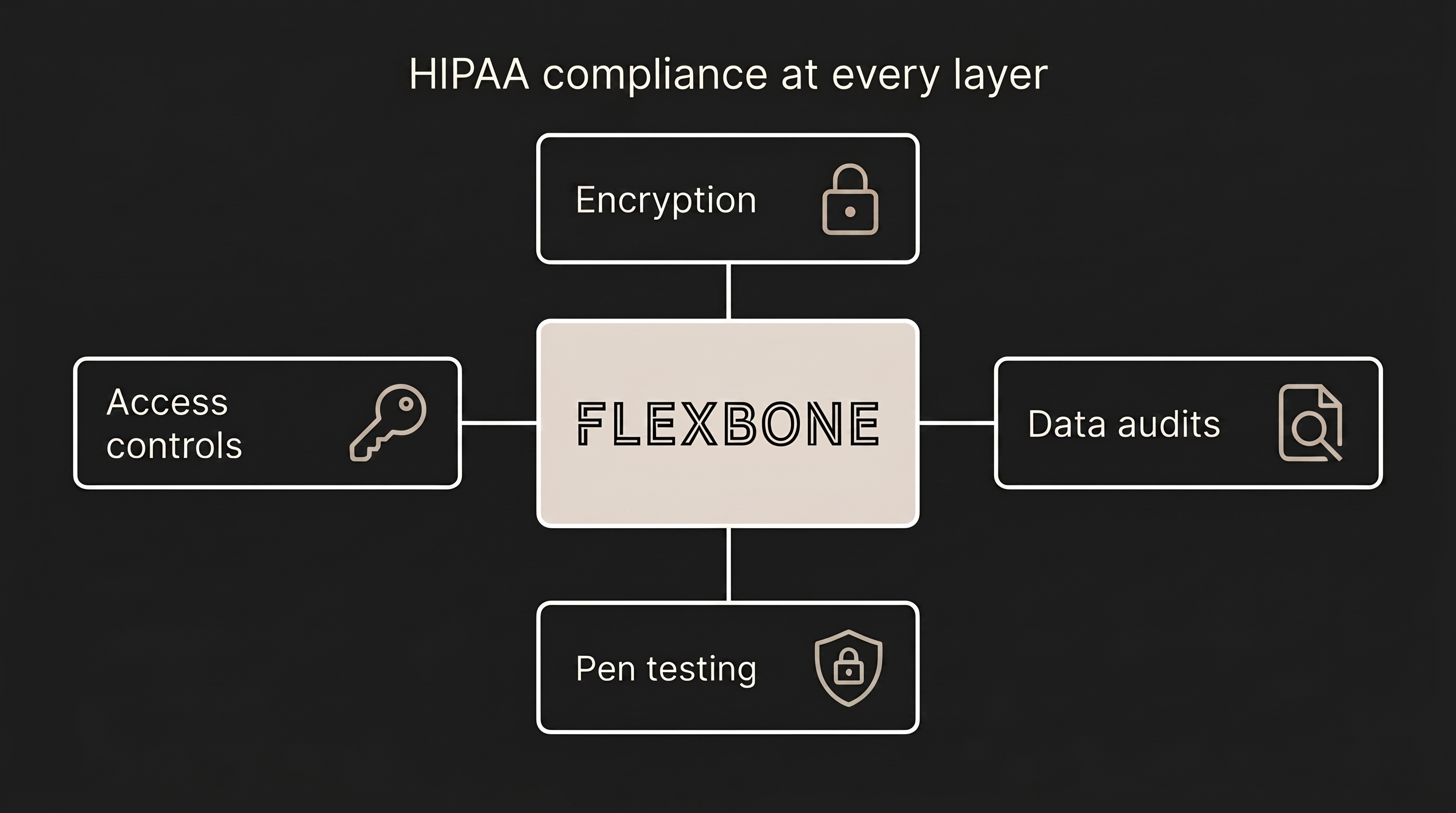
Flexbone achieves HIPAA compliance by combining secure infrastructure, rigorous operational controls, and a commitment to patient privacy. From the moment data enters our system, it is protected at every layer, ensuring that our HIPAA compliant AI software earns and retains the trust of every healthcare partner we serve.