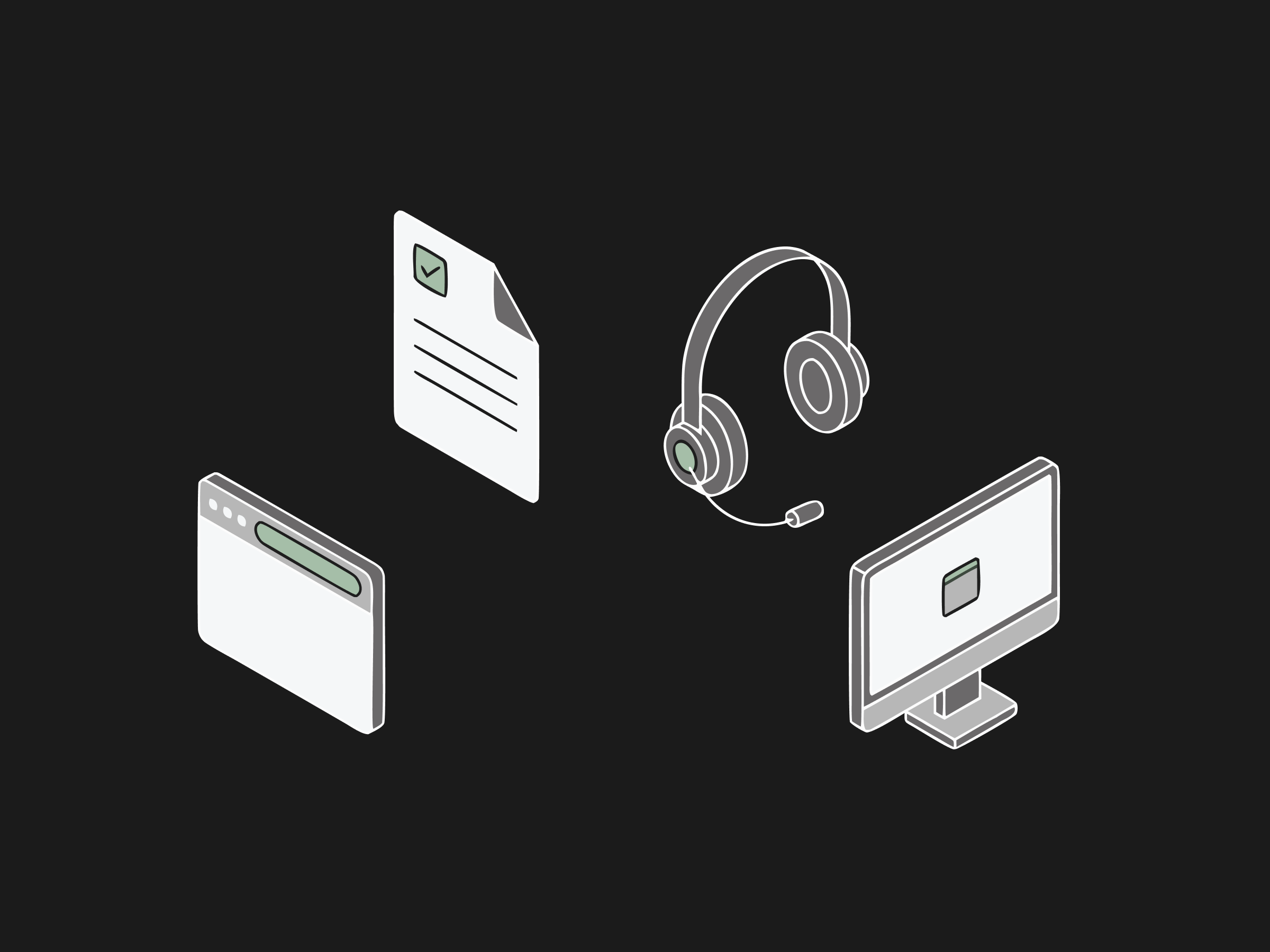
When people hear "AI agent," they usually think of a chatbot. That's not what we build. Flexbone deploys four distinct types of agents, each designed for a specific category of operational work. They can run independently or together, depending on what the audit reveals.
Voice Agents
Voice agents handle inbound and outbound phone calls. They're built on a state machine architecture, not a prompt chain, which means calls follow a deterministic flow with AI handling the natural language understanding and generation within each state.
A voice agent for a dental practice handles scheduling, rescheduling, cancellations, and insurance verification questions. A voice agent for a freight broker handles carrier check calls and load confirmations. Same architecture, completely different training data and business logic.
The key distinction: voice agents don't just transcribe and respond. They take actions, updating the schedule in the EHR (Epic, athenahealth, or whatever the practice runs), flagging a claim, sending a confirmation. The call is the trigger; the work happens in the background. Because that work touches protected health information, the agents run inside a HIPAA-compliant environment with a full audit trail.
Want this mapped against your own call and claim volume? Book a 30-minute audit
Document Agents
Document agents process paperwork. Faxes, PDFs, scanned forms, insurance EOBs, referral letters, the kind of documents that pile up in every back office.
These agents extract structured data from unstructured documents, classify them by type, route them to the right queue, and in many cases complete the downstream data entry automatically. A document agent processing a prior authorization denial can extract the denial reason (often a CARC code), match it to the original claim, draft the appeal letter, and flag it for human review, all within minutes of the fax hitting the server.
Prior authorization is slow and paper-heavy by design. The Centers for Medicare and Medicaid Services now requires affected payers to return decisions within 72 hours for urgent requests and seven calendar days for standard ones, and to stand up an electronic prior authorization API, per its Interoperability and Prior Authorization final rule. Until those APIs are live everywhere, much of the back-and-forth still arrives by fax, which is exactly the surface a document agent clears.
See what AI can run at your facility. In a 30-minute audit we map the calls, eligibility, and follow-ups Flexbone can take off your team first.
Book an auditBrowser Agents
Browser agents operate inside web applications, EHRs, practice management systems, payer portals, any browser-based tool your team uses. They navigate the UI, fill forms, click buttons, and extract data, exactly the way a human would but without the fatigue.
This matters because a lot of healthcare and enterprise software has no API for the workflows that eat the most time. Eligibility checks (the 270/271 transaction) on a payer portal like Availity? Manual. Prior auth status lookups? Manual. Pulling a report from a legacy system? Manual. Browser agents handle these by interacting with the application directly.
Desktop Agents
Desktop agents extend browser automation to native desktop applications, legacy systems that only run on Windows, thick-client EHRs, terminal-based software. They use screen recognition and input simulation to operate applications that were never designed for integration.
This is the agent type that often goes unidentified until the audit reveals how much time staff spends in a 20-year-old desktop application that has no API and no export function.
When to use what
The audit determines which agent types apply. In our deployments, clients start with one or two agent types and expand as the ROI becomes clear. A typical deployment might begin with a voice agent handling after-hours calls and a document agent processing faxes, then add a browser agent for eligibility verification once the team sees how the first two perform.
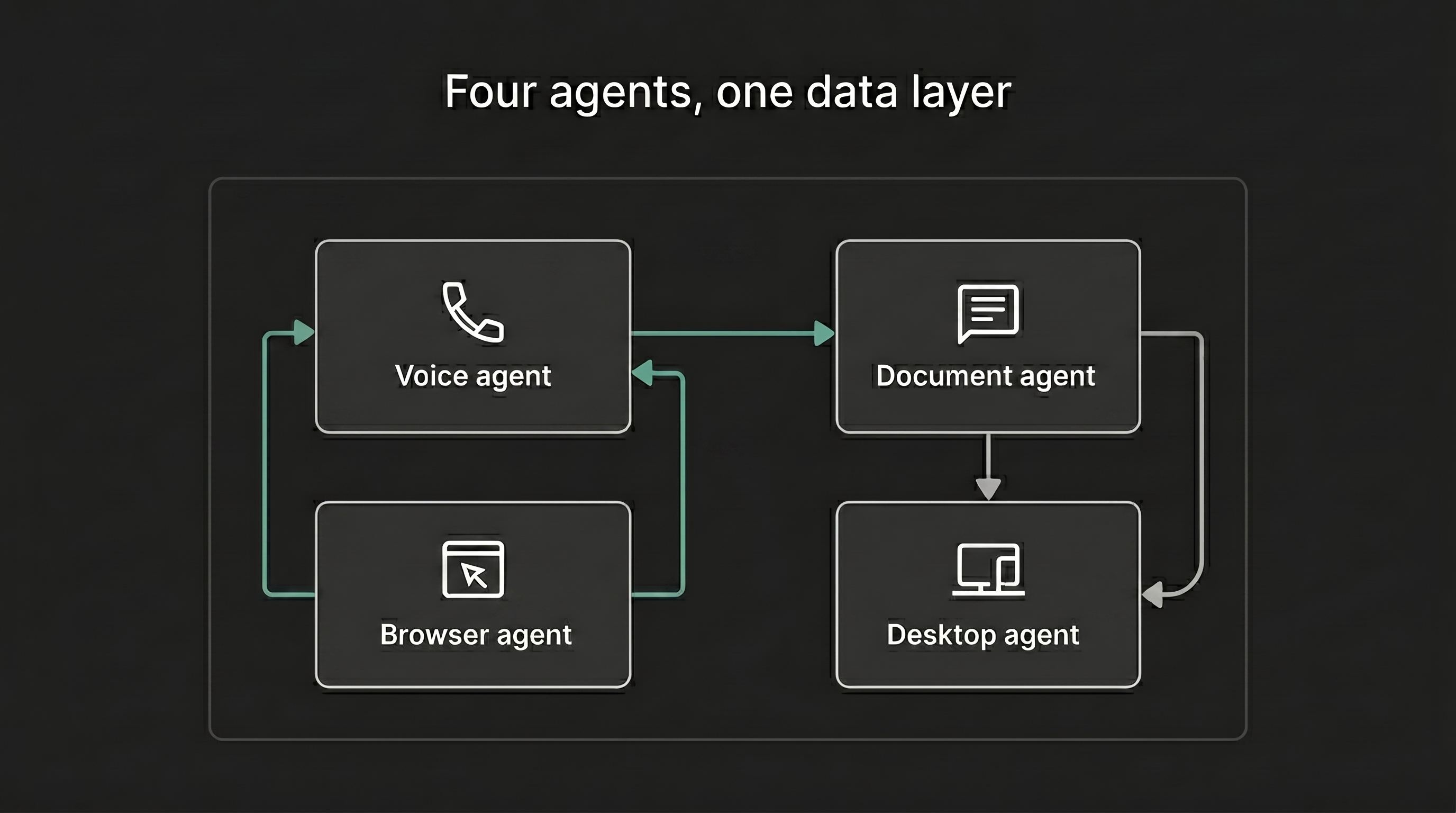
The agents share a common data layer, so a voice agent can trigger a document agent (e.g., "let me send you that form") and a browser agent can feed results back to a voice agent (e.g., real-time eligibility lookup during a call). The architecture is designed for composition.
Want to see which agent types fit your operation? Start with an audit.