IVR containment rate is the share of inbound contacts that an automated system fully resolves without transferring to a live agent. The formula is contained contacts divided by total inbound contacts, times 100. If 40,000 of 100,000 monthly calls are handled end to end by the IVR, containment is 40 percent. Benchmarks vary by call complexity and the capability of the system: traditional IVRs commonly contain 20 to 40 percent of contacts, while AI-driven voice deployments reach higher Teneo. Containment is not the same as deflection, and a high number only helps if the contained calls are actually resolved rather than abandoned. This page gives the formula, realistic benchmarks, the containment-versus-deflection distinction, and why legacy IVRs contain so little.
How do you calculate IVR containment rate?
Containment rate = (contacts fully handled by the IVR / total inbound contacts) x 100, over a set period. A contact counts as contained only if the caller completes their task inside the automated system and does not opt out to an agent or call back about the same issue. Count an immediate transfer as not contained, and be careful with abandons: a caller who hangs up inside the IVR is not a resolved contact, even though they never reached an agent. As self-service containment guidance notes, the metric is only meaningful when you exclude calls that escaped to a human or bounced back later Umbrex. Measure containment by call reason, because a single blended number hides which intents your automation actually handles.
Want this mapped against your own call and claim volume? Book a 30-minute audit
What is a good containment benchmark?
A good containment benchmark depends on what your automation is asked to do. For routing-only IVRs, containment in the 20 to 40 percent range is typical, and the contained contacts are usually simple lookups. For conversational and AI systems handling defined intents, higher numbers are achievable, but the honest benchmark is the containment rate on contacts the system is actually designed to resolve, not the whole queue. Balto's breakdown of deflection and containment stresses measuring against resolvable volume rather than chasing a headline percentage Balto. Set your target by intent: password resets, order status, and balance checks can run high, while billing disputes or clinical questions should not be forced into containment. A contained contact that produces a repeat call is worse than an honest transfer.
A voice agent that books the appointment has resolved the call; an IVR that collects a callback number has only contained it. Flexbone reports resolution per call type and chooses those types from the center's own recordings. See AI voice agents.
See what AI can run at your facility. In a 30-minute audit we map the calls, eligibility, and follow-ups Flexbone can take off your team first.
Book an auditContainment vs deflection, what is the difference?
Containment and deflection are often used interchangeably, but they measure different things. Containment is the share of contacts an automated system fully resolves without a live agent. Deflection is moving a customer from one channel to another, for example steering a phone caller to a chatbot or a help article, whether or not the issue is resolved. A deflected contact can still end in an agent conversation later, which means deflection can look good while resolution stays flat. As one containment definition puts it, containment specifically counts interactions closed out by automation, not merely redirected Decagon. The practical rule: track containment when you care about end-to-end resolution and cost, and treat deflection as a routing tactic, not proof the customer's problem went away.
Why do legacy IVRs contain so little?
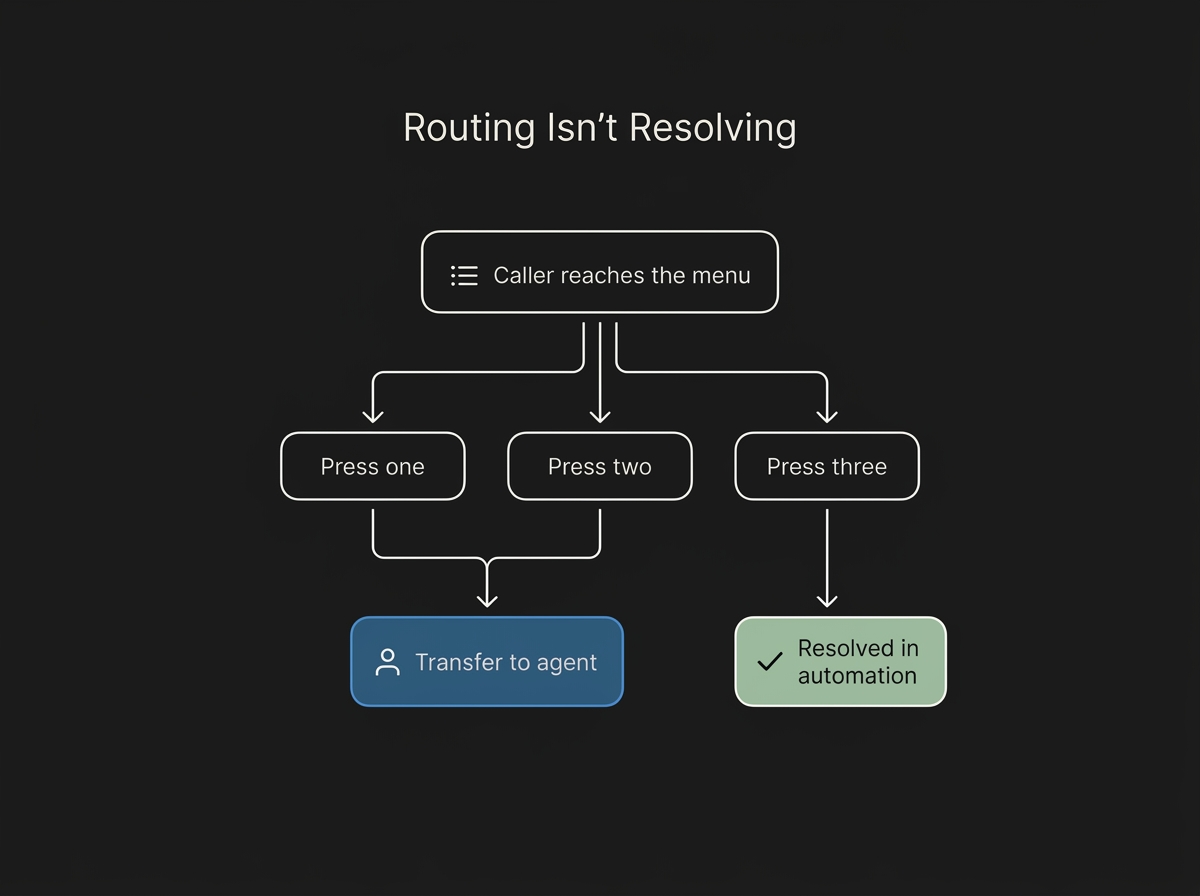
Legacy IVRs contain little because they were built to route, not to resolve. A touch-tone menu can identify why a caller is phoning and send them to the right queue, but it cannot hold a conversation, pull and update records, or complete a multi-step task, so many callers press zero for an agent. Deep menu trees make it worse, since callers who cannot find their option opt out. SQM's analysis of the IVR dilemma notes that IVR self-service does deliver strong first-call resolution when it fits the task, around 74 percent, yet many centers still get low overall containment because the menus try to route rather than solve SQM Group. The gap between routing and resolving is exactly where an AI voice agent changes the number.
How Flexbone raises IVR containment
The containment ceiling on a routing IVR is structural: it can send a call somewhere, but it cannot finish the work. Flexbone deploys AI voice agents that resolve contacts end to end, verifying the caller, pulling the record, completing the task, and writing the result back to your systems, across BPO, insurance, healthcare, and public-sector lines. Because the agent resolves rather than routes, the containment delta over a legacy IVR is the pitch: contacts that used to press zero now complete in the automated layer. We start with an audit of your call reasons, then automate the intents that can be safely contained and leave the rest to skilled agents. The number to watch is contained-and-resolved, not contained-and-bounced.
Ready to measure the containment delta on your own call reasons? Start a pilot, or see how our healthcare call agents work.