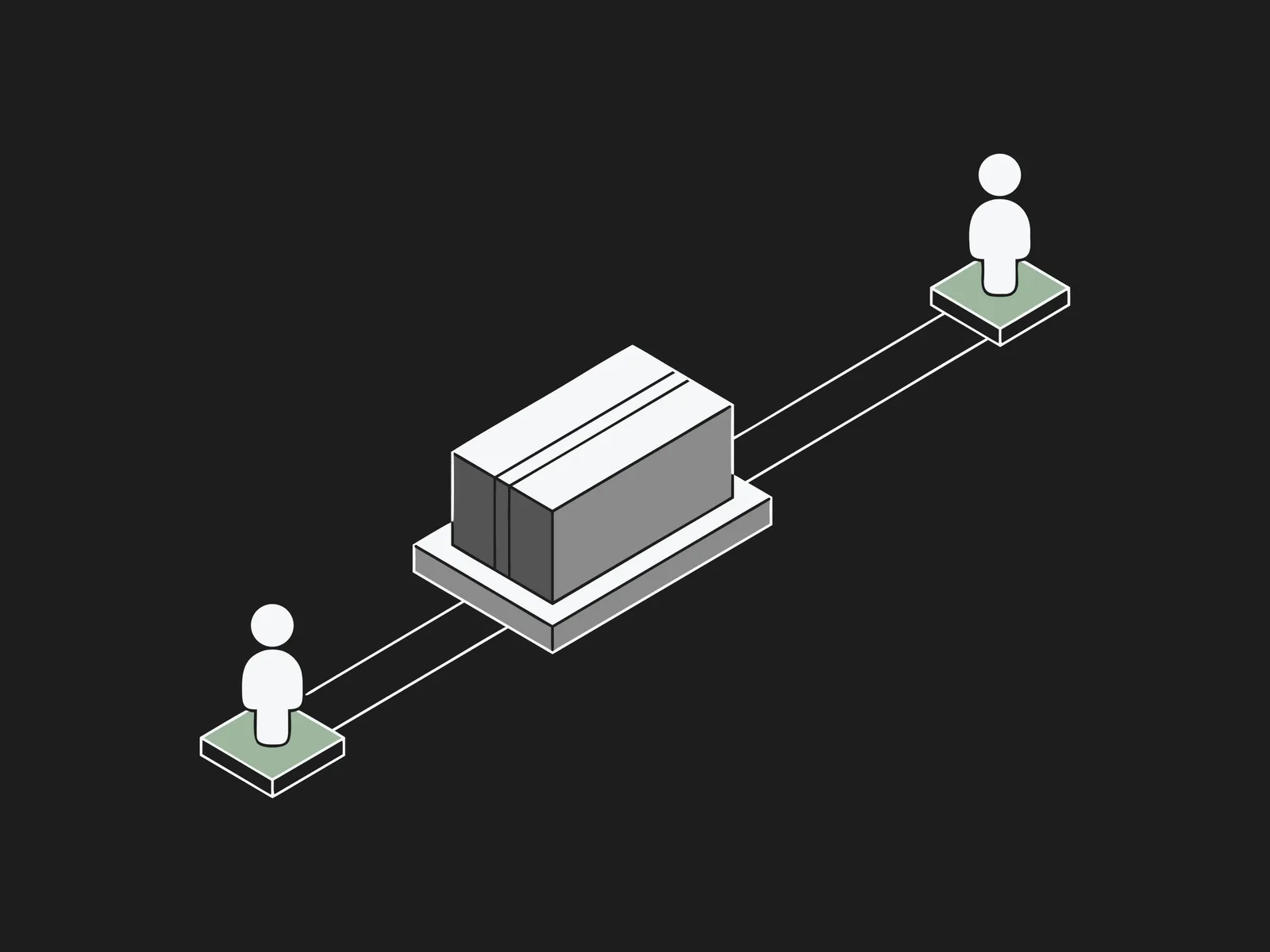
A patient recall system is the process and tooling a practice uses to identify patients who are overdue for care and reach out to bring them back in. Recall covers patients due for a routine follow-up, a screening, or a chronic-condition check. Reactivation covers patients who have lapsed entirely and have not been seen in a year or more. Both rely on outbound outreach: a call, a text, or a message that names the overdue visit and offers a time to book. The goal is to protect continuity of care for the patient and steady, predictable volume for the practice. A good patient recall system works from the schedule and the EHR recall list, not a static spreadsheet that goes stale within weeks.
What is a patient recall system?
A patient recall system is the combination of a working list and an outreach method that together move overdue patients back onto the schedule. The list comes from the EHR: patients flagged for a recall interval, patients whose last visit predates their care schedule, and patients who canceled or no-showed and never rebooked. The outreach method is how the practice contacts those patients and offers an appointment. What separates a recall system from an ad hoc reminder is that it runs on a defined cadence, tracks the outcome of every contact, and writes those outcomes back so the list stays current. Without that loop, staff repeat calls to patients who already booked and miss patients who slipped through. The recall system is the structure that keeps the list accurate and the outreach consistent.
Want this mapped against your own call and claim volume? Book a 30-minute audit
What is the difference between patient recall and patient reactivation?
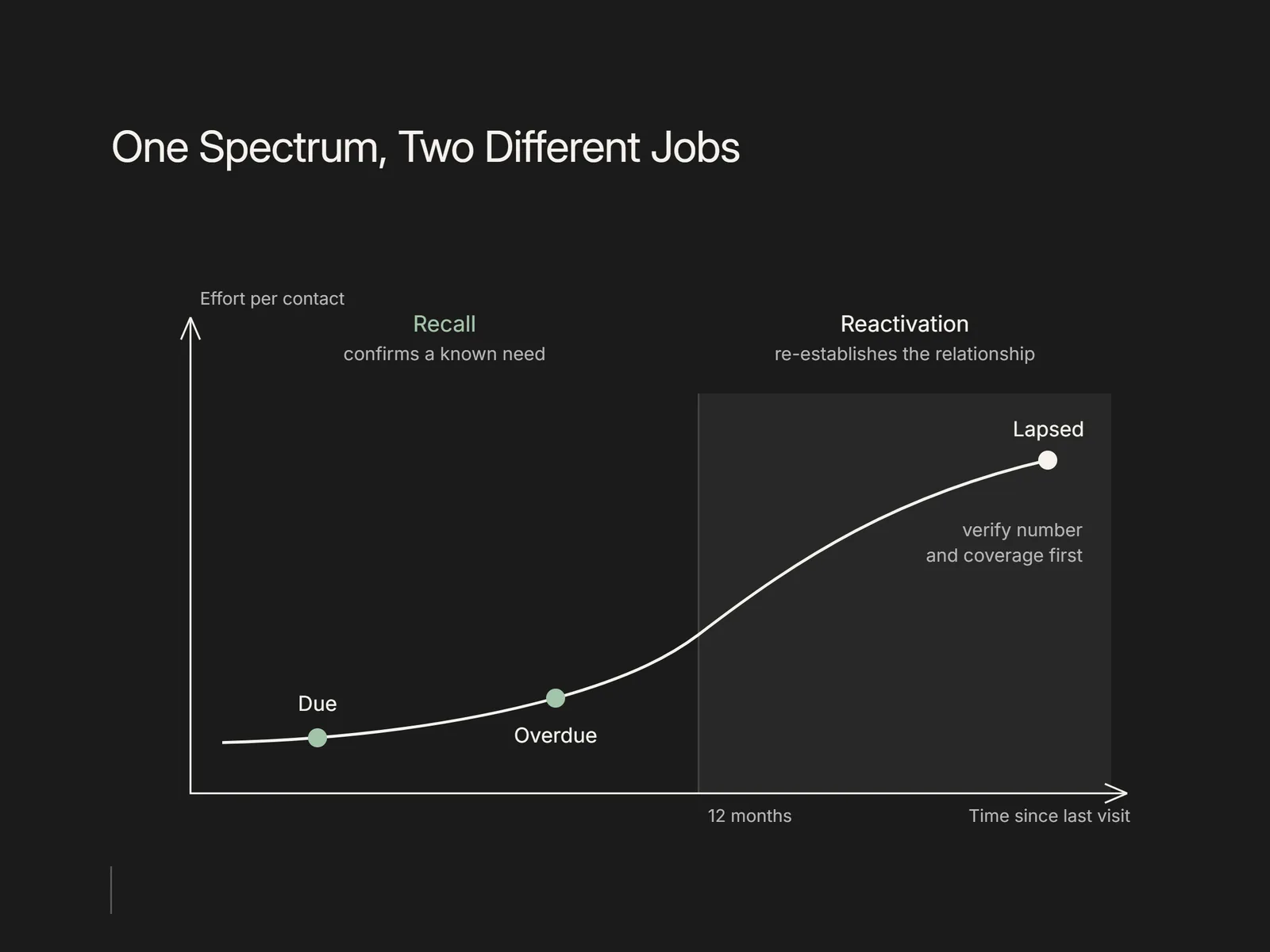
Patient recall and patient reactivation sit on the same spectrum but target different groups. Recall addresses patients who are due or overdue for an expected visit: an annual physical, a mammogram, a diabetic follow-up, a post-procedure check. These patients are still active in the practice, and the recall interval is part of their care plan. Reactivation addresses patients who have lapsed, meaning no visit in a year or more and no scheduled return. Reactivation lists are older and less reliable, so phone numbers and insurance details need verification before outreach. The practical difference is effort per contact: recall outreach confirms a known need, while reactivation often has to re-establish the relationship, confirm the patient still wants care at the practice, and update stale contact information along the way.
See what AI can run at your facility. In a 30-minute audit we map the calls, eligibility, and follow-ups Flexbone can take off your team first.
Book an auditWhy does a patient recall system protect revenue and continuity of care?
A recall system protects continuity of care because overdue patients are, by definition, missing care they were expected to receive, and the gap widens the longer it goes unaddressed. It protects revenue because those same visits are booked capacity the practice has already staffed for. The scale of missed visits is not small. A 12-year review of a burn clinic covering more than 101,000 scheduled visits found an overall no-show rate of 7.3 percent and a cancellation rate of 14.9 percent, with little change over time, and many of those patients need a follow-up that a recall process is designed to recover. Access friction compounds the problem: in the 2022 National Health Interview Survey, 10.6 percent of adults reported that they delayed or did not get medical care because they could not find an available appointment when needed. A recall system that reaches these patients and offers a concrete time closes part of that gap.
How does outbound recall outreach work?
Outbound recall outreach starts by pulling a working list from the EHR: who is overdue, for what visit type, and when they were last seen. The list is then filtered for patients who are still active, have current contact information, and are eligible for the visit. Outreach follows in a defined order, usually a call first because it allows an immediate booking, with text or portal messages as follow-up for patients who do not answer. The message names the specific overdue visit rather than sending a generic reminder, since a named reason gives the patient a clear decision to make. Each contact records an outcome: booked, callback requested, wrong number, or opted out. Those outcomes flow back to the recall list so the next cycle starts from an accurate picture instead of recontacting patients who already resolved.
How does Flexbone run patient recall and reactivation?
Flexbone runs recall and reactivation as outbound campaigns handled by AI voice agents. The agent works from the overdue and recall lists in your EHR, calls patients in the defined order, explains the reason for the call, offers open appointment times, and books the visit directly against your schedule. When a patient books, requests a callback, or asks not to be contacted, the agent writes that outcome back to the EHR so the list stays current and no one is called twice. The same infrastructure powers our AI patient coordinator for inbound scheduling and our broader healthcare phone automation work, so recall outreach and everyday call handling run on one system. We start every engagement with an audit of your recall lists and current outreach before any calls go out, so the campaign matches how your practice already works. Flexbone is HIPAA compliant and SOC 2 aligned, and the agent follows your consent records and honors opt-outs. It is a way to reach more overdue patients consistently, not a claim to recover every one.
Where to start
If overdue and lapsed patients are stacking up faster than your staff can call them, a recall system that runs the outreach and writes outcomes back to the EHR is often the missing piece. To see how Flexbone would run recall and reactivation against your own lists, book a demo.