Prior authorization for medication is a payer requirement that a prescriber justify a drug before the plan will cover it. The process runs in a set order. The prescriber's office or the pharmacy first identifies that a drug needs approval, then the office submits clinical justification, including the diagnosis, prior therapies tried, and relevant lab or chart notes, to the health plan or its pharmacy benefit manager (PBM). The payer or PBM reviews the request against its formulary and step-therapy rules and either approves it, denies it, or asks for more information. An approval sets a coverage window; a denial comes with a reason and an appeal path. From there the prescriber can appeal, request a peer-to-peer review, or move the patient to a covered alternative. Standard and expedited requests carry different deadlines.
Why does a medication need prior authorization?
A plan flags a medication for review when the drug is expensive, has a lower-cost equivalent, carries safety or dosing concerns, or falls outside the plan's preferred formulary tier. Step therapy is a common trigger: the plan expects the patient to try a cheaper drug first and only covers the requested one if that option fails. These rules are meant to control cost and steer prescribing toward formulary drugs, but they add delay. In the American Medical Association's 2024 survey, 69 percent of physicians reported that step-therapy requirements led to ineffective initial treatments, and 79 percent said a prior authorization delay or denial at least sometimes led to a patient paying out of pocket for a medication, per the AMA. Understanding which of these triggers applies tells you what evidence the appeal will need.
Want this mapped against your own call and claim volume? Book a 30-minute audit
What is the step-by-step medication prior authorization process?
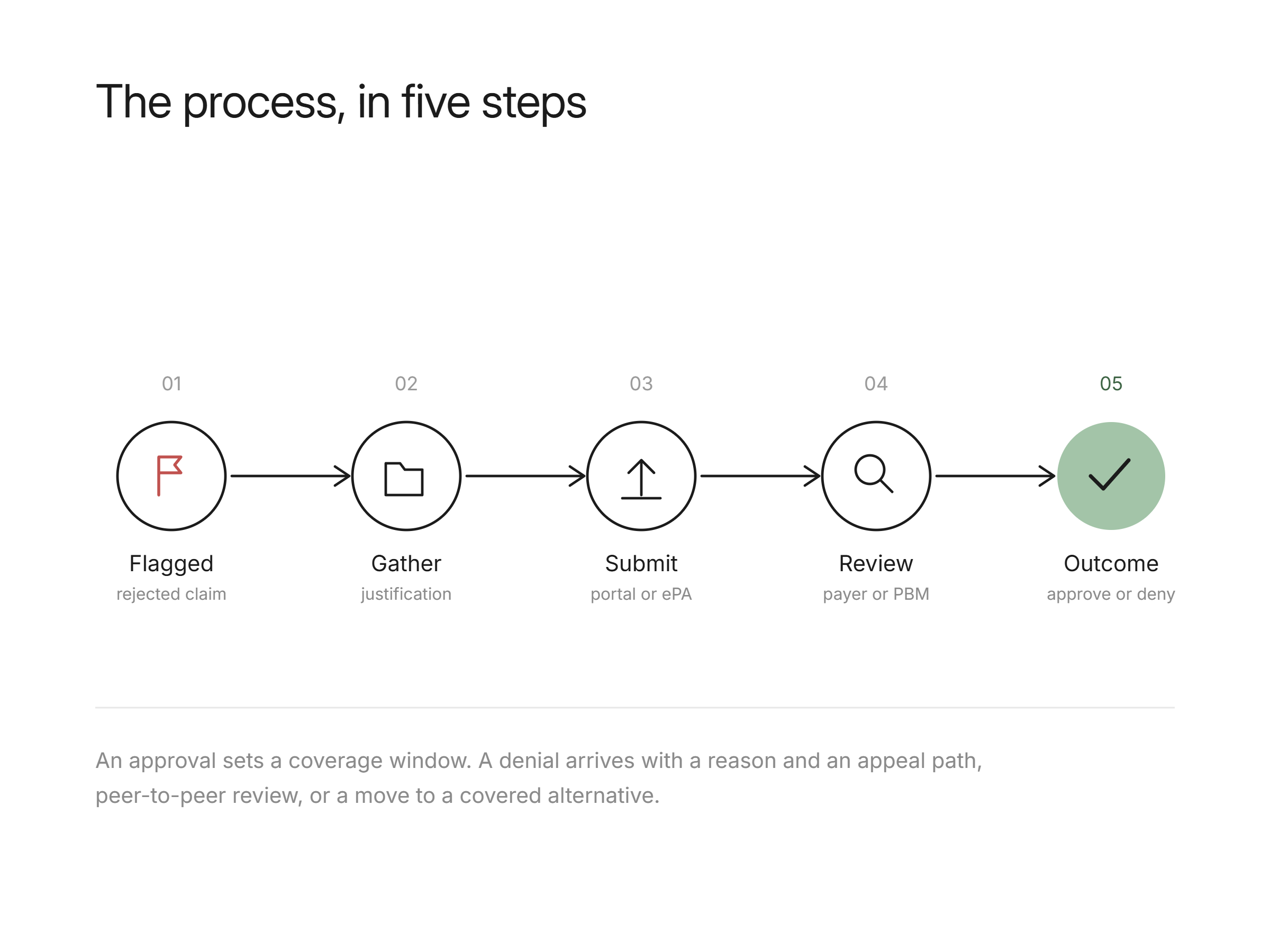
Laid out as steps, most of the process is carrying information from the chart to the plan's questions and back. Flexbone automates that carrying in ePA platforms and payer portals and writes the decision into the record, with the prescriber's rationale left to the prescriber. The broader workflow is in prior authorization automation.
The process has five stages. First, the requirement surfaces, usually as a rejected pharmacy claim at the point of sale or a flag inside the prescriber's e-prescribing tool. Second, the prescriber's office gathers the clinical justification: diagnosis codes, the drugs already tried and their outcomes, and supporting labs or notes. Third, the office submits the request through the plan's portal, its PBM's portal, an electronic prior authorization (ePA) transaction, or by fax. Fourth, the payer or PBM reviews the request against its coverage policy and formulary and returns an approval, a denial, or a request for more information. Fifth, if the drug is approved, the pharmacy can fill it under a coverage window; if it is denied, the office works the appeal. Software that automates these handoffs is covered in our guide to prior authorization automation.
See what AI can run at your facility. In a 30-minute audit we map the calls, eligibility, and follow-ups Flexbone can take off your team first.
Book an auditHow long does prior authorization for medication take?
Timelines vary by plan and by whether the request is standard or expedited. For a Medicare Part D coverage determination, the plan must give notice of its decision within 72 hours of a standard request and within 24 hours of an expedited request, according to CMS. Commercial plans set their own windows, and a request that needs additional clinical records takes longer because the review clock often does not start until the documentation arrives. Expedited handling applies when a delay could seriously jeopardize the patient's health, which a prescriber can attest to on the request. For a fuller breakdown of timing across payer types, see how long prior authorization takes.
What should you do if a medication prior authorization is denied?
Read the denial reason first, because it tells you what the appeal needs. If the denial cites a missing step, document the drugs already tried and why they were stopped, then request a formulary exception. If it cites insufficient clinical evidence, add the labs, imaging, or notes that support medical necessity. If the decision turns on clinical nuance rather than paperwork, request a peer-to-peer review, a phone conversation between the prescriber and the plan's medical director. Appeals are worth filing: for Medicare Advantage prior authorization requests in 2024, 80.7 percent of denials that were appealed were overturned in full or in part, per KFF. When an appeal is not viable or the patient cannot wait, moving to a covered formulary alternative is often the faster path to therapy.
Who submits a pharmacy prior authorization?
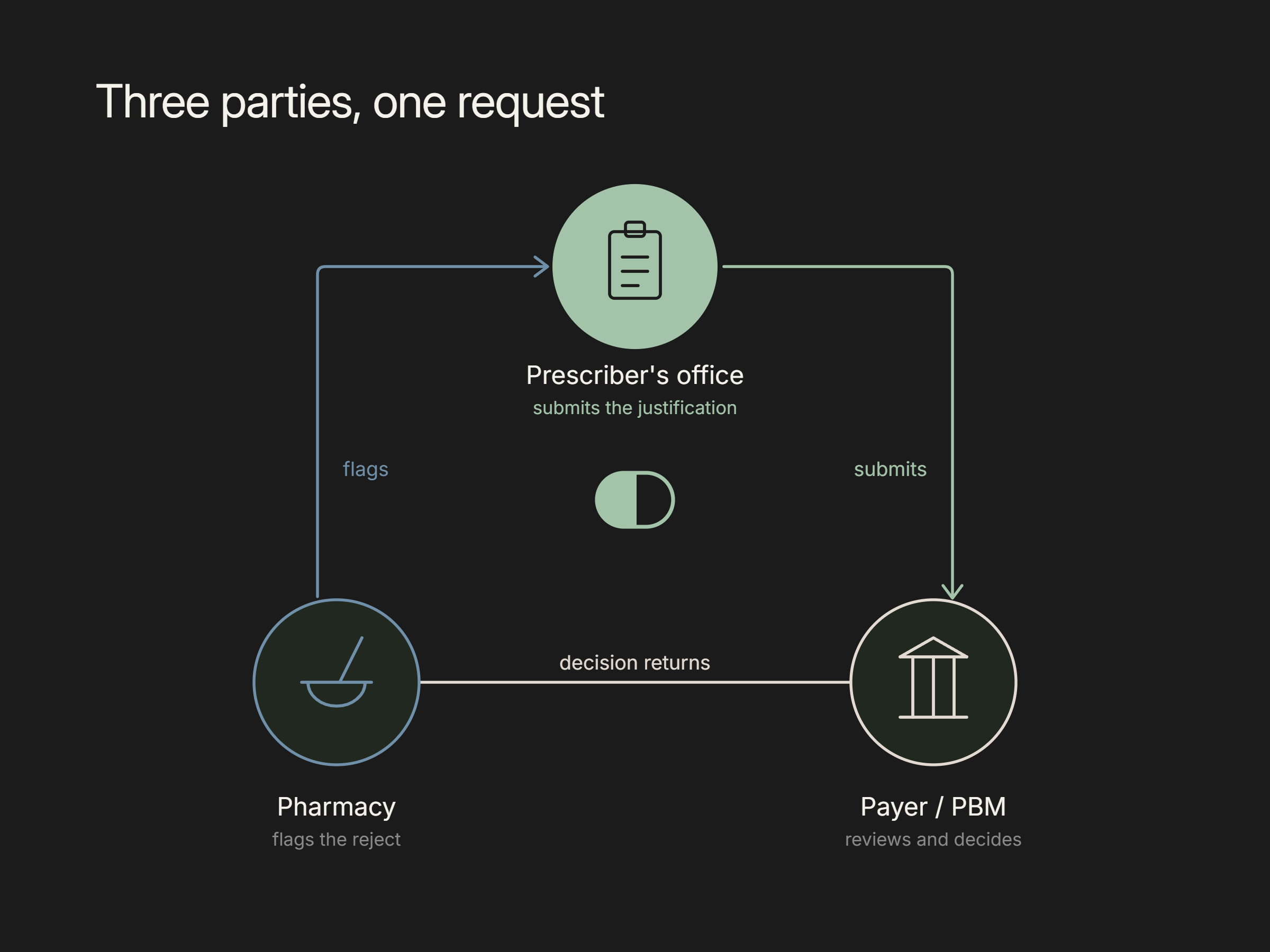
The prescribing clinician's office submits a pharmacy prior authorization, because only the prescriber can supply the clinical rationale the plan needs. In practice the work falls to a nurse, medical assistant, or dedicated prior authorization staff who assemble the documentation and file it. The pharmacy plays a supporting role: it flags that a drug rejected at the point of sale and can route an electronic request to the prescriber, but it cannot justify medical necessity. The patient's part is limited to confirming the pharmacy and following up if the request stalls. This division of labor is why the administrative burden lands on clinical offices, and why the same medication prior authorization can involve three parties before a drug is dispensed.
How does Flexbone handle medication prior authorization?
Flexbone builds AI agents that work the operational steps of a medication prior authorization so clinical staff spend less time on portals and phones. The agents gather the clinical criteria the plan requires from the chart, submit the request through the payer or PBM portal, follow up on pending cases, and write the status back to the EHR so the care team sees where each request stands. The approach is audit-first: every action an agent takes is logged and reviewable, and cases that fall outside defined criteria are escalated to a human rather than guessed at. Flexbone is HIPAA compliant and SOC 2 aligned. The agents handle the repetitive submission and follow-up work; a clinician still owns the medical-necessity judgment and any peer-to-peer conversation.
Getting started
If prior authorization volume is slowing your prescribing or backing up your pharmacy claims, the first step is mapping which drugs and payers drive the most requests. To see how Flexbone's agents fit your workflow, book a demo.