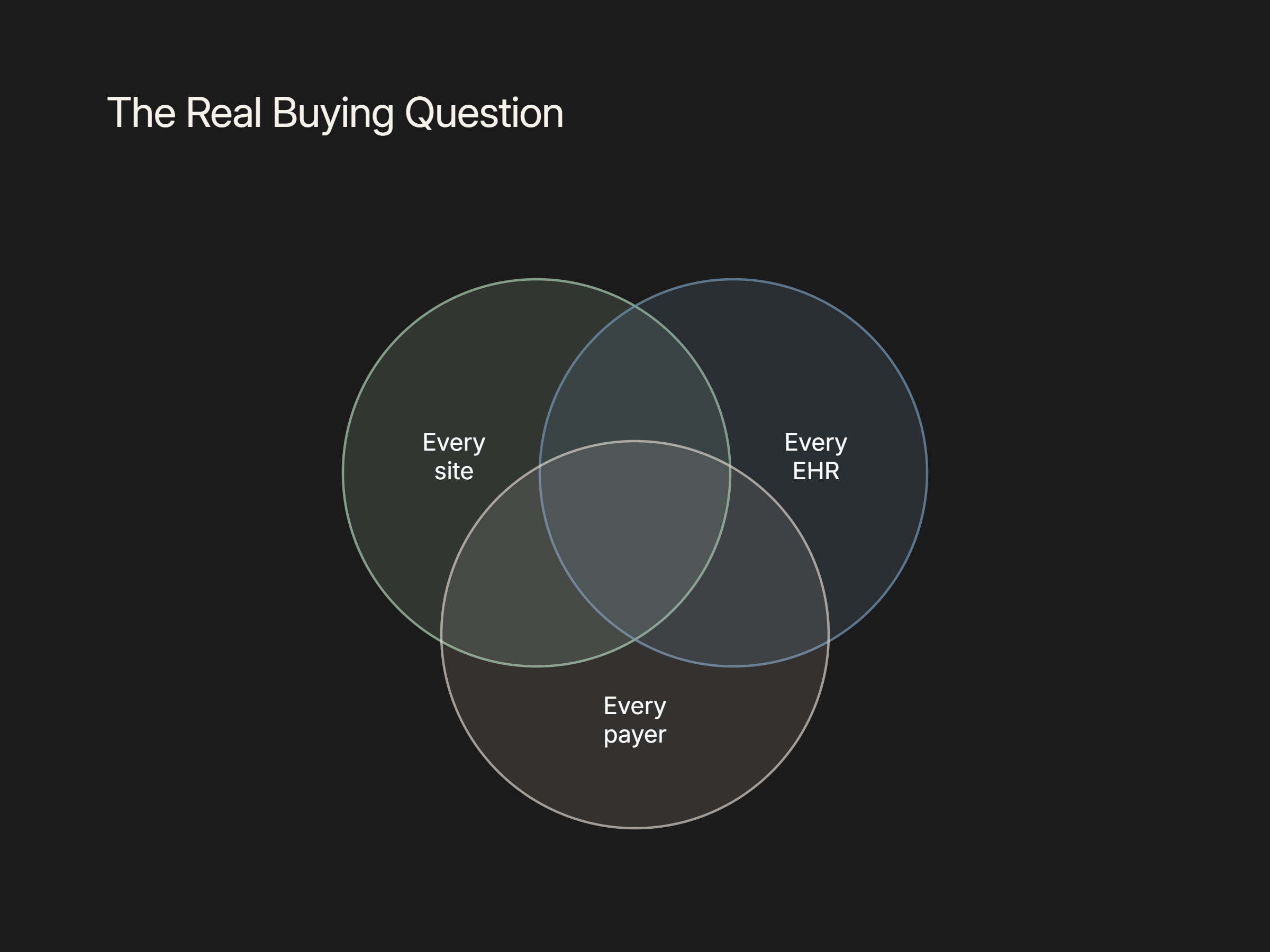
RCM automation vendors handle the repetitive phone and portal work in the revenue cycle: eligibility checks, prior-authorization follow-up, claim-status calls, and denial appeals. For a multi-location group or an RCM company, the buying question is less about a single feature and more about coverage across sites, EHRs, and payers. The prize is large. The CAQH Index reports that U.S. healthcare avoided an estimated $258 billion in administrative costs in 2024 through electronic transactions, and that full automation of the remaining manual and partially manual transactions could save about $21 billion a year. This guide covers what RCM phone automation is, how to evaluate vendors, what it costs at different sizes, and which categories of players exist in 2026.
What is RCM phone automation?
RCM phone automation uses AI voice and browser agents to complete the calls and portal lookups that revenue-cycle staff run all day: verifying eligibility with a payer, checking claim status, following up on a prior authorization, and chasing denied claims. Instead of a biller sitting in an IVR queue, an agent navigates the call or portal, captures the result, and writes it back to your billing system so a human handles only the exceptions. The pull toward this is a staffing problem, not a technology fad. HFMA reports that revenue-cycle staffing challenges have persisted since the pandemic, pushing hospitals and groups toward automation and outsourcing. Automation is attractive here precisely because the work is transactional, high-volume, and hard to keep staffed at every location.
Want this mapped against your own call and claim volume? Book a 30-minute audit
How do you evaluate RCM automation vendors?
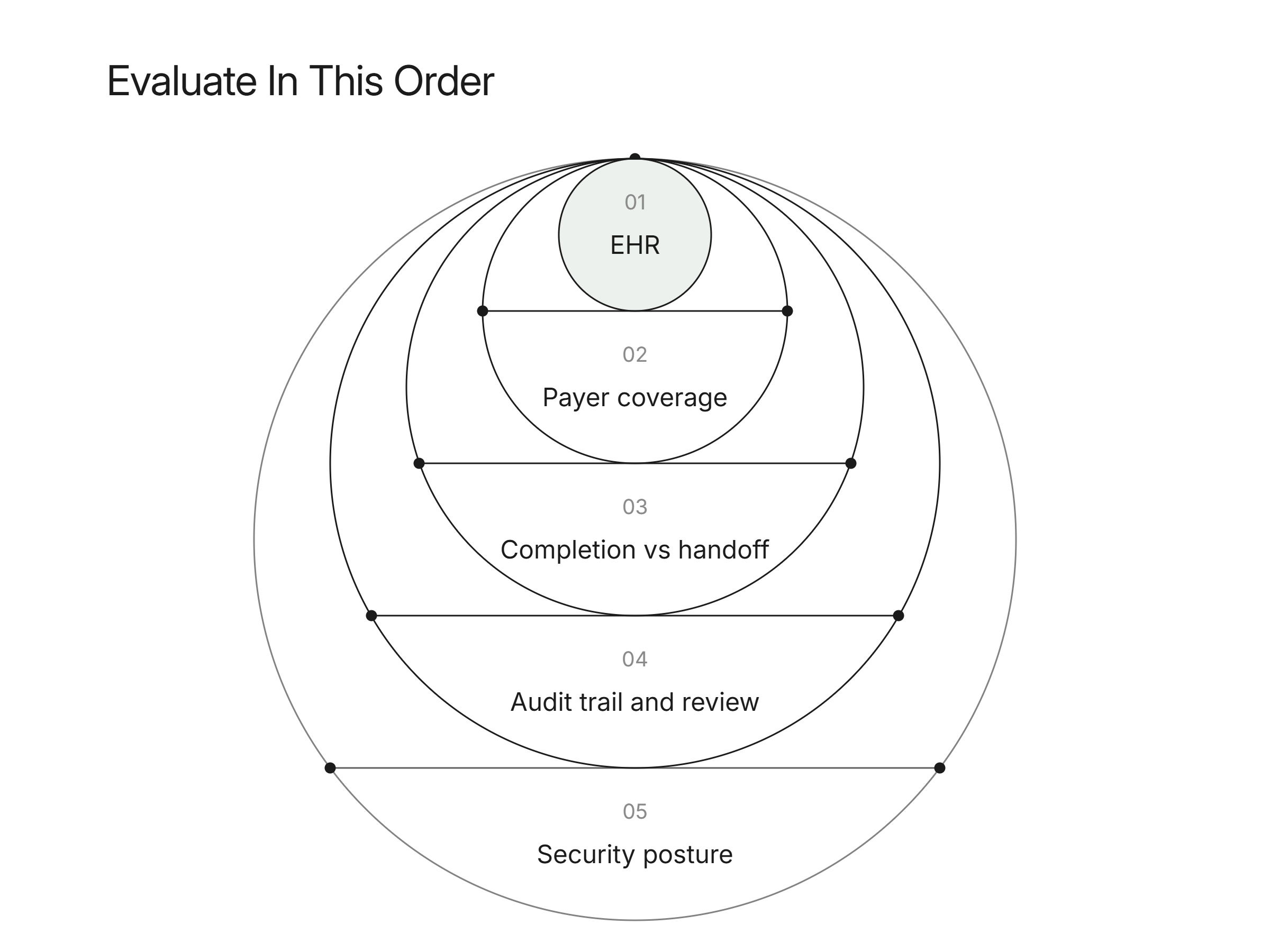
Evaluate on five things, in order. First, EHR and billing-system fit: does the vendor read and write inside the systems each of your locations runs, or only one. Second, payer coverage: which payers and portals it handles reliably, since a national group touches dozens. Third, the completion rate versus the handoff rate: how often the agent finishes a task without a human. Fourth, the audit trail and human-review step, which is what keeps the work defensible. Fifth, security posture, meaning HIPAA compliance and SOC 2 alignment. HFMA's reporting on the revenue cycle of the future stresses that AI adoption is pairing with deliberate workflow redesign, not bolt-on tools. Ask each vendor to run against your own denials and payers in a pilot, and measure completion rather than trusting the demo.
Ask each vendor how it decides what to automate. Flexbone's answer is an audit of the practice's recorded calls and work queues before any build, described in audit then automate.
See what AI can run at your facility. In a 30-minute audit we map the calls, eligibility, and follow-ups Flexbone can take off your team first.
Book an auditWhat does it cost for a small clinic vs a multi-site group?
Most RCM automation is priced per transaction, per seat, or as a percentage of recovered revenue, and vendors quote rather than publish rates, so the honest answer is that it varies. The useful anchor is the labor it offsets. HFMA reports that hospital labor costs kept climbing in 2025 even as hiring slowed, so the roles automation removes are getting more expensive to keep filled. A small clinic often justifies automation on one or two roles it cannot keep filled, so per-transaction or light per-seat pricing fits. A multi-site group has enough call volume to negotiate on transaction economics and should press for site-level reporting and volume pricing. In both cases, compare the quote against the fully loaded cost of the staff hours the tool removes, not against a sticker price.
Who are the players in 2026?
The 2026 market falls into categories rather than one list. Broad RCM platforms such as Waystar, Experian Health, and FinThrive automate denials, claim status, and appeals inside large suites. Clearinghouse and eligibility players such as Availity focus on the transaction layer. Prior-authorization specialists such as Cohere Health work the front-end approval. A newer group of AI voice and agent companies automates the phone work specifically across whatever EHR a group runs. The categories map onto the transactions the CAQH Index tracks, where the manual and partially manual transactions that remain are the biggest automation opportunity. For a multi-location or RCM buyer, the practical split is whether you want automation locked to one billing suite or a layer that works across all your systems and payers.
How Flexbone fits multi-location and RCM buyers
Flexbone is the automation layer that works across the systems you already run, rather than a rip-and-replace platform. We are audit-first, so we start by reviewing a sample of each group's calls and denials to find where recovery is leaking before we automate. Our voice, browser, and document agents then verify eligibility, chase prior authorizations, follow up on claim status, and draft denial appeals inside your existing EHRs and on payer portals, with a human reviewing exceptions. Because we are RCM-agnostic, a multi-site group with mixed EHRs runs one automation layer instead of one per system. Everything is HIPAA compliant and SOC 2-aligned. See our insurance eligibility verification page for one workflow in detail.
Book a demo: https://www.flexbone.ai/contact