UnitedHealthcare prior authorization is a requirement that certain services, procedures, and drugs be approved by the plan before they are covered. The provider's office submits the request with clinical documentation, and UnitedHealthcare (UHC) confirms the item meets its coverage and medical-necessity rules before the care is delivered. The categories that commonly require it include advanced imaging (MRI, CT, PET), many specialty and injectable drugs, some elective procedures and surgeries, durable medical equipment, and certain genetic and diagnostic tests. Requirements vary by plan type (commercial, Medicare Advantage, Medicaid) and change over time, so the same service can need authorization under one UHC plan and not another. Because of that variation, practices check the specific plan's current requirement rather than relying on a general rule, then submit through the correct channel before scheduling.
What services require UnitedHealthcare prior authorization?
UnitedHealthcare prior authorization is concentrated on higher-cost and higher-variation services rather than routine care. Advanced imaging such as MRI, CT, and PET scans is a common trigger, as are many specialty and injectable drugs, some elective procedures and surgeries, durable medical equipment, and certain genetic and diagnostic tests. Most primary care visits and preventive services typically do not require it. The important detail is that requirements vary by plan and by state, so a commercial plan, a Medicare Advantage plan, and a Medicaid plan can treat the same procedure code differently, and those lists change over time. For that reason the requirement is checked against the patient's actual plan and the specific procedure code, not assumed from the service alone. This is the same discipline that supports accurate insurance eligibility verification: confirm the plan first, then match the code.
Want this mapped against your own call and claim volume? Book a 30-minute audit
How do you submit a UnitedHealthcare prior authorization?
Most UnitedHealthcare prior authorization requests for medical services are submitted electronically. The two common paths are the UnitedHealthcare Provider Portal and Availity, where the practice enters the member ID, the procedure or service code, the place of service, and the supporting clinical documentation, then tracks the request to a decision. Medication prior authorizations are frequently handled through CoverMyMeds or the plan's pharmacy channel, which route the request to the pharmacy benefit for review. The reliable inputs are the same across channels: an active member ID, the correct CPT or HCPCS code, the diagnosis, and documentation that shows the service meets the plan's criteria. Because the correct submission path can depend on the plan and the service type, practices confirm the current requirement and channel before submitting rather than assuming last year's process still applies.
How long does a UnitedHealthcare prior authorization take?
Turnaround on a UnitedHealthcare prior authorization varies by plan, by service, and by how complete the submitted documentation is, so there is no single figure that applies to every request. Clean submissions with the right documentation on the first pass tend to resolve faster than requests that trigger a documentation request or a medical-necessity review. For Medicare Advantage plans, CMS sets outer limits on organization determinations: a standard decision is generally made within a set number of days, and an expedited decision is faster when waiting could seriously jeopardize the member's health, per CMS. Commercial and Medicaid timelines follow their own plan and state rules and can differ from the Medicare Advantage limits. Practices that track requests actively, rather than waiting for a portal notification, tend to catch stalled cases sooner.
See what AI can run at your facility. In a 30-minute audit we map the calls, eligibility, and follow-ups Flexbone can take off your team first.
Book an auditWhy do UnitedHealthcare prior authorizations get denied?
UnitedHealthcare prior authorizations are commonly denied for procedural reasons rather than a final verdict on the care. The frequent causes are missing or incomplete clinical documentation, a service that did not meet the plan's medical-necessity criteria as submitted, an unmet step-therapy or site-of-care requirement, or a coding mismatch between the request and the medical record. Many of these are correctable: the practice can appeal, submit additional documentation, or request a peer-to-peer review in which the ordering physician discusses the case with a plan reviewer. Denials sit inside a large national workload; the American Medical Association reports physicians handle about 39 prior authorizations each week and spend roughly 13 hours on them, according to the AMA. Because so many denials are procedural, a disciplined AI denials management process that catches the documentation gap and routes the appeal quickly recovers work that would otherwise be written off.
How can a practice speed up UHC prior authorizations?
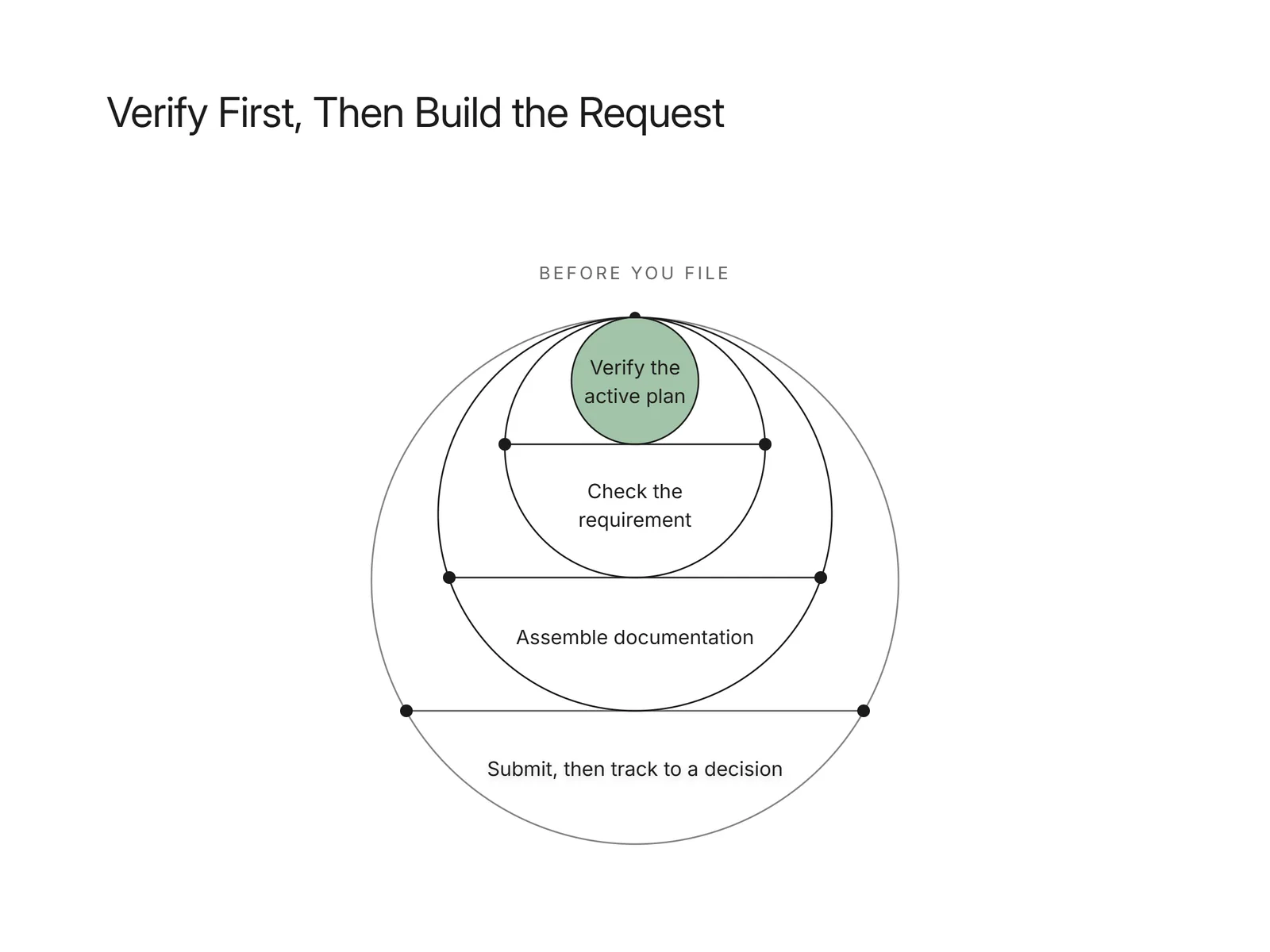
A practice speeds up UHC prior authorizations mostly by removing avoidable rework at the front of the process. That means confirming the patient's active plan and benefits, checking whether the specific code requires authorization for that plan, and assembling the documentation the plan's criteria call for before the request is filed, so the first submission is complete. Standardized eligibility checks help here; CMS supports the electronic 270/271 eligibility inquiry and response transaction as part of Administrative Simplification, per CMS, which lets a practice verify coverage before it builds the request. Submitting through the correct channel (the UnitedHealthcare Provider Portal, Availity, or CoverMyMeds for medications), then tracking each request to a decision instead of waiting passively, closes the remaining gap. The pattern that holds across payers is the same: verify first, document completely, submit through the right path, and follow up on schedule.
How Flexbone handles UnitedHealthcare prior authorization
Flexbone automates the operational work around UnitedHealthcare prior authorization while keeping a person in control of clinical decisions. We are audit-first: we review a sample of your recent UHC authorizations to find where requests stall or slip before we automate anything. Our AI voice agents and browser agents then determine whether a given code requires authorization for the patient's UHC plan, assemble and submit the request with documentation from your system through the appropriate channel, place follow-up calls or portal checks to track status, and write the decision back into the EHR so the record stays current. The agents work inside your existing systems and on payer portals, the workflow is HIPAA compliant and SOC 2 aligned, and anything outside a clear rule (a documentation gap, an ambiguous plan response, a peer-to-peer request) is escalated to your team rather than guessed. You can see how the pieces fit together on our prior authorization automation page.
If you want to map exactly what AI can take off your UnitedHealthcare prior authorization workload, book a call with Flexbone and we will start from a review of your own payer mix and current process.