
A superbill is an itemized receipt a provider gives a patient after a visit so the patient can seek reimbursement from their own insurer. It lists the patient and provider details, the provider's NPI and tax ID, the dates of service, the diagnosis codes, the procedure codes, and the charge for each service. A superbill is not a claim the practice submits to a payer. Instead, the patient submits it to their insurance company and, if the service is covered, the plan reimburses the patient rather than the practice. Superbills are most common with out-of-network and self-pay care, for example many behavioral health and specialty practices that do not contract with insurers. In those settings, the provider collects payment at the time of service and hands the patient a superbill so the patient can pursue any out-of-network benefits.
What is a superbill?
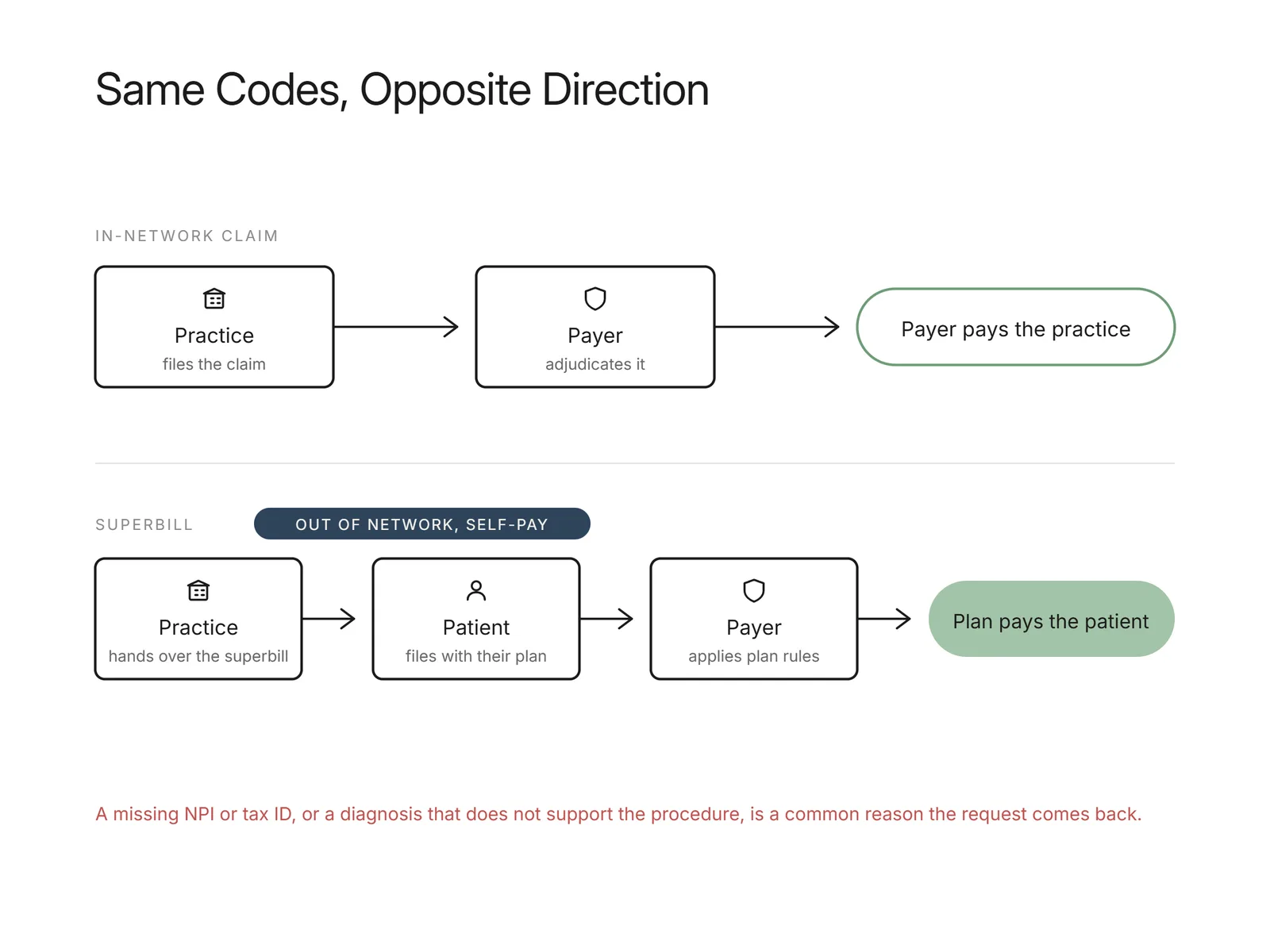
A superbill is a detailed, itemized document that records a patient's visit in enough coded detail for an insurer to evaluate it for reimbursement. It reads like a receipt, but it carries the specific data payers require: who provided the care, what was diagnosed, what services were performed, and what each service cost. The defining feature is who acts on it. With a standard in-network visit, the practice files the bill with the payer directly. With a superbill, the practice gives the document to the patient, who takes it to their own insurer. That is why superbills show up mostly in out-of-network and cash-pay practices, where the provider has no contract to bill the plan on the patient's behalf.
Want this mapped against your own call and claim volume? Book a 30-minute audit
What information is on a superbill?
A superbill has to contain the fields an insurer needs to identify the provider, the patient, and the services rendered:
- Patient details: name, date of birth, and often the insurance member ID.
- Provider and practice details: the rendering provider's name and credentials, the practice name and address, the National Provider Identifier (NPI), and the tax identification number (TIN).
- Visit details: the date or dates of service and the place of service.
- Diagnosis codes: ICD-10 diagnosis codes that describe the patient's condition.
- Procedure codes: CPT or HCPCS procedure codes that describe the services performed.
- Charges: the fee for each coded service and the amount the patient paid.
The specific code numbers depend on the encounter, so the useful thing to know is the code type rather than a fixed value. ICD-10 codes answer why the patient was seen, and CPT or HCPCS codes answer what was done. A superbill missing the NPI, the tax ID, or a valid diagnosis-to-procedure pairing is a common reason an insurer returns the reimbursement request.
When do you use a superbill?
You use a superbill when the patient, not the practice, is going to seek payment from insurance. That situation is defined by the payer relationship rather than the type of care. The two common cases are out-of-network care, where the provider does not contract with the patient's plan, and self-pay or cash-pay care, where the patient elects to pay directly. Behavioral health is the most frequent example, because a large share of therapists and psychiatrists operate out of network, but the same pattern appears in physical therapy, chiropractic, and other specialties that choose not to join insurance networks. In each case, the provider collects payment at the visit and issues a superbill so the patient can file for whatever out-of-network reimbursement their plan allows. If a practice is in network for a patient's plan, it bills the payer directly and no superbill is needed.
See what AI can run at your facility. In a 30-minute audit we map the calls, eligibility, and follow-ups Flexbone can take off your team first.
Book an auditWhat is the difference between a superbill and a claim?
The difference is who submits the document and who gets paid. A claim is the standardized bill a practice sends directly to a payer to be reimbursed on the patient's behalf under an in-network contract. A superbill is a document the practice gives to the patient, who then submits it to their own insurer. With a claim, the payer pays the practice; with a superbill, if the service is covered, the payer reimburses the patient. The clinical and coding content overlaps heavily, since both rely on ICD-10 diagnosis codes and CPT or HCPCS procedure codes, but the workflow is inverted. A superbill is the raw material a patient uses to build their own out-of-network claim, without the practice ever touching the payer.
How does a patient use a superbill for reimbursement?
The patient starts by confirming their plan actually has out-of-network benefits, because plans that only cover in-network care will not reimburse a superbill at all. Before care, a practice or an eligibility check can confirm out-of-network coverage, the out-of-network deductible, and the reimbursement percentage. That eligibility exchange is standardized: payers respond to a HIPAA 270 request with a 271 response describing the patient's benefits, part of the CMS Administrative Simplification transaction standards. Once benefits are confirmed, the patient submits the superbill to the insurer, often alongside the plan's out-of-network claim form. The insurer applies the plan's rules, meaning the deductible and the allowed amount, and reimburses the patient directly for the covered portion. Reimbursement is never guaranteed; it depends on the plan's benefits, whether the deductible is met, and whether the service is covered.
How do superbills relate to eligibility, denials, and prior authorization?
A superbill sits at the end of a workflow that starts well before the visit. The most common reason a patient's out-of-network reimbursement stalls is a benefits question that could have been answered up front, which is where insurance eligibility verification matters: confirming out-of-network coverage and the deductible before care prevents surprises when the patient files. When a plan does not reimburse a superbill, the reasons often mirror those behind rejected in-network claims, such as a mismatched diagnosis-and-procedure pairing or a missing identifier, which is the territory covered by AI denials management. Some out-of-network services also carry payer requirements before care, so prior authorization automation helps a practice tell patients up front what their plan will and will not reimburse.
AI agents can handle the front-office pieces around a superbill directly: they verify out-of-network benefits against the payer before the visit and generate accurate, correctly coded documentation for the patient to submit. If your practice issues superbills or works out-of-network claims, book a call with Flexbone and we will run a quick audit of what AI can take off your front-office and billing work.