
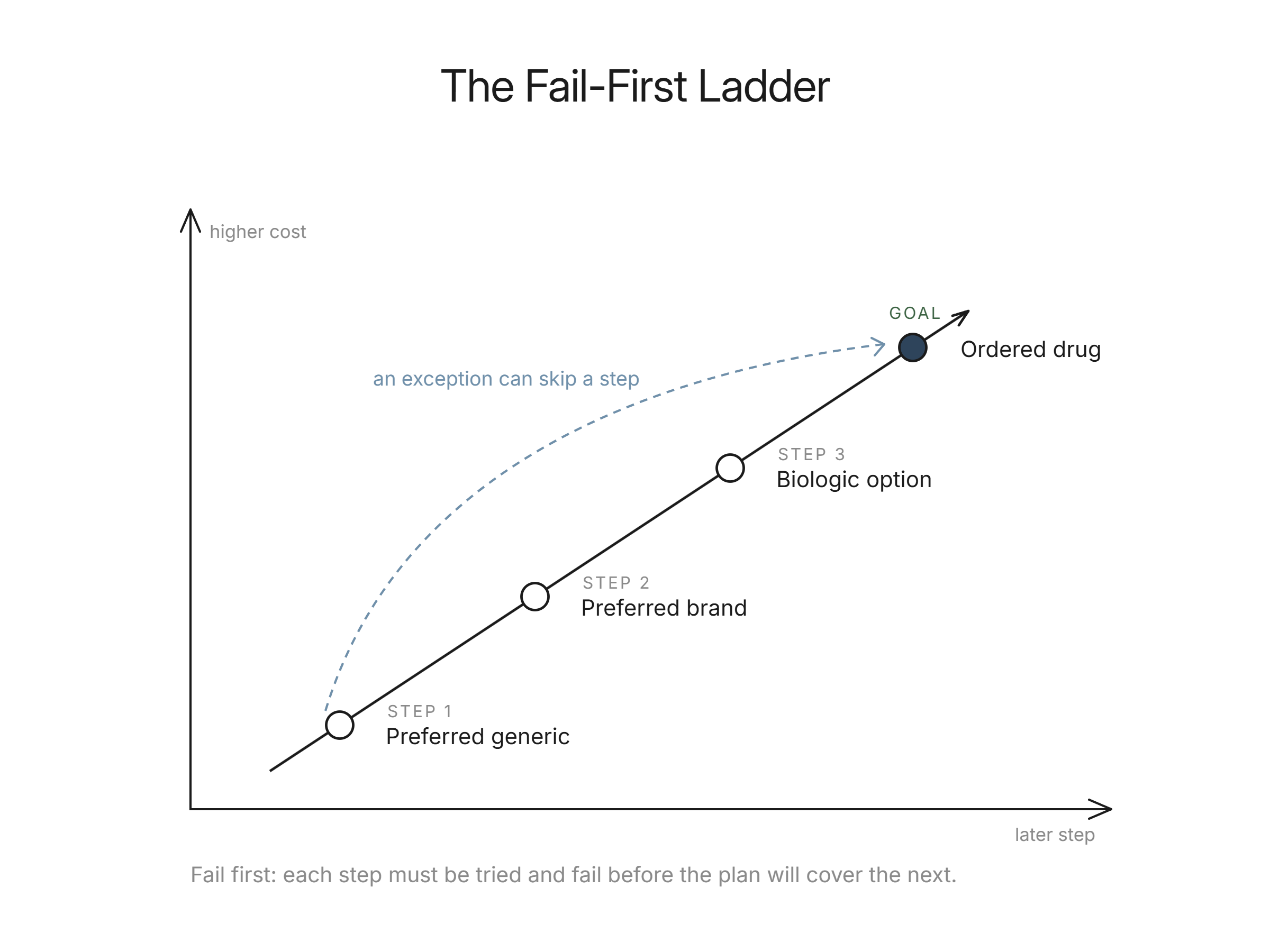
Step therapy is a utilization-management rule that requires a patient to try one or more insurer-preferred drugs, and have them fail or cause side effects, before the plan will cover the medication a prescriber originally ordered. It is also called a fail-first requirement. Payers use step therapy protocols to steer patients toward lower-cost options first, most often for specialty drugs, biologics, and expensive brand-name medications. When the preferred drug does not work or is not clinically appropriate, the prescriber can request a step therapy exception, supported by clinical documentation showing why the ordered drug is medically necessary. Step therapy sits alongside prior authorization in the coverage-review process, and the two often apply to the same prescription. This guide explains how the protocol works, how to request an exception, and how it affects patients.
How does step therapy work?
A step therapy protocol lays out an order in which a plan will cover drugs for a given condition. The plan defines a first step, usually a lower-cost generic or preferred agent, and will only pay for a later step once the earlier one has been tried. The American Medical Association describes step therapy as a policy under which "payers will require that patients first try and fail lower-cost tests, drugs or other treatments before moving on to higher-cost options," as noted in its glossary of prior authorization terms. In practice, the pharmacy claim for the prescribed drug rejects at the point of sale, and the prescriber must either switch the patient to the preferred drug or file for an exception. Some protocols have one step, others have several, and the required trial period varies by plan and drug.
Want this mapped against your own call and claim volume? Book a 30-minute audit
What does "fail first" mean in step therapy?
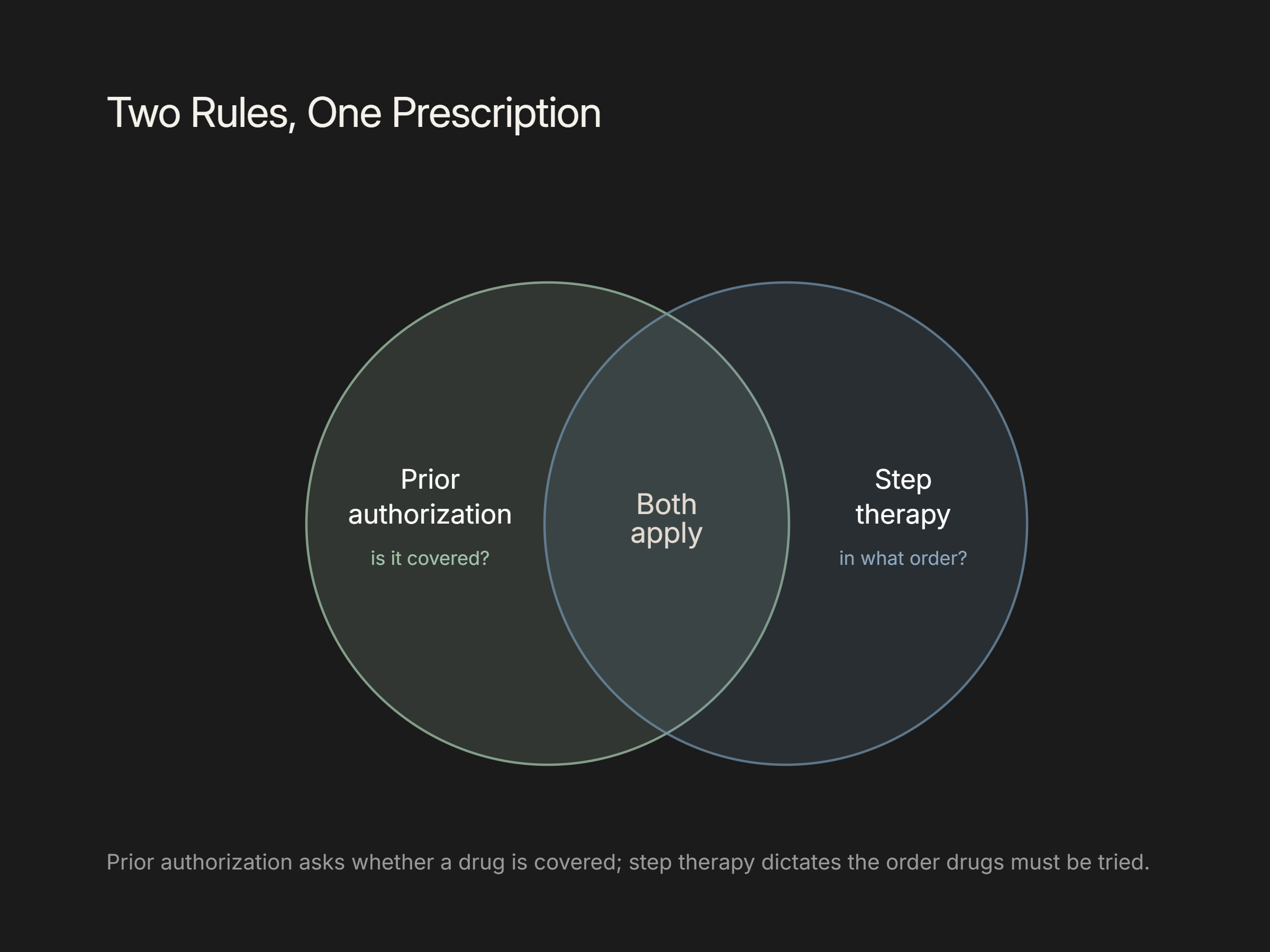
Fail first is another name for the same policy, and it describes the mechanism directly. The patient has to fail on the plan's preferred drug, meaning the drug either does not control the condition or produces side effects, before the plan will authorize the drug the physician chose. In some cases the requirement applies even when the patient has already tried and failed the preferred drug under a previous insurance plan, so a plan change can reset the sequence. The distinction between step therapy and prior authorization is worth keeping straight: prior authorization asks whether a specific drug will be covered at all, while step therapy dictates the order in which drugs must be tried. A single prescription can be subject to both.
Documenting a failed step is a retrieval task: which drugs were tried, for how long, and why they stopped. Flexbone pulls that history from the chart into the payer's exception request and leaves the next therapy choice to the prescriber. See specialty drug authorization.
See what AI can run at your facility. In a 30-minute audit we map the calls, eligibility, and follow-ups Flexbone can take off your team first.
Book an auditHow do you request a step therapy exception?
A step therapy exception is a request to skip one or more required steps because the preferred drug is not medically appropriate for the patient. The prescriber, not the patient, usually initiates it by submitting a supporting statement to the plan. Common grounds are a documented prior trial of the preferred drug that failed, a contraindication, an expected adverse reaction, or a clinical reason the preferred drug will not be effective. For Medicare Advantage Part B drugs, CMS states that plans must decide an exception request generally within 72 hours for a standard request and within 24 hours when a delay could seriously jeopardize the patient's health, and enrollees keep the right to appeal a denial, per its fact sheet on step therapy for Part B drugs. Commercial and Part D plans set their own forms and timelines, and many states have laws that require a clear exception process, so the specifics depend on the plan and the state.
How does step therapy affect patients?
The main effect is delay. While the exception or the required trial plays out, the patient waits for the treatment the physician selected, and the condition can worsen in the meantime. Patients also sometimes have to repeat a drug that has already failed for them. In the AMA's annual survey of 1,000 practicing physicians, 69 percent reported ineffective initial treatments, for example due to step-therapy requirements, and the association reports that prior authorization and related controls lead to added office visits, out-of-pocket costs, and abandoned prescriptions, as detailed in its summary of how prior authorization delays care and increases costs. Not every step therapy rule causes harm, and some patients do well on the preferred drug. The risk concentrates in cases where the clinical picture is already known and the delay repeats a step that will not work.
How Flexbone helps with step therapy exceptions and medication PAs
The slow part of a step therapy exception is rarely the clinical decision. It is assembling the evidence: pulling the record of the prior failed trial, the contraindication note, or the chart detail that proves medical necessity, and getting that packet to the right plan on the right form within the deadline. Flexbone's AI agents gather that documentation from the sources a practice already has and submit medication prior authorizations and step therapy exception requests to payers, so staff spend less time on portals and hold queues. The agents are built to be audit-first: every action they take is logged and reviewable, and a person confirms the clinical facts before anything goes to a payer. Flexbone operates under HIPAA and is aligned with SOC 2 controls. This work fits into a broader prior authorization automation approach, and the mechanics of doing it reliably are covered in our guide on how to automate prior authorization.
Does step therapy apply to Medicare and commercial plans?
Step therapy appears across plan types. Medicare Advantage plans may apply it to certain Part B drugs under CMS rules, Part D plans use it for many specialty medications, and commercial plans apply it widely to brand-name and biologic drugs. What changes from plan to plan is the length of the protocol, the required trial period, the exception form, and the appeal timeline, and state law adds another layer for commercial coverage. The practical step tends to be the same: read the plan's coverage policy for the specific drug, confirm whether an exception applies, and get the supporting documentation to the plan before the deadline. If you want to see how automated documentation and submission handle that work, book a demo.