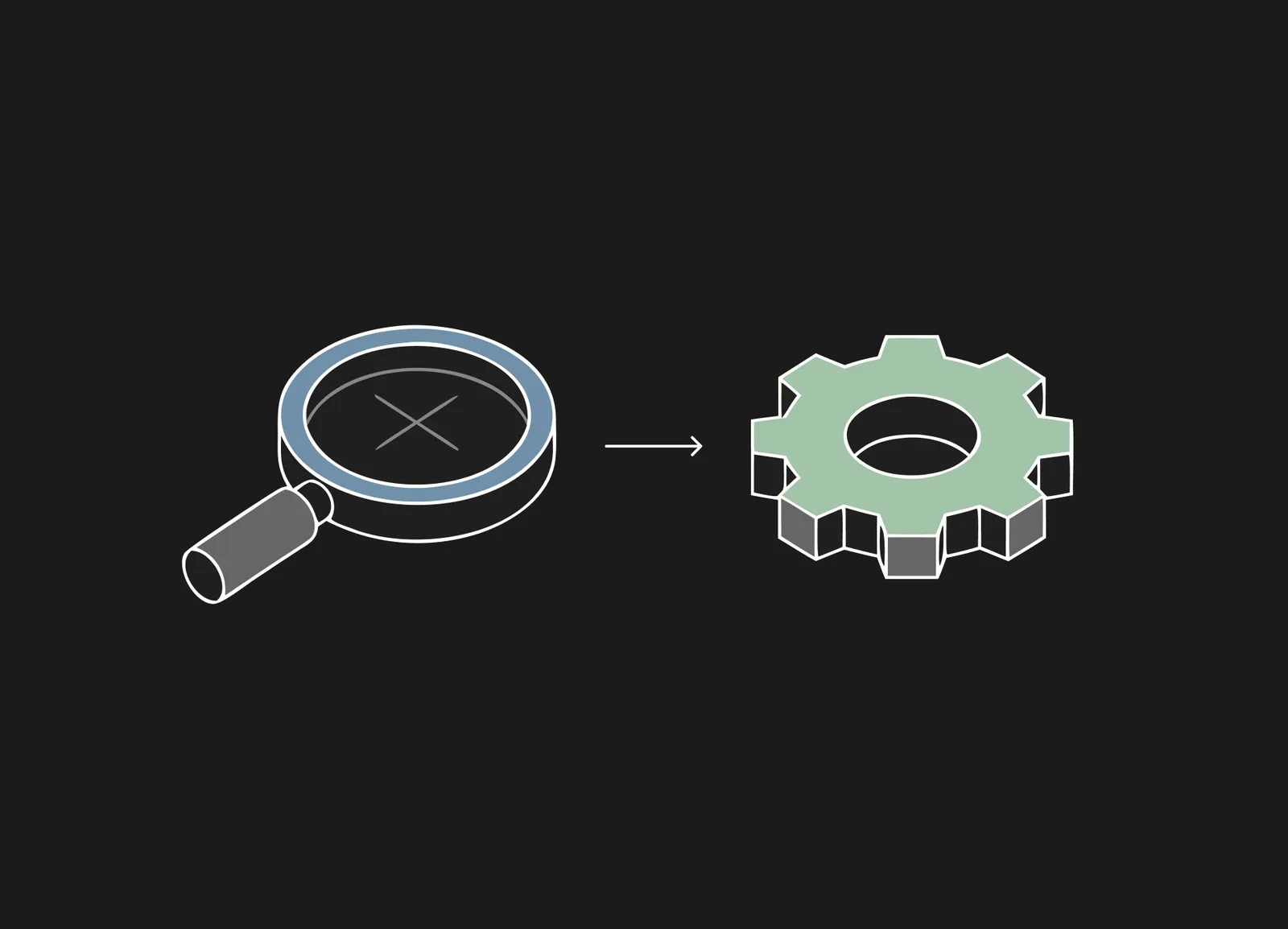
Every week, someone pitches us on a shortcut. A healthcare system wants to "just deploy the voice agent." A logistics company asks if we can "turn on the document processor by Monday." An operations director sends a list of tasks and asks us to automate all of them.
We say no. Not because we can't build fast, we can, but because building fast on bad assumptions is how you end up with AI that makes things worse.
The problem with skipping the audit
Most AI deployments fail for the same reason most software projects fail: the people building it don't understand the work it's supposed to do.
When a contact center says "we need AI to handle calls," that statement hides enormous complexity. Which calls? The ones where a patient needs to reschedule, or the ones where they're calling about a bill they don't understand? The routine insurance verification, or the edge case where the system shows coverage but the plan actually terminated last week?
These aren't hypotheticals. They're real calls we've listened to, in real facilities, where the difference between a simple automation and a broken one is buried in the specifics.
Want this mapped against your own call and claim volume? Book a 30-minute audit
See what AI can run at your facility. In a 30-minute audit we map the calls, eligibility, and follow-ups Flexbone can take off your team first.
Book an auditWhat an audit actually looks like
A Flexbone audit takes one week. During that week, we:
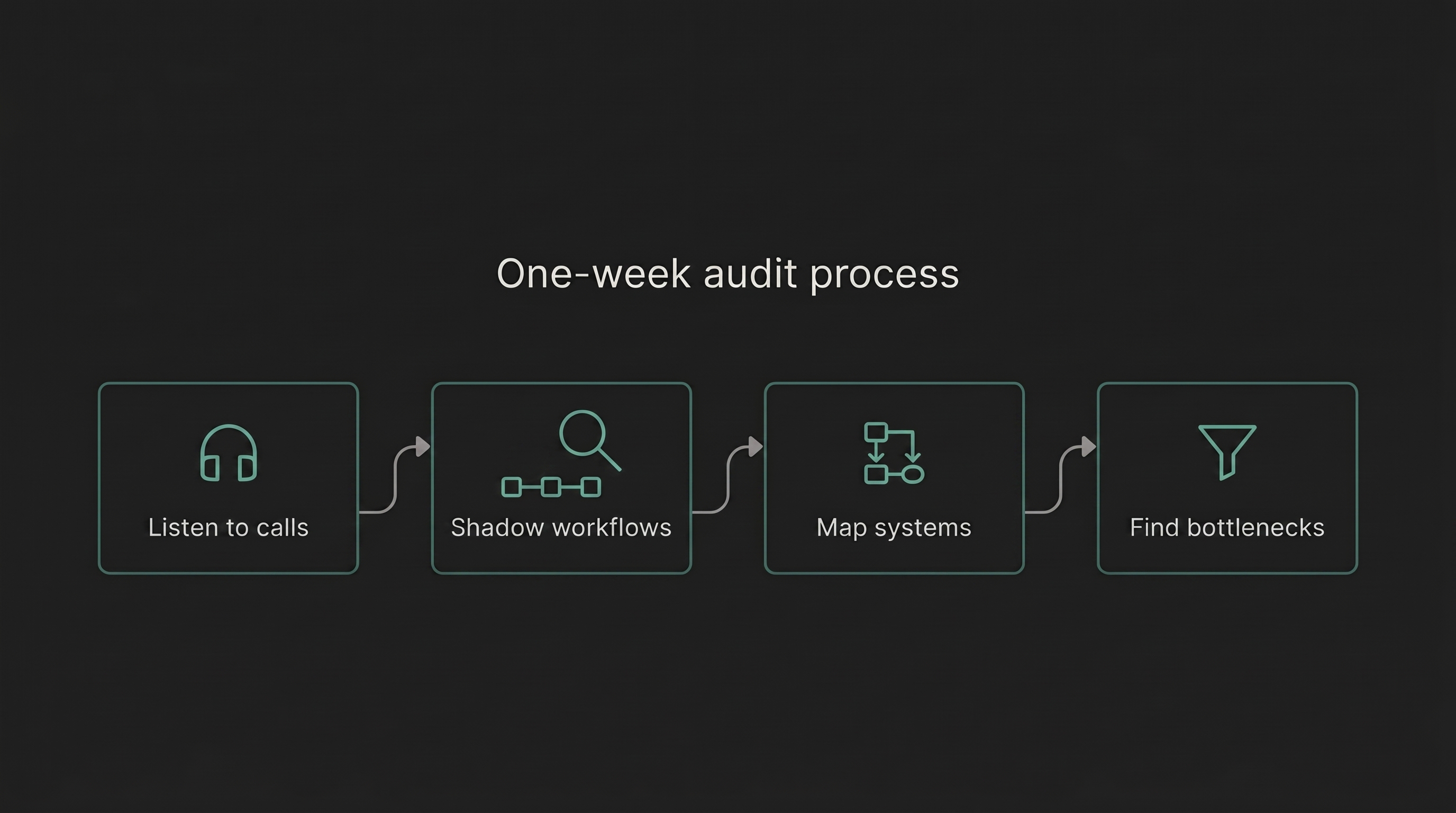
- Connect to your phone system and listen to the full range of call categories, not a sample. We classify each one by complexity, intent, and resolution path.
- Shadow your staff through their actual workflows, the clicks, the copy-paste between systems, the workarounds nobody documented.
- Map your systems, which EHR, which practice management software, which phone platform, which fax server, and critically, how data flows (or doesn't flow) between them.
- Identify the bottlenecks, not the ones leadership thinks exist, but the ones that actually eat hours every day.
The output is a detailed operational map that shows exactly where AI fits and, just as importantly, where it doesn't.
Why this matters for the AI
AI agents trained on real operational data work. AI agents trained on assumptions don't.
When we build a voice agent for a practice, it's not a generic phone tree with natural language understanding bolted on. It's an agent that knows your specific scheduling rules, your specific insurance verification flow, your specific way of handling the patient who calls three times about the same prior authorization.
That specificity comes from the audit. There's no shortcut to it.
The compounding effect
Organizations that go through the audit don't just get better AI on day one. They get AI that keeps improving. Because we understood the baseline, we can measure what changed. Because we mapped the edge cases, we can retrain them when they evolve. Because we know which tasks are actually high-volume vs. which ones just feel that way, we can prioritize the next automation that delivers the most measurable impact.
This is what we mean by "audit then automate." It's not a marketing tagline. It's a methodology that makes everything downstream, the build, the deployment, the ongoing optimization, fundamentally better.
If you're evaluating AI for your operations, start with the audit. Book one here.