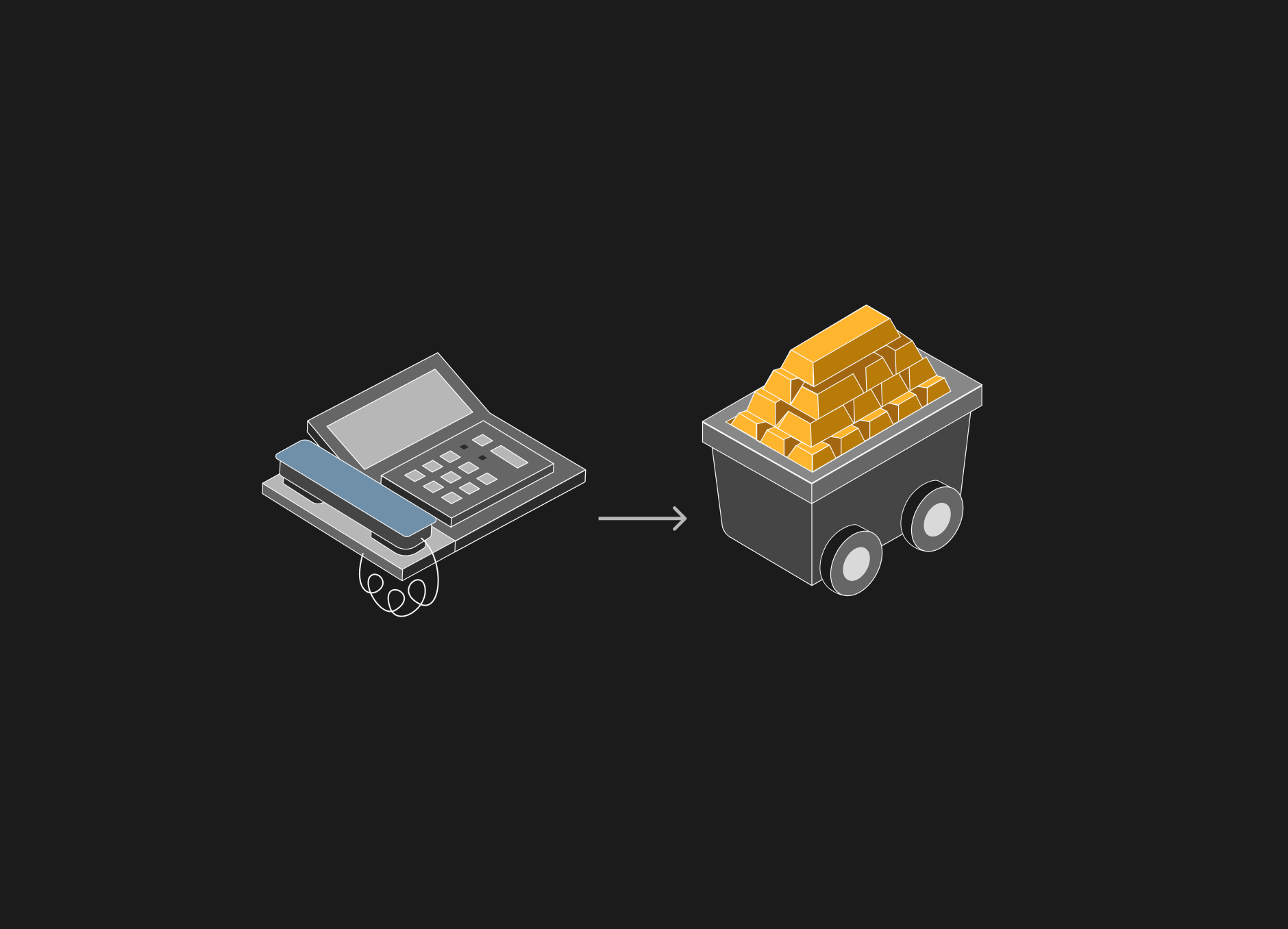
Your VoIP or telephony system already captures the customer and patient conversations your organization has. The hidden value is in the audio: with call analytics, those recordings become structured, searchable data you can measure for quality, compliance, and intent. Instead of sampling a handful of calls, you can analyze 100 percent of them and see exactly what is happening across your teams, then act on it.
Organizations run on conversations. Whether it’s a scheduler confirming an appointment, a billing specialist explaining a statement, or a customer asking for help, those interactions define the patient or customer experience more than any dashboard metric ever could.
Yet, for many organizations, these conversations disappear the moment the call ends. Thousands of interactions happen every month with no systematic way to measure quality, detect problems, or learn from what’s being said.
Flexbone’s Voice Room changes that. It connects directly to your VoIP or telephony system and transforms unstructured audio into structured, searchable intelligence so you can finally understand what is happening across calls, every day.
Why doesn’t traditional call QA scale?
Organizations typically rely on manual call reviews or selective monitoring. A manager listens to a handful of recordings each week, flags an issue, and shares feedback. It’s time-consuming, subjective, and covers less than 1% of total calls.
That leaves 99% of conversations unanalyzed, meaning trends, frustrations, and compliance issues go unnoticed until they surface through poor outcomes or negative reviews.
Voice Room scales quality assurance across your entire organization. Using advanced transcription, natural language understanding, and domain-specific models, it analyzes each call and automatically detects recurring topics, tone shifts, and compliance violations.
You don’t just get more data. You get clarity:
- Are staff giving consistent, accurate answers?
- Which issues cause the most call escalations or delays?
- Are there opportunities to convert more inbound interest into booked visits or sales?
- Where are customers expressing frustration, confusion, or dissatisfaction?
How do you turn voice data into organizational intelligence?
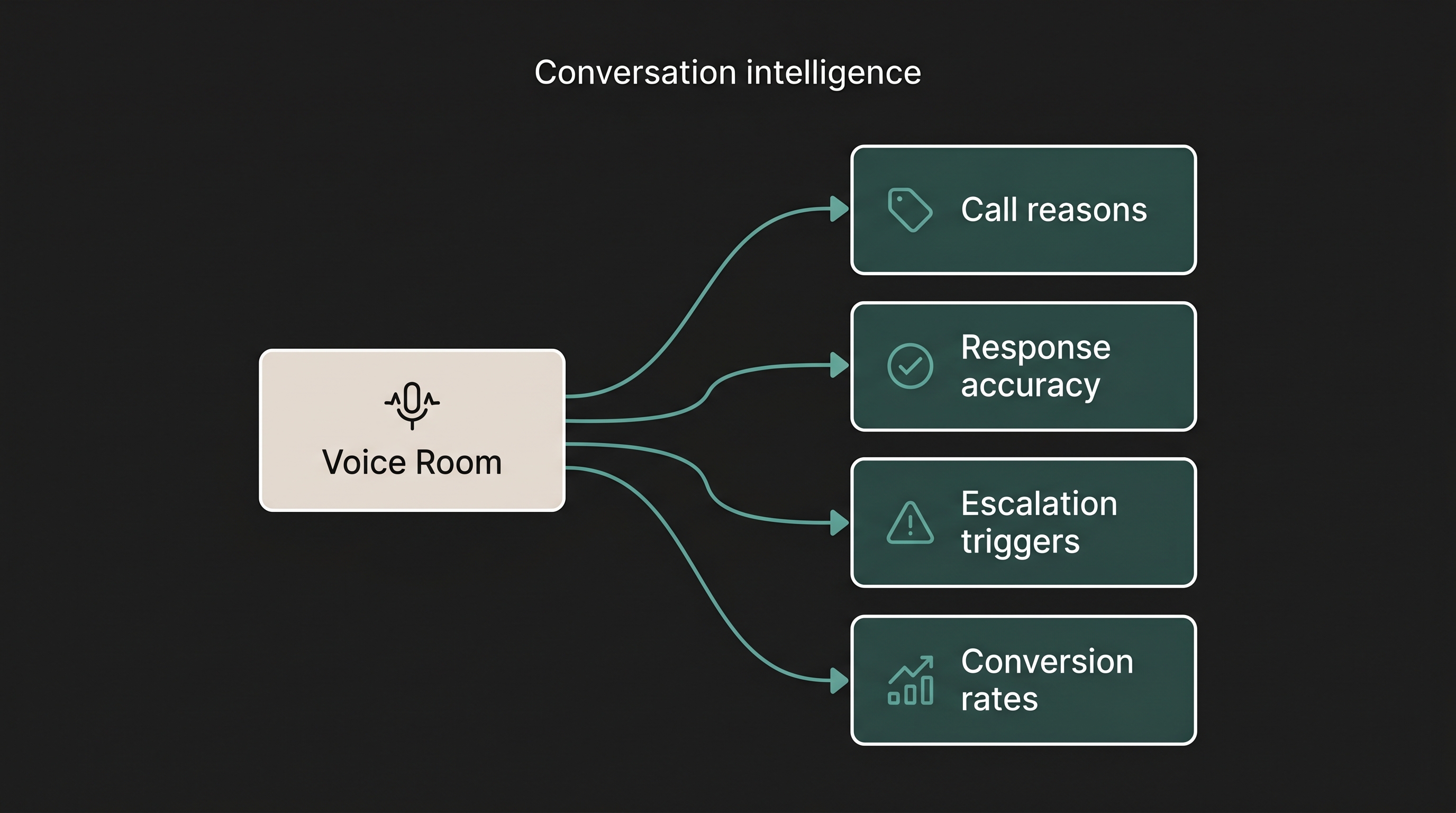
Once Voice Room is plugged into your telephony environment, it begins to map conversation patterns across teams, regions, and workflows. You can track:
- Common reasons for inbound calls (e.g., eligibility and benefits questions handled through the 270/271 transaction, prior authorizations, or claims status across Medicare, Medicaid, and commercial payers).
- Response accuracy and adherence to scripts or compliance language.
- Escalation triggers, hold times, and handoff frequency.
- Conversion rates from inbound interest to scheduled appointments.
Each insight is structured and searchable. Instead of combing through recordings, leaders can filter by issue type, sentiment, or agent. This makes it possible to measure call quality at scale and take action on it.
See where an AI agent fits in your operation.
Book a demoHow do you spot issues before they escalate?
Voice Room doesn’t just analyze calls after the fact. It surfaces trends early, giving you visibility into recurring breakdowns before they impact your operations.
For example, if patients begin expressing frustration about billing clarity or insurance eligibility, the system identifies the pattern and alerts management. If multiple callers mention dropped connections or long hold times, the issue becomes visible immediately rather than weeks later in a report.
These insights help organizations move from reactive firefighting to proactive improvement. Problems are caught early, and staff can be retrained before small issues become systemic.
How does call analysis support compliance?
In regulated industries like healthcare, ensuring that staff follow the right protocols on each call is essential. Manual audits can’t keep up.
Voice Room automatically flags compliance-sensitive moments, such as disclosures, required disclaimers, or HIPAA PHI-handling procedures. Supervisors can review exactly where a compliance lapse occurred, complete with a transcript and timestamp.
This level of precision transforms compliance from a back-office audit into a continuous operational safeguard.
How do you move from insight to automation?
Once you know where your calls are breaking down, you can take the next step: automating the simplest interactions.
Routine inquiries, such as benefit checks, appointment confirmations, or delivery updates, can be handled by Flexbone’s AI agents trained specifically for your workflows. These agents can respond through voice, SMS, or chat, write results back into an EHR like Epic or athenahealth, and reduce call volume so staff can focus on complex or high-value interactions.
Voice Room continuously measures how these automations perform and feeds real-world feedback into model refinement. Over time, the system becomes faster, smarter, and more accurate while maintaining human oversight.
Building a culture of continuous improvement
Flexbone’s engineering philosophy is forward-deployed. Our teams do not deliver static products; they stay engaged with your operations, refining models, validating insights, and surfacing new automation opportunities as your organization evolves.
This ongoing collaboration ensures that Voice Room adapts alongside you. As new products, policies, or patient services are introduced, the platform learns, retrains, and updates automatically, keeping your quality assurance and operational intelligence current at all times.
The results
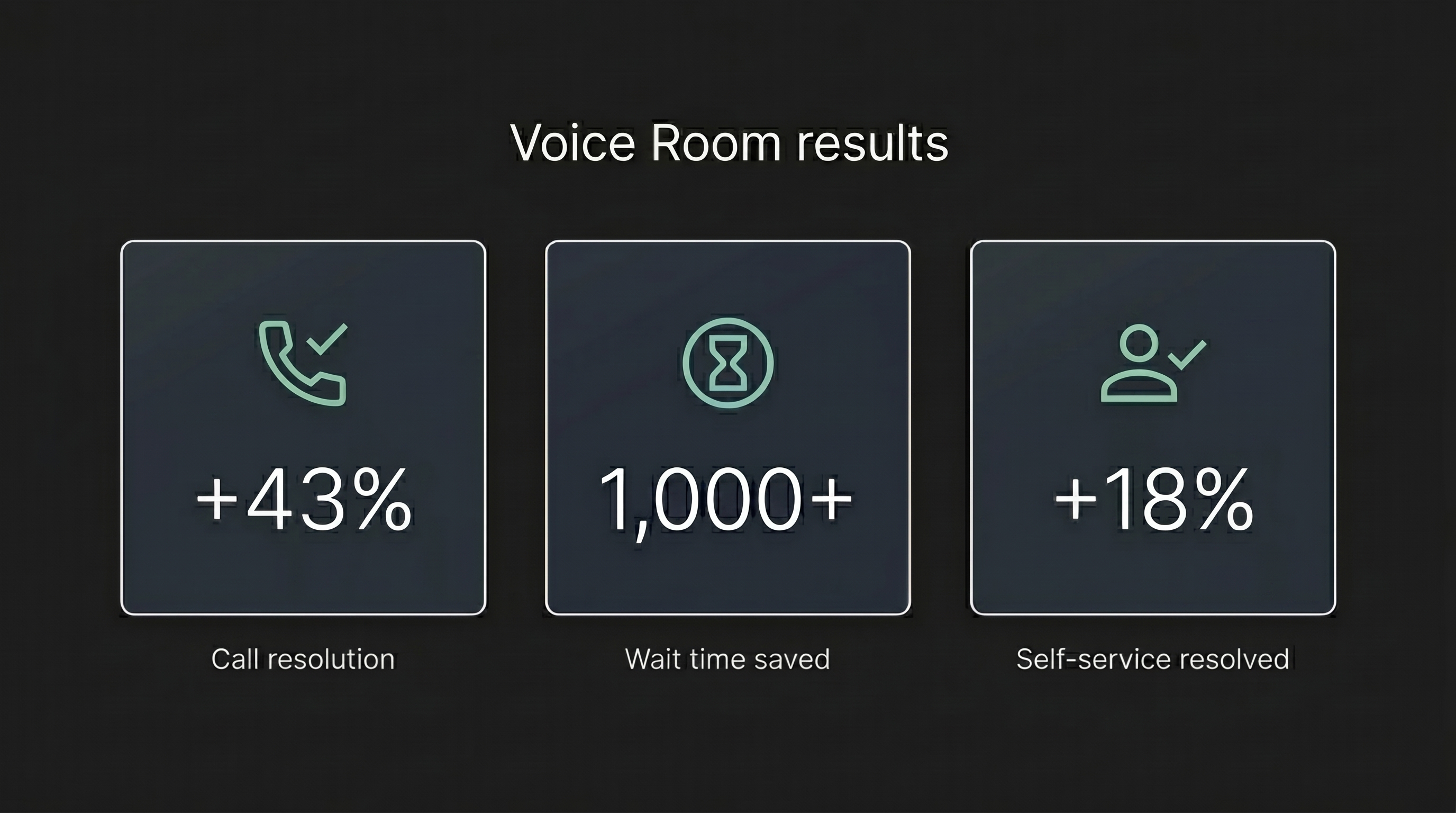
Organizations using Voice Room have seen measurable improvements:
- +43% improvement in first-call resolution
- 1,000+ hours of customer wait time reduced
- +18% of customer issues resolved through self-service
These are not abstract AI metrics; they reflect real-world efficiency gains driven by better listening, faster response, and continuous operational learning.
The takeaway
Voice Room turns every conversation in your organization into structured, actionable data. It helps leaders understand what’s really happening across teams, detect issues before they grow, and identify where automation or training can have the biggest impact.
In a world where each call represents an experience, a risk, or an opportunity, Voice Room ensures nothing gets lost between the lines.